

Benefits of AI-Generated Summaries for Meeting Efficiency
AI-generated summaries revolutionize the way teams handle post-meeting tasks by distilling lengthy discussions into concise,actionable points. this automation not only saves time but also ensures no critical detail is overlooked. By providing instant access to key decisions and assigned responsibilities, teams can swiftly move forward without sifting through hours of dialog, enhancing overall productivity. Moreover,these summaries cater to diverse workstyles,offering visual and textual formats that accommodate rapid reference or deep dives depending on the user’s needs.
- Eliminates redundant follow-ups: Clear summary points reduce the need for repetitive clarification meetings.
- Improves accountability: Automatic highlighting of assigned tasks ensures everyone knows their responsibilities.
- Accelerates decision-making: Condensed insights help stakeholders grasp progress instantly and act faster.
| Benefit | Impact on Meeting Efficiency |
|---|---|
| Instant retrieval of key points | Reduces time spent reviewing lengthy minutes |
| Consistent documentation | Prevents significant information from getting lost |
| Supports remote and hybrid teams | Keeps all members aligned regardless of location |
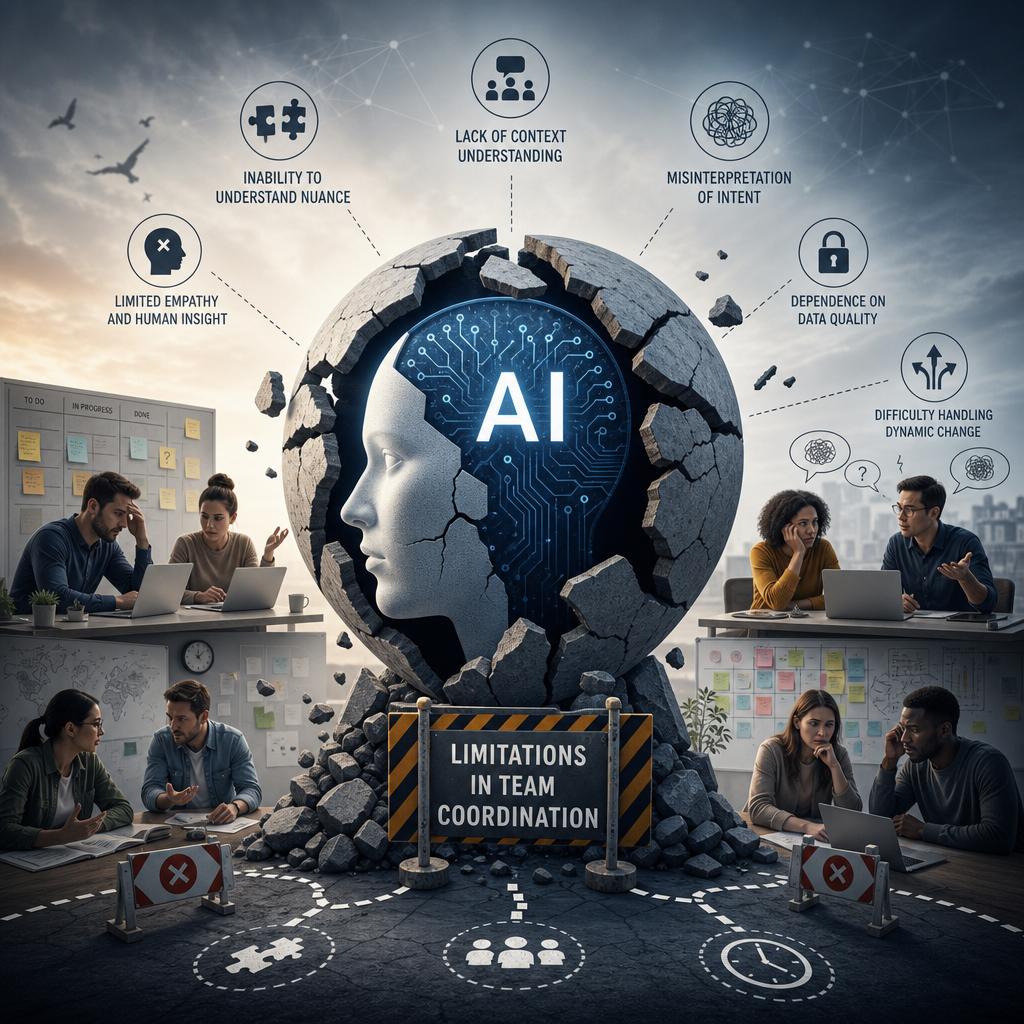
Limitations of AI in Enhancing Team Coordination
While AI-driven tools excel at generating succinct summaries and streamlining information sharing, their ability to foster authentic team dynamics is limited. They excel in processing data and outlining action points but struggle to interpret the nuances of human emotion,body language,and spontaneous brainstorming that fuel genuine collaboration. AI lacks the innate empathy required to resolve conflict or gauge the morale of team members, critical elements that conventional coordination often addresses during face-to-face interactions or live discussions.
Moreover, reliance on AI for coordination poses risks tied to the inherent constraints of algorithmic processes:
- Contextual Gaps: AI may oversimplify complex topics, losing subtleties that impact decisions.
- Dependence on Predefined Rules: Lacks flexibility in adapting to evolving team dynamics and cultural nuances.
- delayed Feedback Loops: Automated summaries can omit real-time clarifications that in-person meetings naturally accommodate.
| Coordination Aspect | AI Capability | Human Advantage |
|---|---|---|
| Emotional Intelligence | Minimal | High - critical for conflict resolution |
| Context Interpretation | Limited | Nuanced understanding |
| Dynamic Adaptation | Rigid | Flexible, situational adjustments |
In essence, while AI tools can augment workflows by trimming down the volume of meetings and ensuring everyone is up to speed, they cannot replace the organic, multifaceted communication that cultivates effective teamwork.
Strategies to Integrate AI Tools Without Sacrificing Collaborative dynamics
Introducing AI tools into team environments requires a delicate balance to preserve the human connections that underpin effective collaboration. Rather than allowing automation to replace interaction, it should serve as a complement-one that enhances clarity and reduces friction.As an example, using AI-generated meeting summaries can free participants from excessive note-taking, letting them engage more fully in discussions. However, maintaining real-time dialogue, active listening, and spontaneous brainstorming remains crucial. Teams should supplement AI outputs with follow-up conversations and ensure that decision-making processes stay inclusive and obvious.
Key approaches to harmonize AI integration with team dynamics include:
- Establishing clear roles for AI-generated content: Treat summary reports as aids rather than substitutes for human insight.
- Encouraging periodic human check-ins: Use AI to track action items but verify progress through personal coordination.
- Promoting a culture of feedback: Invite team members to critique AI outputs to continually improve relevance and accuracy.
| Strategy | Purpose | Impact on Collaboration |
|---|---|---|
| AI Summaries | Capture key points efficiently | enhances focus, reduces meeting fatigue |
| Regular Sync-Ups | Check progress and clarify nuances | Preserves interpersonal connection |
| Continuous Feedback | Refine AI tools based on team input | Fosters trust and relevance |
Best Practices for Balancing AI Assistance with Human Interaction in Meetings
Effectively leveraging AI in meetings requires a thoughtful blend of automation and human touch. While AI tools excel at extracting key points and generating concise summaries, they cannot replicate the nuanced understanding and empathy that human interaction fosters. Teams should use AI-generated summaries as a foundation for follow-up discussions, rather than a substitute for real-time engagement.This ensures decisions are informed by both data and dialogue, preserving the collaborative spirit essential for innovation. Additionally, AI can help track action items and responsibilities, but accountability and motivation remain firmly rooted in interpersonal communication.
Establishing clear roles for AI and participants can streamline meetings without sacrificing warmth or connectivity. Consider implementing guidelines such as:
- Use AI for capturing and distributing summaries to free participants from note-taking and allow full presence during discussions.
- Reserve AI for objective tasks like scheduling and data retrieval, while humans handle conflict resolution and brainstorming.
- Encourage active listening and verbal check-ins post-summary, ensuring alignment and emotional intelligence drive decision-making.
| Task | Best Handled By |
|---|---|
| Meeting Recap | AI Summary Tools |
| Action Assignment | Team Leads |
| Conflict Resolution | Human Facilitators |
| Scheduling & Reminders | AI Assistants |
By embracing AI as a complementary tool rather than a replacementorganizations can enhance efficiency while maintaining the vital human connections that drive meaningful collaboration and innovation.