

The Role of AI in Streamlining Meeting Summaries
Artificial Intelligence has become an indispensable tool in the realm of meeting management, primarily by automating the generation of accurate and concise summaries. These AI-driven summaries capture key points, decisionsand action items without the customary delays caused by manual note-taking. By harnessing natural language processing and machine learning algorithms,AI enables organizations to retain critical details effortlessly while reducing the cognitive load on participants. This technological advance means time once spent transcribing discussions can now be redirected towards strategic tasks,fostering greater productivity across teams.
Though, seamless coordination remains vital to truly reap the benefits of AI-assisted summaries. Effective collaboration requires clear interaction channels and mutual understanding, which technology alone cannot establish.Here’s how AI and human coordination work in tandem to enhance meeting effectiveness:
- Contextual Understanding: Humans provide nuance and context that AI might miss, ensuring summaries reflect the strategic intent behind discussions.
- follow-up Accountability: Summaries serve as prompts, but team members need coordinated follow-through to transform insights into action.
- Customization: Teams can tailor AI tools to prioritize industry-specific jargon or internal processes, fine-tuning the summary’s relevance.
| AI Capability | Human coordination Role |
|---|---|
| Real-time transcription | Clarifying ambiguous points during the meeting |
| Highlight extraction | Verifying key decision accuracy |
| Action item identification | Assigning tasks and deadlines |
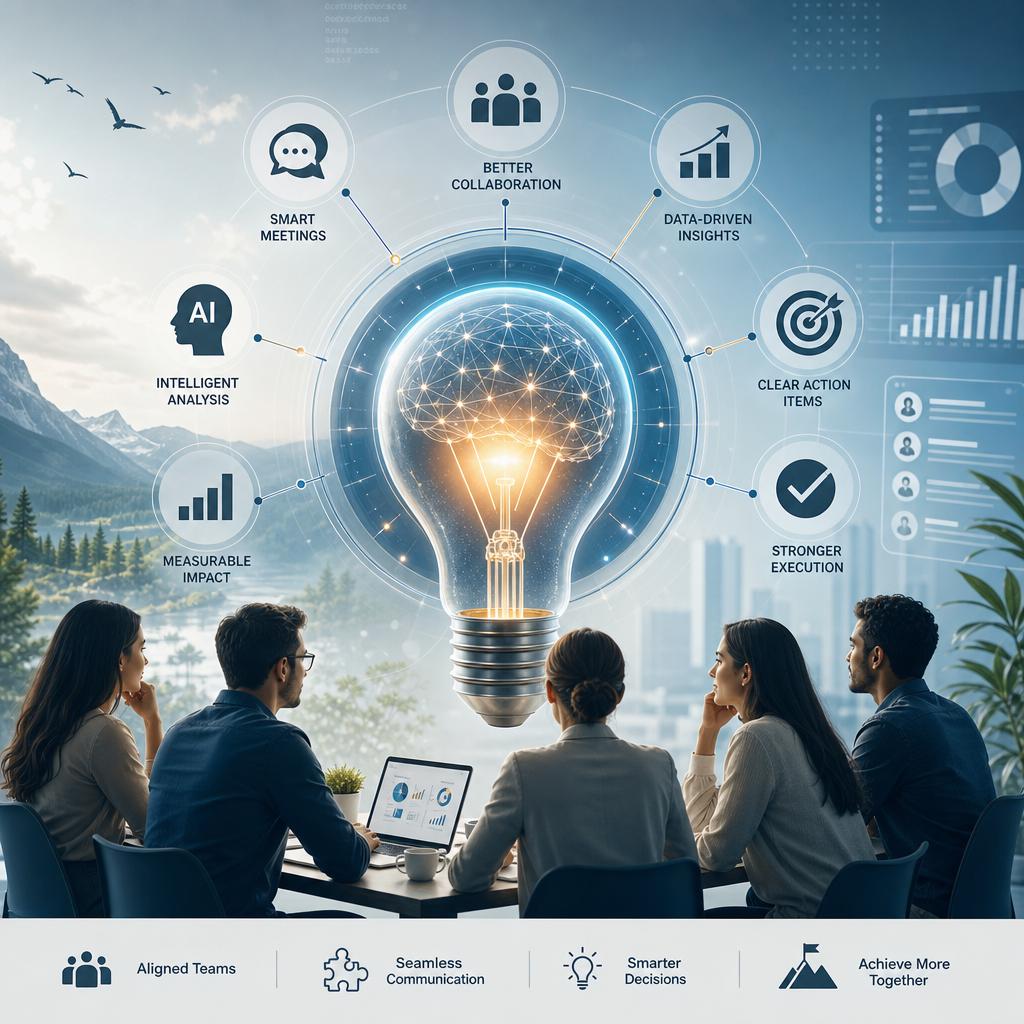
Enhancing Team Coordination Through Intelligent Meeting Insights
Artificial intelligence is transforming the way teams approach their meetings by distilling dense conversations into actionable insights, but true success lies beyond mere summarization. Effective coordination demands that teams interpret AI-generated data to align responsibilities, prioritize tasksand clarify timelines. The synergy between human judgment and intelligent technology creates a dynamic workflow where every participant stays informed without being overwhelmed by excessive dialog or redundant discussions.
To optimize this balanceorganizations should focus on several key elements:
- Contextual Awareness: AI tools that adapt to project specifics and team dynamics provide meaningful cues rather than generic summaries.
- Feedback Integration: Continuous iteration on AI outputs based on team inputs helps refine accuracy and relevance.
- Action-Oriented Outputs: Meeting insights that highlight decisions, deadlinesand stakeholders foster accountability and momentum.
| Coordination Factor | Impact | Role of AI |
|---|---|---|
| Task Clarity | Reduces ambiguity in assignments | Highlights responsibilities automatically |
| Time Management | Keeps deadlines visible and prioritized | Chronologically organizes follow-up actions |
| Collaboration Flow | Improves cross-team communication | Extracts relevant dialogue snippets |
Balancing Automation and Human Judgment in Meeting Efficiency
As organizations increasingly rely on AI-powered tools to streamline meetings, the intrinsic value of human judgment remains irreplaceable. Automation excels in processing vast amounts of information quickly, extracting key pointsand providing concise summaries that save time. However, the nuances of decision-making, interpersonal dynamicsand contextual understanding require a human touch. Leaders must skillfully blend AI-generated insights with their intuition and experience to ensure meetings are not only efficient but also productive and empathetic.This hybrid approach respects the complexity of collaboration without sacrificing clarity or speed.
Key elements to maintain effective coordination alongside AI tools include:
- active listening: Interpreting tone and unspoken cues beyond data summaries.
- Contextual awareness: Recognizing organizational priorities and cultural subtleties.
- Adaptive facilitation: Steering discussions dynamically based on participant needs.
- Critical evaluation: Questioning AI outputs to avoid overreliance or misinterpretation.
| Aspect | automation Benefit | Human Judgment Role |
|---|---|---|
| Information Processing | Fast summarization and data extraction | Validation and prioritization of insights |
| Decision-making | Suggesting options based on data trends | Considering ethical and strategic implications |
| collaboration | Tracking tasks and deadlines | Managing relationships and motivations |
Recommendations for Integrating AI Tools to Optimize Collaborative Workflows
To truly harness AI’s potential in streamlining team collaboration, it’s essential to embed these tools thoughtfully within existing workflows rather than using them as standalone solutions. Prioritize seamless integration with communication platforms and project management software. This ensures AI-generated summaries and insights are contextually linked to action items and ongoing discussions, reducing cognitive overload.Equally important is customizing AI outputs to match team dynamics-tailoring summary lengths, highlight prioritiesand including relevant next steps enhances usability and drives faster decision-making.
Successful adoption also hinges on nurturing a culture of coordination alongside the use of AI. Teams should establish clear protocols for interpreting AI outputs, such as designating roles responsible for verifying summaries or facilitating follow-ups. Encouraging continuous feedback loops allows AI functionality to evolve based on the team’s unique needs, fostering trust and accountability. consider this simplified guide for implementation:
| Step | Focus Area | Key Action |
|---|---|---|
| 1 | Integration | Connect AI tools to current communication channels |
| 2 | customization | Adjust AI summary parameters to team preferences |
| 3 | Training | Educate team members on interpreting AI outputs |
| 4 | Feedback | Implement regular reviews to improve AI accuracy |