

The Evolution of AI in Music Creation and Its Impact on the Industry
Artificial intelligence has moved from being a futuristic concept to a reality that continuously reshapes the music industry. In the early days, AI was limited to simple algorithmic compositions, but today’s technology leverages deep learning and neural networks to generate complex melodies, harmonies, and rhythms that rival human creativity. Tools powered by AI can analyze vast musical datasets to detect patterns, enabling them to produce original pieces or assist musicians in composing.this evolution has not only expanded creative possibilities but also democratized music production, making sophisticated composition tools accessible to amateurs and professionals alike.
The impact of AI extends beyond melody creation-it also influences lyrics and vocal synthesis. Advanced natural language processing models craft compelling and contextually relevant lyrics, while voice synthesis tech can imitate human voices wiht remarkable precision, even allowing customization of vocal timbres and emotional expressions. These capabilities have introduced new workflows in studios and spawned genres blending human artistry with machine-generated elements, illustrating the synergy between technology and tradition.
- Melody generation: AI models composing instrumental scores and arrangements
- Lyric writing: Automated generation of meaningful and stylistically diverse song lyrics
- Voice synthesis: Realistic vocal imitation and emotional modulation
| AI Capability | Example Use | Industry Effect |
|---|---|---|
| Melody Composition | Generating background scores for films | Speeds up scoring process |
| Lyric Generation | Creating theme-based song lyrics | Enhances songwriting inspiration |
| Voice Synthesis | Producing virtual artists and performances | Expands artist possibilities |
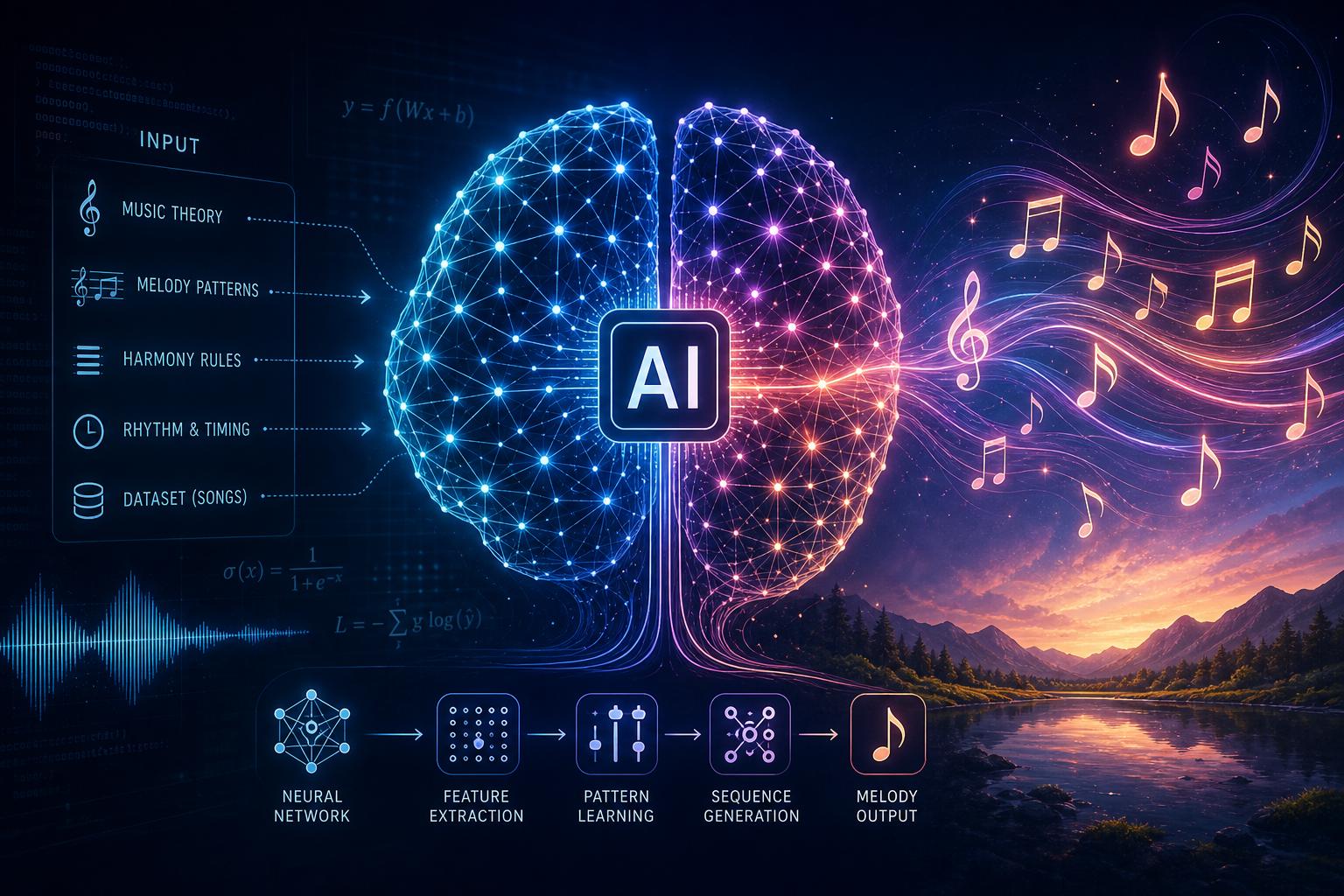
Understanding How AI Generates Melodies Through Neural Networks and Algorithms
At the core of AI’s ability to generate melodies lies the intricate interplay between neural networks and algorithmic processes designed to mimic human creativity.Neural networks, especially recurrent and transformer-based models, analyze vast datasets of existing music to identify patterns in melody, rhythm, and harmony. These systems use layers of interconnected nodes that simulate how neurons in the brain operate, enabling the AI to predict subsequent notes and chord progressions with remarkable coherence. By continually learning from examples, the AI develops an intuitive sense of musical structure, allowing it to compose original sequences that can surprise even seasoned musicians.
Key techniques in AI melody generation include:
- Sequence Modeling: Predicts future notes based on preceding ones, maintaining musical flow.
- Style transfer: blends elements from different genres to create innovative hybrids.
- Reinforcement Learning: Optimizes compositions by rewarding pleasing harmonic and rhythmic structures.
| AI Technique | Function | musical Outcome |
|---|---|---|
| Recurrent Neural Networks (RNN) | sequence prediction | Smooth melodic lines |
| transformer Models | Context-aware composition | Long-range harmony |
| Generative Adversarial Networks (GANs) | Creative variation | Unique, unexpected motifs |
The Role of Artificial Intelligence in Crafting Lyrics with Semantic and Emotional Depth
The infusion of artificial intelligence into lyric composition transcends mere word generation; it embraces a nuanced understanding of context, sentiment, and symbolism. Modern AI models dissect vast datasets of poetry, songs, and literary works to discern patterns of emotional resonance and linguistic rhythm.this enables the crafting of lyrics that are not only semantically coherent but also rich in emotional depth, striking chords with listeners on a subconscious level. By leveraging natural language processing technologies, AI can identify metaphors, alliterations, and mood shifts, ensuring that the lyrics have a human-like authenticity and a compelling narrative flow.
Moreover, AI’s ability to tailor lyrical content to specific themes or emotional palettes allows songwriters and producers to innovate within genres or craft personalized songs for diverse audiences. Consider the table below illustrating how AI can adapt lyric elements according to emotional intent, enhancing the creative process:
| Emotion | Common Themes | Lyrical Devices |
|---|---|---|
| Joy | Party, Freedom, Light | Alliteration, Repetition, Vivid Imagery |
| Melancholy | Loss, Reflection, Night | Metaphor, Enjambment, Rhyme |
| Hope | New Beginnings, Dreams, Light | Symbolism, Positive Connotation, Rhythm |
- Contextual Awareness: AI adapts phrases to fit evolving song narratives.
- Emotional Calibration: lyrics can mirror or steer listener emotions strategically.
- Creative Experimentation: Enables blending of genres and lyrical traditions seamlessly.
Exploring AI-Generated Voices and Best Practices for Authentic Vocal Integration
AI-generated voices have revolutionized the way creators approach vocal production, offering unprecedented flexibility and accessibility.With advancements in neural networks and deep learning, these synthetic voices can mimic natural intonations, emotions, and even regional accents, making them suitable for a variety of musical genres. Though, integration demands careful consideration:
- Consistency: Ensure the AI voice matches the song’s mood and instrumentation to avoid dissonance.
- Human Touch: Incorporate subtle imperfections or dynamic modulations manually to prevent an overly robotic feel.
- Ethical Use: Always disclose the synthetic nature of the vocal and respect copyright when using voices based on real singers.
To seamlessly embed AI-generated vocals into compositions,producers often employ a combination of post-processing techniques and contextual arrangement. Equalization, reverb, and subtle pitch correction can enhance realism, while strategic placement in the mix balances presence without overpowering conventional instruments. Below is a comparative overview of common approaches to vocal integration:
| Technique | Purpose | Effect on AI Voice |
|---|---|---|
| Dynamic Modulation | Add natural variations | Greater realism and expressiveness |
| Formant Shifting | Alter vocal character | enhanced uniqueness and style |
| Spatial Effects (Reverb/Delay) | Create ambiance and depth | Improved immersion and blend |