
The Capabilities and Limitations of AI in Website Development
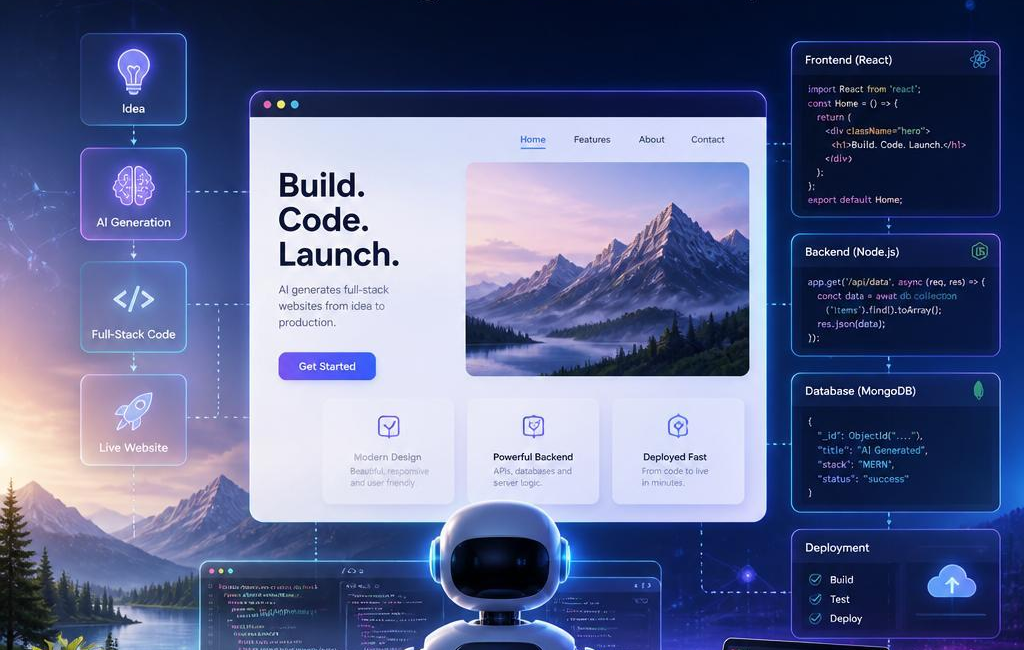
Artificial intelligence has revolutionized how we approach website development by automating many tasks traditionally requiring human expertise. Advanced AI tools can now generate full-stack code by interpreting high-level instructions, enabling rapid prototyping and reducing time to deployment. Developers benefit from AI’s ability to write clean, reusable code snippets for frontend frameworks, backend logicand even database integration without manual intervention. Moreover, AI-powered platforms can adapt designs responsively to different devices and optimize user experience based on data-driven insights, significantly enhancing productivity and innovation.
However,despite these remarkable capabilities,there are inherent limitations to consider. AI struggles with complex creative decisions and contextual nuances that human developers excel at, such as understanding brand identity or unconventional user journeys. Additionally, generated code may require meticulous review for security vulnerabilities, performance optimizationor compliance with best practices-a step that remains outside the scope of current AI autonomy. Below is a concise comparison outlining AI’s strengths and limitations in website development:
| Capabilities | Limitations |
|---|---|
| Automates routine coding tasks | Limited in handling abstract creative concepts |
| Generates responsive and valid full-stack code | May produce inefficient or redundant code segments |
| Adapts designs based on data inputs | Requires human oversight for security and ethics |
| Accelerates prototyping and iteration | Cannot fully replace human intuition and strategic planning |
Understanding How AI Generates Full-Stack Code Efficiently
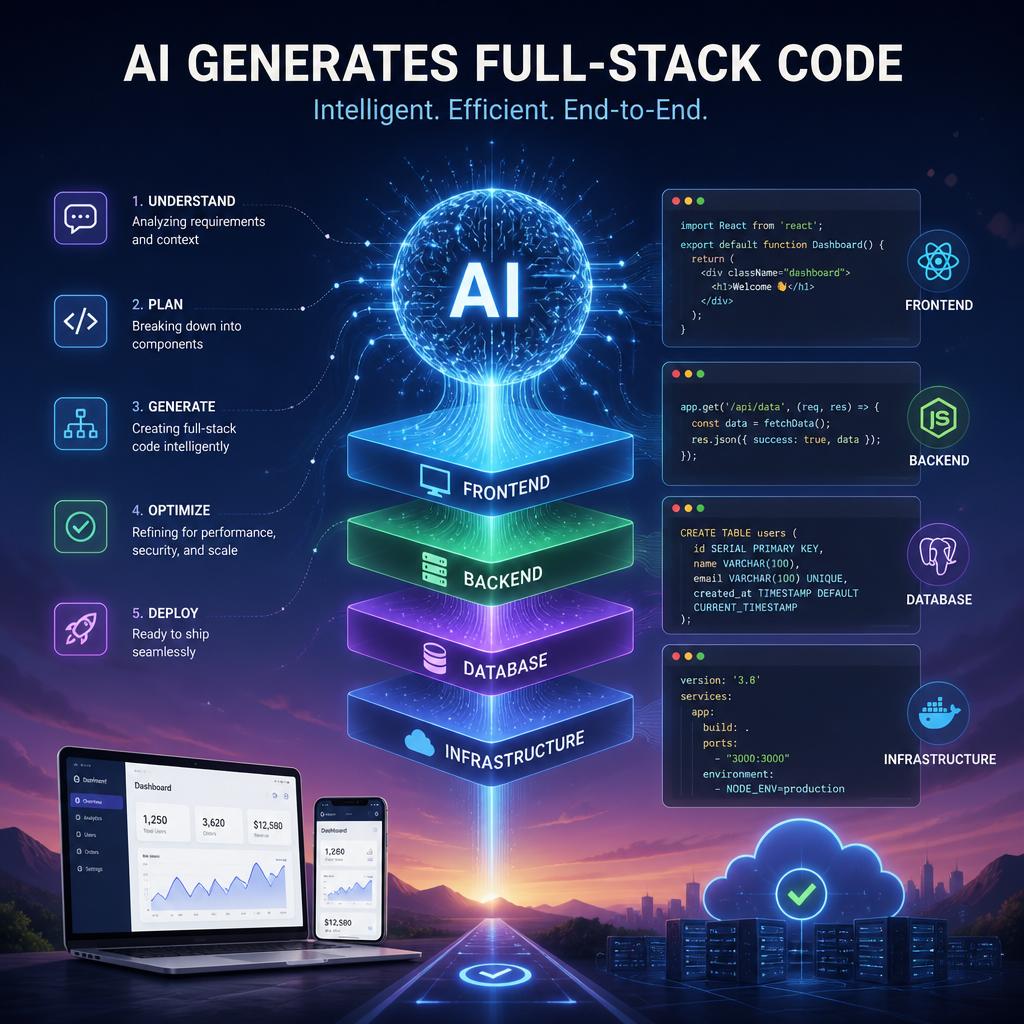
AI-powered tools leverage advanced machine learning algorithms to comprehend and generate code across the entire technology stack-from frontend design components to backend server logic and database integration. By analyzing vast repositories of open-source projects and documentation, these systems learn the syntactical structures and contextual best practices that enable them to produce clean, efficient code quickly. This capability not only accelerates development cycles but also ensures consistent adherence to modern coding standards,significantly reducing human error in repetitive coding tasks.
Key elements contributing to AI efficiency include:
- Context Awareness: Understanding the project requirements and code dependencies to generate coherent, functional segments.
- Code Optimization: Applying patterns that enhance performance while maintaining readability.
- Cross-Language Proficiency: Seamlessly integrating multiple languages and frameworks essential for full-stack development.
| AI Capability | Description | Benefit |
|---|---|---|
| Natural Language Processing | Translates requirements into code snippets | Speeds up initial development |
| Pattern Recognition | identifies coding conventions and anti-patterns | Improves code quality |
| Real-time Error Detection | Alerts on syntax and logic issues immediately | Reduces debugging time |
Best Practices for Integrating AI Tools into Your Development Workflow
To maximize the effectiveness of AI tools within your development workflow, it’s essential to establish clear guidelines that emphasize smart collaboration between human and machine. Prioritize tasks where AI can expedite repetitive coding processes, such as generating boilerplate code, debuggingor creating initial versions of UI components. This approach preserves developer creativity for complex problem-solving and strategic planning. additionally, ensure AI-generated code undergoes rigorous review and testing cycles; while AI can produce functional snippets rapidly, human oversight guarantees maintainability, securityand adherence to project standards.
Strategies for seamless AI integration include:
- Utilizing AI to assist with code documentation and comments to improve readability and knowledge transfer.
- Employing version control tools to track AI-generated contributions and facilitate iterative improvements.
- Designing modular components that can be more easily adjusted or replaced as AI evolves.
- Maintaining a feedback loop where developers train AI tools with project-specific data for better accuracy.
| Best Practice | Benefit |
|---|---|
| Code Review Enforcement | Reduces bugs and security risks |
| Task Automation Focus | Increases development speed |
| Continuous Training | Improves AI output relevance |
| Modular Architecture | Enhances maintainability |
Optimizing Website Performance and Security with AI-Generated Code
Leveraging AI-generated code to enhance website performance involves strategically optimizing both frontend and backend components. AI can dynamically suggest streamlined code pathways, automate asset minification, and intelligently implement caching strategies, reducing load times substantially. Key performance improvements include:
- Adaptive image optimization: AI tools automatically resize and compress images based on user device and connection speed.
- Efficient asynchronous loading: Scripts and resources load progressively without blocking page rendering.
- Real-time code refinement: Continuous AI analysis to identify and remove redundant or inefficient code snippets.
From a security viewpoint, AI-generated code enables proactive defense mechanisms by embedding best practices and adaptive protocols directly within the codebase. This approach minimizes human error and anticipates evolving threats by:
| Security Feature | AI-Driven Advantage |
|---|---|
| Input Validation | Automated, context-aware sanitization to prevent injection attacks |
| Authentication | Adaptive multi-factor logic based on user behavior patterns |
| Vulnerability Patching | Instant identification and remediation suggestions for exposed weaknesses |
Such integrated capabilities not only fortify websites against cyber threats but also ensure robust performance under fluctuating traffic and attack scenarios.