

Building a Robust Governance Framework for AI Integration
Establishing clear policies and controls is essential to managing AI’s exponential growth responsibly.An effective governance structure not only defines ethical guidelines and compliance standards but also ensures accountability across the organization.Integrating domain experts with AI specialists fosters a culture where risk is assessed continuously, and decisions reflect both technical feasibility and societal impact. Key elements include transparent decision-making protocols and dedicated oversight committees empowered to intervene promptly when deviations occur.
To streamline governance, companies should embed AI oversight into existing workflows rather than treating it as a separate process. Incorporating automated compliance checks and monitoring tools enables rapid detection of anomalies while reducing manual burdens. Below is a simplified view of how governance components align with workflow stages:
| Workflow Stage | Governance Focus | Key Action |
|---|---|---|
| Design & Growth | ethical Standards & Bias Mitigation | Implement fairness audits |
| Testing & Validation | Accuracy & Clarity | Conduct explainability reviews |
| Deployment & Monitoring | Compliance & Risk Management | Enable real-time monitoring dashboards |
- Define clear roles and responsibilities for AI governance to ensure alignment at all levels.
- Leverage data governance frameworks to maintain integrity and security of data feeding AI systems.
- Continuously update governance policies to keep pace with emerging technologies and regulatory landscapes.
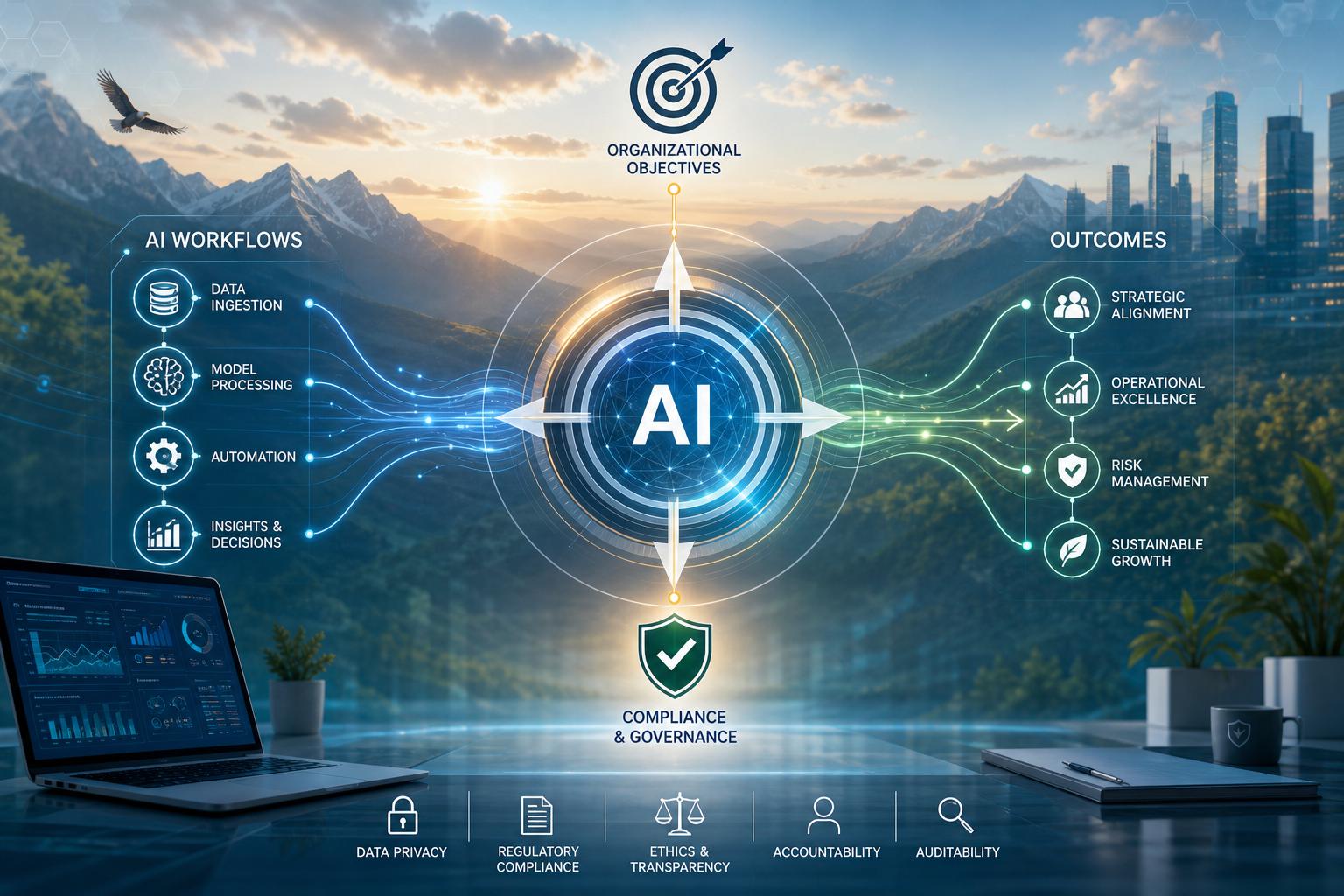
aligning AI workflows with Organizational Objectives and Compliance
Ensuring that AI initiatives are directly tied to the core strategic goals of an organization is critical to unlocking true value and maintaining stakeholder trust. When designing AI workflows, organizations must embed clear governance frameworks that encompass not only ethical considerations but also regulatory compliance. This approach safeguards the enterprise from unintended risks while reinforcing accountability at every stage-from data intake, model training, to deployment. Key factors to monitor include:
- Alignment with specific business outcomes such as efficiency, market differentiation, or customer experiance enhancement.
- Transparent audit trails documenting data lineage, decision logic, and model versioning.
- Periodic impact assessments that measure both performance and compliance adherence.
Practical implementation necessitates synchronizing cross-functional teams-data scientists, compliance officers, and business strategists-to co-develop workflows that fit seamlessly within both operational and legal boundaries. Below is a simple framework illustrating how governance pillars intersect with AI workflow stages to promote robust oversight:
| Workflow Stage | Governance Pillar | Compliance Focus |
|---|---|---|
| Data Acquisition | data Privacy & Consent | GDPR, CCPA |
| Model Development | bias Mitigation & Transparency | Fairness Audits |
| Deployment & Monitoring | Security & Accountability | Operational Risk Controls |
By institutionalizing this interplay, organizations create a dynamic yet controlled environment where AI can thrive as a responsible and strategic asset.
Implementing Continuous Monitoring and Risk Management strategies
As organizations embed AI into their core operations, the imperative to maintain an adaptive and vigilant oversight system has never been greater. Continuous monitoring serves as the backbone for identifying subtle shifts in AI model behaviour, system performance, and compliance adherence. By leveraging real-time analytics and automated alerting, teams can promptly detect anomalies before they escalate into critical issues. Key elements of robust monitoring include:
- Real-time data validation: Ensuring input integrity and consistency to prevent cascading errors.
- Performance benchmarking: Regularly assessing AI outputs against defined accuracy and fairness metrics.
- Security audits: Continuous scanning for vulnerabilities to guard against malicious exploits.
Risk management in this dynamic AI landscape extends beyond customary frameworks, integrating proactive strategies that evolve alongside technology advancements. Adopting a cyclical risk assessment model helps organizations recalibrate controls based on emergent threats and shifting business priorities. Implementing multi-layered mitigation tactics, such as automated rollback triggers and scenario-based stress testing, further fortifies governance. The table below highlights essential risk management components tailored for AI governance in 2026:
| Risk Aspect | Strategy | Benefit |
|---|---|---|
| Model Drift | Scheduled retraining with updated datasets | Maintains accuracy over time |
| Bias Amplification | Bias impact audits and corrective interventions | Ensures fairness and compliance |
| Data Privacy | Encrypted data handling and access controls | Protects sensitive information |
Enhancing Collaboration Between AI Teams and Business Units for Optimal Outcomes
Effective collaboration between AI teams and business units requires clear dialog channels and shared goals that reflect both technological capabilities and business priorities. To achieve this synergy, organizations should implement structured governance frameworks that delineate responsibilities, ethical standards, and decision-making processes.This ensures that AI initiatives align with broader corporate strategies while maintaining accountability and transparency. Moreover, fostering a culture of mutual respect and continuous learning helps bridge the gap between technical experts and business leaders, enabling agile responses to evolving market demands.
A well-integrated workflow is crucial to harmonizing efforts across departments. Establishing collaborative platforms and standardized protocols allows teams to share insights and iterate rapidly on AI models with direct input from end-users. The following table outlines key elements that contribute to this integration:
| Key Element | Role in Collaboration |
|---|---|
| cross-functional Teams | Facilitate diverse perspectives and collective problem-solving |
| Governance Committees | Ensure compliance and ethical considerations are met |
| Data sharing Protocols | Enable seamless access to relevant information for AI development |
| Feedback Loops | Integrate user experience insights into AI enhancements |