

Balancing Support and Independence in AI-Assisted Homework
Striking the right balance between offering assistance and promoting self-reliant learning is essential when integrating AI tools into homework routines. While artificial intelligence can serve as a powerful tutor-providing explanations, examplesand guidance-it must not replace the critical thinking and problem-solving processes that students develop thru their own efforts.Educators and parents alike should encourage students to use AI as a supplemental resource rather than a shortcut, fostering an environment where assistance supports growth without overshadowing personal accountability.
Effective AI-assisted homework strategies include:
- Using AI to clarify concepts but encouraging attempts at answers before consulting the tool.
- Setting clear limits on AI engagement, such as time constraints or specific tasks AI can assist with.
- Encouraging reflection by having students explain AI-generated solutions in their own words.
- Monitoring AI usage to ensure it promotes learning rather than mere answer retrieval.
| Aspect | Recommended Approach | Expected Outcome |
|---|---|---|
| Support Level | Guided help | Builds confidence and understanding |
| Independence | Encouraged attempts | Enhances problem-solving skills |
| AI Usage | Limited & purposeful | Prevents overreliance |
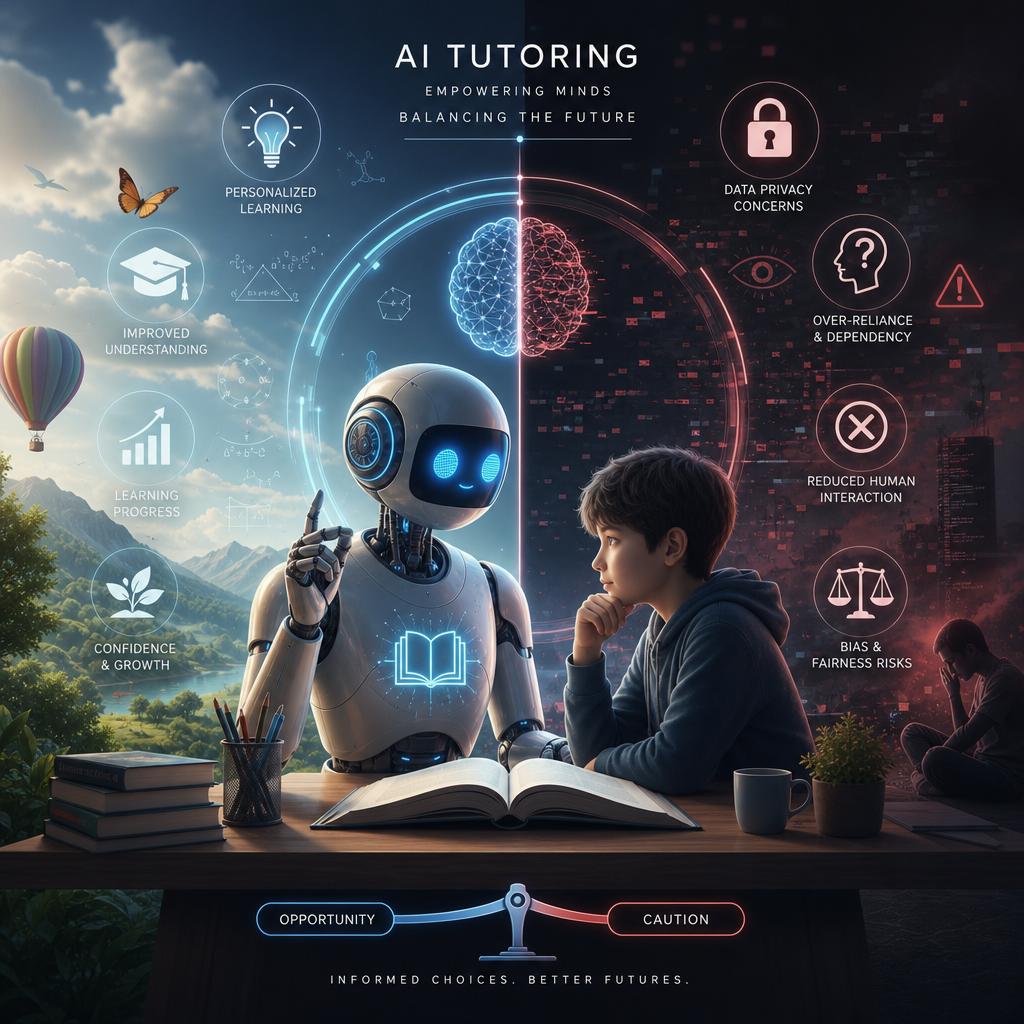
Understanding the Educational Benefits and Risks of AI Tutoring
AI tutoring systems are revolutionizing how students approach homework by offering personalized support tailored to individual learning paces and styles. These smart platforms provide immediate feedback, clarify complex conceptsand encourage critical thinking, which fosters a deeper understanding of subjects. Key educational benefits include:
- Customizable learning paths that adapt to student needs
- 24/7 accessibility, enabling continuous learning outside traditional hours
- Reduction of learning gaps through targeted problem-solving assistance
- Encouragement of independent inquiry without immediate human intervention
However, alongside these advantages, there are significant concerns about overreliance and ethical use. Without proper boundaries, AI tutoring can lead to passive learning or even academic dishonesty as students might depend excessively on AI-generated solutions. To address these risks, educators and parents should establish clear limits and promote responsible use, ensuring AI tools serve as supplements rather than substitutions for genuine effort.A balanced framework might look like this:
| Allowed AI Uses | Restricted Uses |
|---|---|
| clarifying concepts | submitting AI-generated answers as own work |
| Offering hints and guidance | Using AI to complete entire assignments |
| Providing practice exercises | Bypassing critical thinking steps |
Establishing Clear Ethical Guidelines for AI Use in Homework
To foster responsible AI engagement in academic tasks, it is indeed essential to delineate clear ethical boundaries regarding its use. AI should primarily serve as an educational support tool-offering explanations,clarifications,and step-by-step guidance-rather than a shortcut to completing assignments. This not only upholds academic integrity but also ensures students develop critical thinking and problem-solving skills.Key principles to emphasize include:
- Transparency: Students must disclose when and how AI tools were used in their homework.
- Originality: AI-generated content should inspire understanding and reflection,not replace the student’s own work.
- Supervision: Educators should define acceptable AI applications and provide clear examples of appropriate use cases.
by framing AI as a tutor rather than a substitute, educational institutions can harness the technology’s benefits while mitigating misuse. The following table outlines practical ethical guidelines that can be adapted to diverse academic environments:
| Guideline | Purpose | Example |
|---|---|---|
| Clarify AI’s role | Set expectations | Use AI for concept explanations, not direct answers |
| Require citations | Promote honesty | Mention use of AI in homework footnotes |
| Limit scope | Encourage independent work | Allow AI for brainstorming, prohibit full solution generation |
Practical Strategies for Integrating AI Tools Within Academic Boundaries
Effective integration of AI tools in educational settings demands a clear framework that supports learning while upholding academic integrity. Educators and institutions should establish guidelines that delineate permissible uses of AI in homework assistance.As an example, encouraging students to use AI as a tutoring resource to clarify concepts or explore multiple problem-solving approaches fosters deeper understanding without promoting dependency. This can be complemented by promoting transparent interaction about AI use, ensuring students disclose when and how these tools aid their work. Such transparency nurtures responsibility and helps maintain a fair academic environment.
To navigate the balance further, it’s essential to implement practical boundaries on AI applications, focusing on the difference between facilitation and direct completion of assignments. Below is a succinct overview of recommended usage categories:
| Use Case | Allowed | Not Allowed |
|---|---|---|
| Concept Description | Yes – AI can clarify or expand on topics | No – Must not replace own understanding |
| Draft Generation | Yes – brainstorming ideas or outlines | No - Full essay or assignment submission |
| Answer Verification | Yes – Check calculations or logic | No – Copying final answers without comprehension |
| Homework Solutions | Partial – Guidance only | Complete solutions directly from AI |
These strategies collectively foster an educational atmosphere where AI acts as a supportive tutor, enriching the learning experience without compromising the student’s personal academic growth and integrity.