

Balancing Innovation and Responsibility in Artificial Intelligence Development
As artificial intelligence continues to evolve at a remarkable pace, it brings with it transformative benefits that extend across healthcare, education, industry, and daily life. However, the path to innovation is not without its ethical challenges. Developers and stakeholders must actively weigh the profound advantages AI offers against potential risks such as privacy breaches, biases, and unintended consequences that may arise from misuse or insufficient oversight. Ensuring responsible AI development means integrating ethical principles into every stage, from design and deployment to continuous evaluation and refinement.
Successful navigation of these complexities involves embracing a multidimensional approach that includes:
- Openness: Clear documentation and openness about AI decision-making processes.
- Accountability: Establishing who is responsible when AI causes harm or error.
- Fairness: Mitigating bias to promote equal outcomes for all communities.
- Privacy Protection: Safeguarding sensitive data from exploitation.
| AI Benefit | Ethical Consideration | mitigation Strategy |
|---|---|---|
| automated Medical Diagnostics | Potential for Misdiagnosis | Rigorous Testing & Human Oversight |
| Personalized Learning Algorithms | data Privacy Concerns | Data Encryption & User Consent |
| Predictive Policing Tools | Bias & Discrimination | Regular Bias Audits & Transparency |
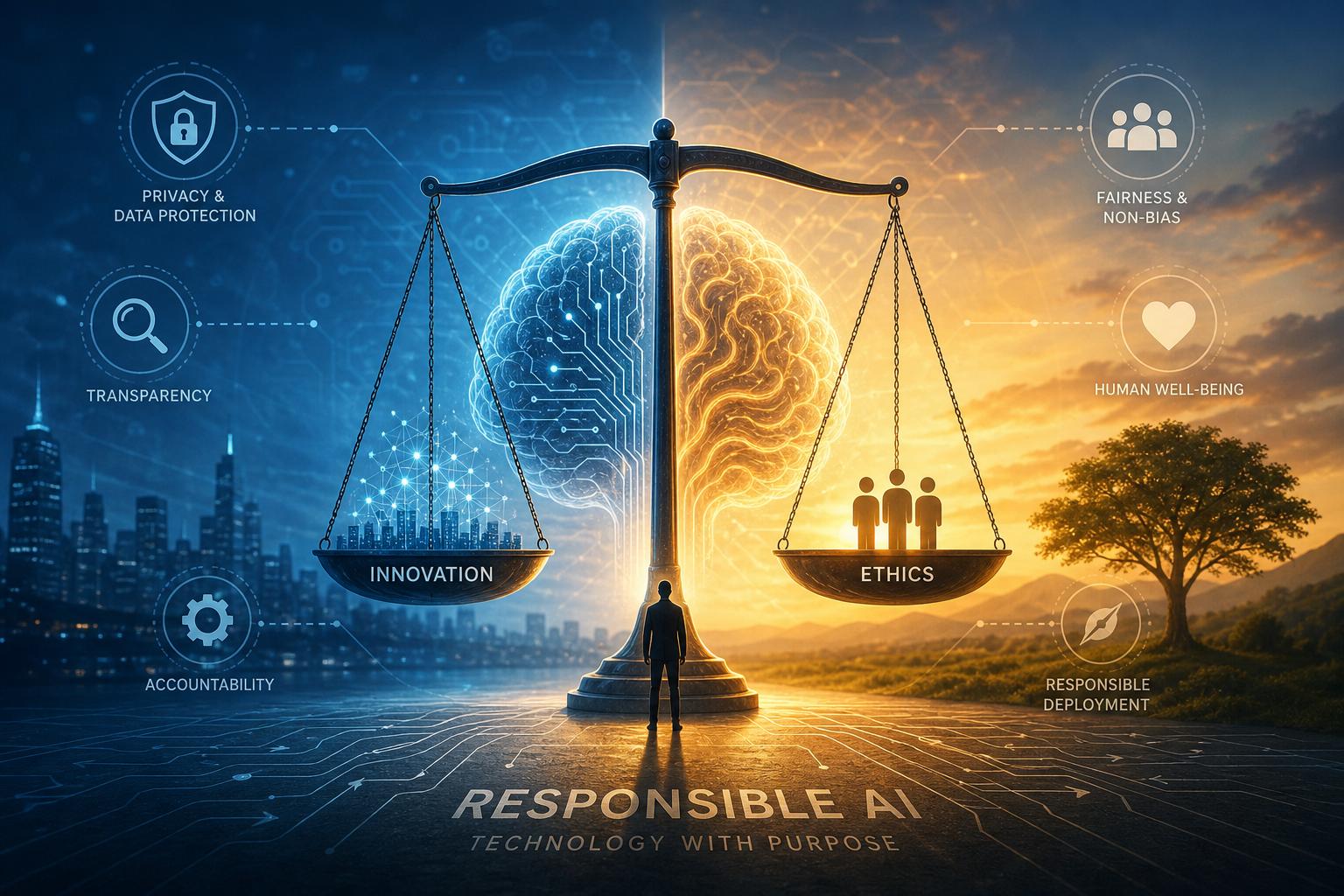
Addressing Ethical Challenges in AI Deployment and decision Making
In the rapidly evolving field of artificial intelligence, maintaining an ethical balance is paramount to harnessing its transformative potential without succumbing to power misuse or inadvertent harm. Organizations must adopt transparent frameworks that ensure AI systems respect privacy, fairness, and accountability. Key considerations include:
- Implementing bias mitigation strategies to avoid reinforcing societal inequalities
- ensuring data governance adheres to evolving privacy regulations
- Designing explainable AI models that provide stakeholders with clear decision rationales
- Establishing human oversight mechanisms that can intervene when AI decisions carry critical impact
To systematically address these ethical challenges, organizations often deploy multi-dimensional review processes.Below is a simplified framework illustrating essential ethical pillars and their associated risk factors:
| Ethical Pillar | Potential Risk | Mitigation Approach |
|---|---|---|
| Transparency | Opaque decision-making | Develop interpretable AI tools |
| Privacy | unauthorized data use | Enforce strict data anonymization |
| Fairness | Disparate impacts on groups | Regular bias audits & inclusive datasets |
| Accountability | Untraceable responsibility | Clear human-in-the-loop protocols |
Mitigating Harm Risks through Transparent and Accountable AI Systems
To address the risks associated with AI-driven decisions, it is essential to build systems grounded in transparency and accountability. Transparent AI frameworks enable stakeholders to understand how algorithms function, what data they use, and the processes they follow to reach conclusions. This openness not only fosters trust but also allows continuous scrutiny and improvement by technical experts, ethical boards, and the public. Key practices include:
- Clear documentation of AI models and their decision-making paths
- Explainable AI techniques to make complex models interpretable
- Regular audits monitoring for bias, fairness, and unintended consequences
Accountability mechanisms extend beyond transparency by embedding responsibility at every stage, from design to deployment. This involves establishing robust governance frameworks were developers,organizations,and regulators collaboratively ensure AI respects societal values and legal standards. The table below summarizes critical pillars that drive ethical AI deployment:
| Ethical Pillar | Description | Impact |
|---|---|---|
| Transparency | Open interaction about AI processes | Builds trust & enables informed oversight |
| Accountability | Clear assignment of responsibility | Ensures consequences for harm & encourages care |
| Fairness | Minimizing bias & ensuring equitable outcomes | Promotes social justice and inclusivity |
| Robustness | Maintaining reliability under varied conditions | Prevents harmful malfunction or exploitation |
Establishing Comprehensive Guidelines for Ethical AI Governance and Use
To navigate the complex landscape of artificial intelligence, it is essential to implement comprehensive guidelines that prioritize transparency, accountability, and fairness. These guidelines act as a robust framework to ensure every AI deployment aligns with societal values and respects human rights. Organizations must integrate ethical considerations from the outset, emphasizing the importance of ongoing impact assessments and stakeholder engagement. This approach mitigates the risks of unintended consequences and addresses challenges such as bias, privacy infringement, and decision opacity.
- Transparency: Clear communication about AI decision-making processes and limitations.
- Accountability: Defined responsibility for AI outcomes and continuous monitoring.
- Equity: Proactively identifying and eliminating biases for fair treatment.
- Safety: Ensuring AI systems operate within defined, pre-approved ethical boundaries.
| Ethical Principle | Application Strategy | Expected Outcome |
|---|---|---|
| Transparency | Open-source algorithms and model explainability | Increased user trust and informed consent |
| Accountability | Regular audits and human oversight | Reduced risk of harm and legal compliance |
| Equity | Diverse data sets and bias testing | Fair portrayal and nondiscrimination |
Adopting a proactive governance model that continuously evolves alongside AI technologies is key to balancing innovation with ethical responsibility.By embedding these principles into organizational cultures and technological pipelines, institutions not only prevent misuse but also amplify AI’s positive societal contributions. This dynamic vigilance is critical to addressing the ethical power and harm risks inherent in AI, ensuring technology empowers society rather than undermines it.