

Understanding the Real Impact of AI on Task Efficiency
When evaluating the effectiveness of artificial intelligence, it’s crucial to go beyond the promises and hype often surrounding its adoption. AI’s true value lies in measurable improvements to task efficiency, yet such improvements must be carefully quantified. Simply automating a process does not guarantee reduced costs or fewer errors. The key is to critically assess whether the AI integration simplifies workflows,reduces manual workload,or accelerates decision-making without sacrificing quality. Consider the specific criteria that define success for each task, such as time saved, error rate reduction, or cost per operation.
To systematically measure impact, organizations should focus on these core factors:
- Task Impact: Does the AI meaningfully change how the task is performed or the output quality?
- Cost Efficiency: Are operational expenses lowered, including hidden costs like maintenance or error correction?
- Error Rates: Has the AI positively influenced the accuracy and reliability of task completion?
| Evaluation Metric | Before AI | After AI | Change |
|---|---|---|---|
| Average Task Time | 15 min | 9 min | ↓ 40% |
| Cost per Task | $25 | $18 | ↓ 28% |
| Error Rate | 5% | 3% | ↓ 40% |
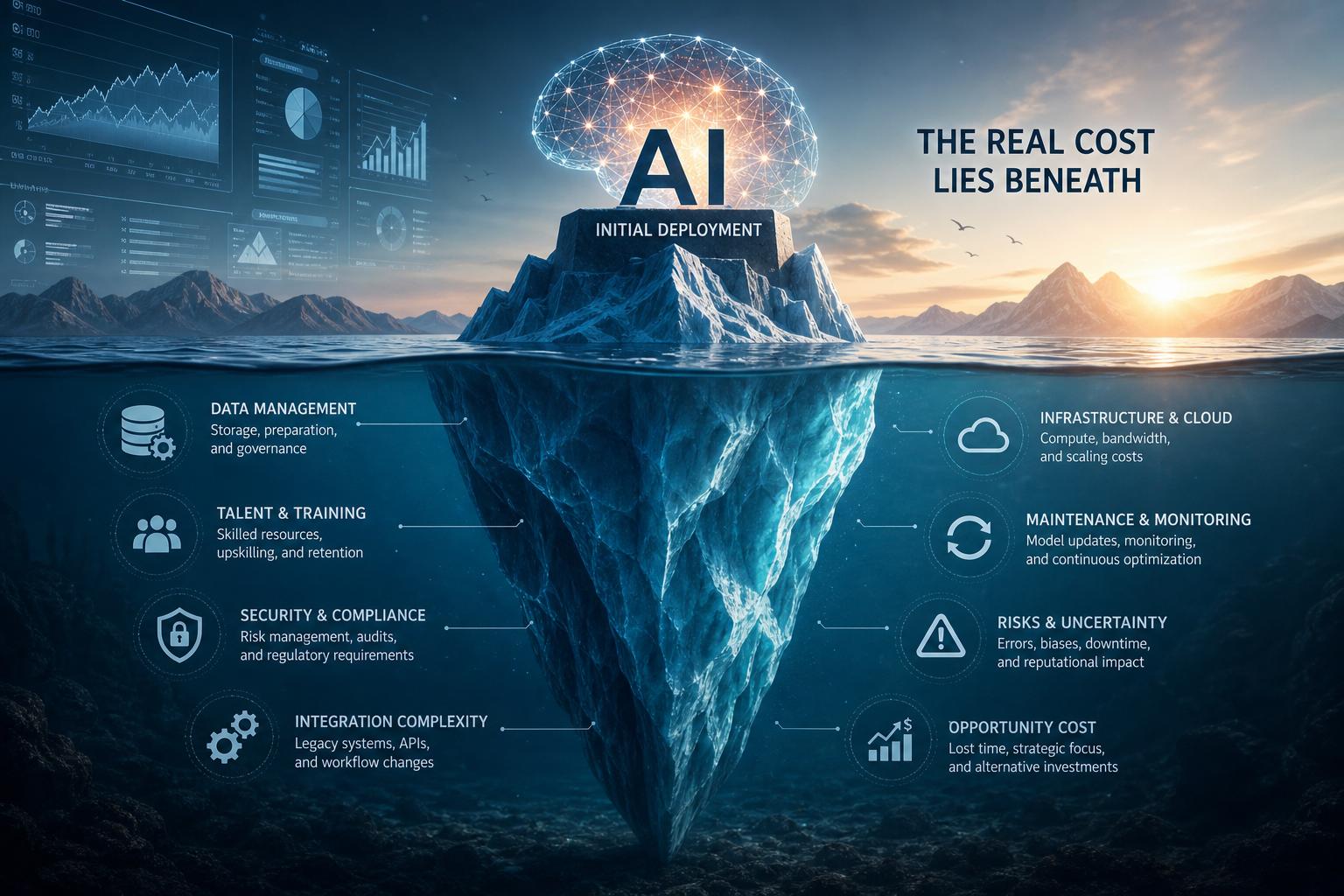
Analyzing Cost Implications Beyond Initial AI deployment
When assessing AI integration, the financial outlook must extend far beyond the initial implementation cost. Businesses often overlook ongoing expenses such as system maintenance, model retraining, data storage, and infrastructure upgrades. These recurring costs can accumulate rapidly, especially as AI models demand continuous data input and refinement to maintain accuracy and relevance. Moreover, hidden expenditures related to compliance, security, and staffing for monitoring AI outputs should be factored into budgeting decisions to prevent unexpected financial burdens.
Key elements impacting cost include:
- Scalability demands: AI systems often need expanded capacities as usage grows, affecting cloud service fees and hardware investments.
- Error management: Costs linked to handling AI-induced errors,including customer dissatisfaction and operational disruptions,require contingency planning.
- Integration complexity: The effort and resources needed for seamless incorporation with existing workflows may lead to additional development charges.
| Cost Factor | Potential Impact | Mitigation Strategy |
|---|---|---|
| Model Retraining | high recurring expense | Scheduled updates and automation |
| error Correction | Operational downtime, loss of trust | Robust validation layers, human oversight |
| Infrastructure Scaling | Increased cloud costs | Right-sizing resources, hybrid cloud use |
Identifying and Mitigating Common AI Error Sources
Understanding where AI systems falter is a crucial step in ensuring they add true value rather then false promises. frequently, errors arise from data quality issues, algorithmic biases, or misaligned objectives. data inconsistency or incompleteness can skew results, leading to faulty outcomes that might be costly or misleading. Algorithmic bias, often subtle and embedded in training datasets, can propagate unintended discrimination or misclassifications.Lastly, deploying AI without precisely defining its goals causes disparate expectations and real-world failures. An effective mitigation strategy should begin with a rigorous audit of the data pipeline,followed by fairness checks and a clear alignment of AI functionalities with business priorities.
mitigation thrives on a multifaceted approach that combines technical solutions with organizational oversight. Implementing robust validation frameworks,continuous monitoring,and user feedback loops can drastically reduce error impact.Below is a concise table illustrating common AI error sources alongside practical mitigation tactics recommended for implementation:
| Error Source | Mitigation Strategy | Expected Outcome |
|---|---|---|
| Incomplete or biased data | Data augmentation and bias audits | Improved model fairness and accuracy |
| Overfitting | Cross-validation and regularization techniques | Better generalization on new data |
| Misaligned objectives | Stakeholder alignment workshops | Clearer success metrics and expected benefits |
| Ignoring feedback | User experience monitoring and iterative updates | Adaptive and user-centered AI models |
By proactively addressing these core error sources, organizations can bridge the gap between AI potential and real-world performance, ultimately steering investment toward impactful, cost-effective deployments.
Strategic Recommendations for Balanced AI Adoption and Use
incorporating AI into business processes demands a measured approach that weighs task impact, cost, and error potential to avoid falling prey to the prevalent hype. organizations should prioritize tasks where AI can deliver clear efficiency gains or enhanced accuracy without introducing unacceptable risks. This requires detailed baseline assessments of current workflows and error rates, allowing AI benefits to be quantitatively compared against implementation expenses and possible failure modes. By focusing on concrete metrics rather than speculative promises, decision-makers can ensure investments target areas with the highest return and lowest operational disruption.
- Evaluate task suitability for AI automation by complexity and variability.
- quantify cost vs. benefit including hidden technical debt and training expenses.
- Analyze error tolerance thresholds and mitigation strategies before rollout.
- Continuously monitor performance with real-world data to recalibrate models.
| Factor | Consideration | Impact |
|---|---|---|
| Task Complexity | Low to moderate complexity preferred | Higher AI accuracy |
| Implementation Cost | Initial investment + ongoing maintenance | ROI sensitivity |
| Error Consequence | Severity of mistakes | Risk management priority |