

The Current State of Household AI Technologies and Their Capabilities
In recent years, household AI technologies have transitioned from mere novelties to functional assistants that enhance daily living. Devices such as smart speakers,automated vacuum cleaners,and bright security cameras now populate many homes,showcasing capabilities in voice recognition,environment mapping,and adaptive learning. These systems integrate seamlessly into home networks, providing users with command over lighting, temperature, and multimedia through natural language processing and predictive algorithms.
Current household AI technologies demonstrate proficiency in:
- Routine automation: Tasks like cleaning, scheduling, and reminders are handled with minimal input.
- Environmental awareness: Sensors and cameras enable context-sensitive responses to changing conditions.
- personalization: AI adapts to user preferences, learning habits to optimize comfort and convenience.
| Technology | Capability | Limitations |
|---|---|---|
| Smart Speakers | Voice Command Control | contextual Understanding |
| Robotic Vacuums | Autonomous Cleaning | Obstacle Navigation in Clutter |
| Security Cameras | Facial Recognition and Alerts | Privacy Concerns |
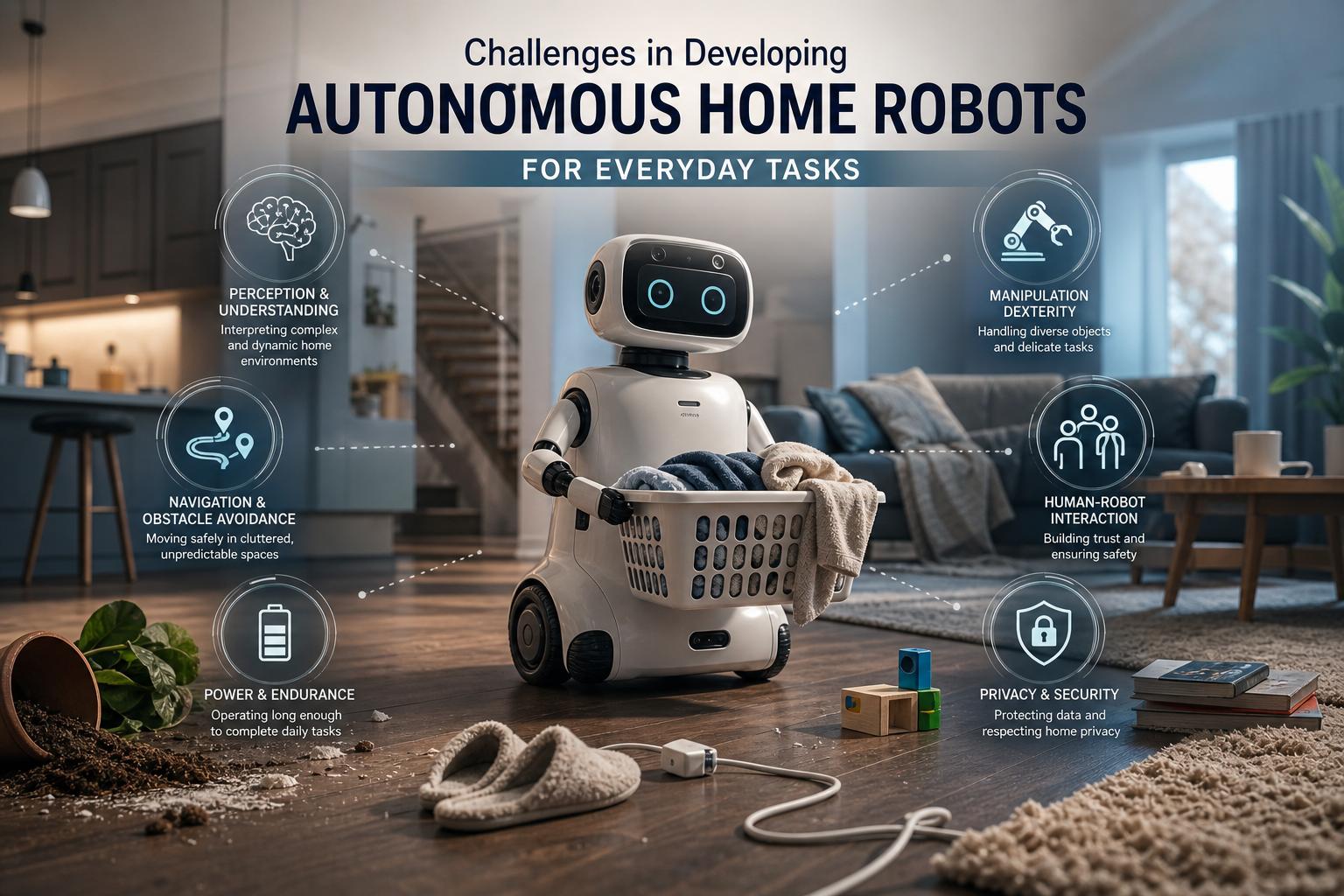
Challenges in Developing Autonomous Home Robots for Everyday Tasks
Creating autonomous home robots capable of performing everyday tasks poses a multitude of intricate challenges that extend well beyond basic mechanical design. One primary difficulty lies in achieving robust environmental perception. Unlike controlled industrial settings, home environments are dynamic and cluttered, filled with unpredictable objects and human activity. Robots must accurately interpret and adapt to varying lighting conditions,furniture arrangements,and human behaviors. This requires refined sensor integration and real-time data processing, frequently enough demanding cutting-edge advancements in computer vision and machine learning algorithms.
Moreover, decision-making in household tasks entails navigating complex social and ethical considerations. Robots must prioritize safety,privacy,and user preferences while handling delicate objects or interacting with children and pets.The need for context-aware reasoning forces developers to program adaptive behaviors that can understand nuanced instructions and multitask in unpredictable scenarios.Below is a simplified overview of key technical obstacles:
| Challenge | Description |
|---|---|
| Perception | Reliable environment mapping and object recognition |
| Mobility | Safe, efficient navigation in cluttered spaces |
| Manipulation | Delicate handling of diverse household items |
| Human Interaction | Understanding social cues and preferences |
| Privacy & Security | Protecting user data and ensuring trustworthy operations |
Ethical and Privacy Considerations in the Integration of AI at Home
As smart home technologies and AI-powered robots advance, the imperative to uphold ethical standards becomes increasingly evident. These devices often collect vast amounts of personal data to function effectively, raising critical questions about consent, data ownership, and openness. Users must be assured that their private details is handled with the highest integrity, governed by clear policies that prohibit misuse or unauthorized sharing. Equally crucial is the design of AI systems to avoid biases and ensure fair treatment of all household members, irrespective of age, gender, or background. The ethical framework surrounding domestic AI must balance innovation with responsibility, fostering trust and acceptance in everyday environments.
Privacy concerns also center around the continuous monitoring capabilities of home robots,which can unintentionally infringe on personal boundaries. key considerations include:
- Data minimization practices, ensuring only essential information is collected
- Robust encryption and secure dialog protocols to protect against cyber threats
- User control mechanisms, such as easily accessible consent settings and data deletion options
- Transparency reports detailing how data is used, stored, and shared
| Privacy Aspect | Key Challenge | Practical Solution |
|---|---|---|
| Data Collection | Unintended surveillance | Strict opt-in policies |
| Data Security | Susceptibility to hacks | End-to-end encryption |
| User Autonomy | Complex settings | Intuitive user interfaces |
Strategies for Accelerating safe and Effective Adoption of Domestic Robots
To fast-track the integration of domestic robots into everyday life, a balanced approach prioritizing safety, usability, and adaptability is essential. Developers and stakeholders must collaboratively establish robust safety protocols, ensuring that robots operate reliably without posing hazards to their human counterparts. Emphasizing user-centric design not only improves accessibility but also fosters trust in robotic systems among diverse households. Incorporating real-time feedback mechanisms and continuous learning capabilities allows domestic robots to dynamically adjust to unique environments and user preferences, enhancing both efficiency and effectiveness.
Key strategies include:
- Standardizing safety certifications to create clear benchmarks for manufacturers and reassure consumers.
- Implementing clear data privacy measures, addressing one of the major public concerns with AI in the home.
- Enhancing interoperability with existing smart home devices, creating seamless user experiences.
- Fostering public education programs to familiarize users with the capabilities and limitations of domestic robots.
| strategy | Benefit | Primary Focus |
|---|---|---|
| Safety Certifications | consumer Confidence | Risk Mitigation |
| Data privacy | Trust Building | Security |
| Interoperability | Ease of Use | System Integration |
| Public Education | User Acceptance | Awareness |