
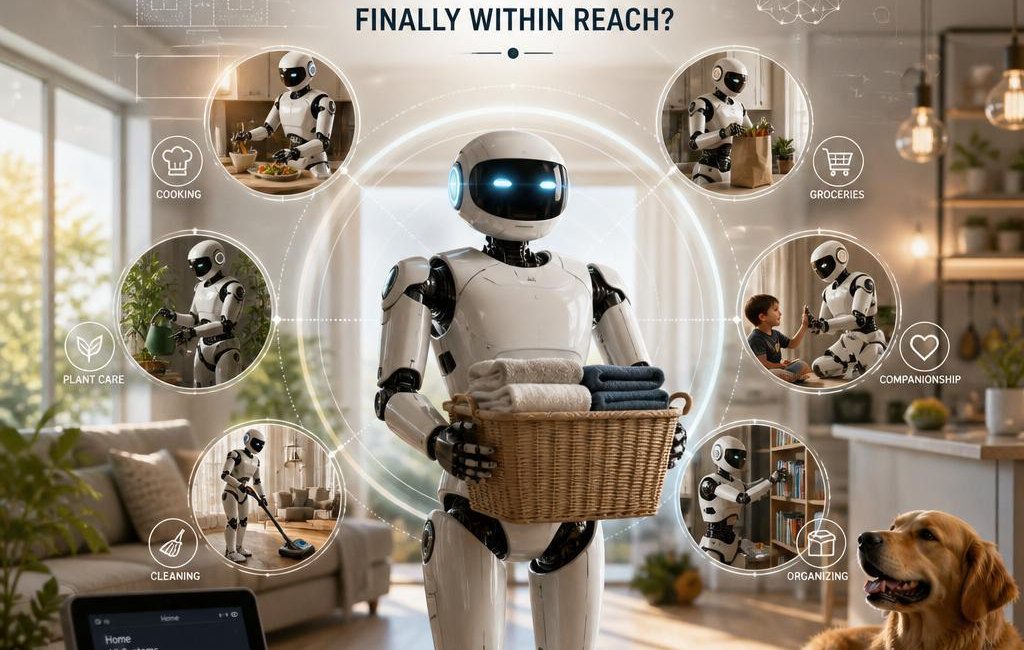
The Evolution of Home Robotics Technology and Its Implications for Daily Life
Advancements in artificial intelligence, sensor technology, and mechanical design have converged to bring us closer than ever to achieving truly versatile home robots. Unlike earlier models that coudl onyl perform single tasks-like vacuuming or lawn mowing-today’s experimental prototypes demonstrate remarkable adaptability. These robots can navigate complex household environments, recognize and manipulate a variety of objectsand learn from user preferences to optimize their performance. Key technological pillars fueling this progress include:
- Enhanced AI algorithms that enable context-aware decision-making and natural language understanding.
- Multi-modal sensors that integrate vision, touchand spatial awareness for precise interaction with surroundings.
- Modular hardware allowing robots to be customized with different tools and attachments.
As these innovations continue to mature, the implications for daily living are profound. General-purpose home robots promise to alleviate mundane chores, assist elderly or disabled family membersand even provide companionship. However, integration into everyday life raises crucial questions about privacy, securityand human-robot interaction dynamics. The following table summarizes the most impactful implications and challenges:
| Implication | Potential Benefits | Challenges |
|---|---|---|
| Automation of household chores | Saves time, increases convenience | Ensuring reliability and safety |
| Elder care support | Improves quality of life and independence | Privacy concerns, data protection |
| Human-robot collaboration | Enhances productivity and social engagement | Adapting social norms and emotional expectations |
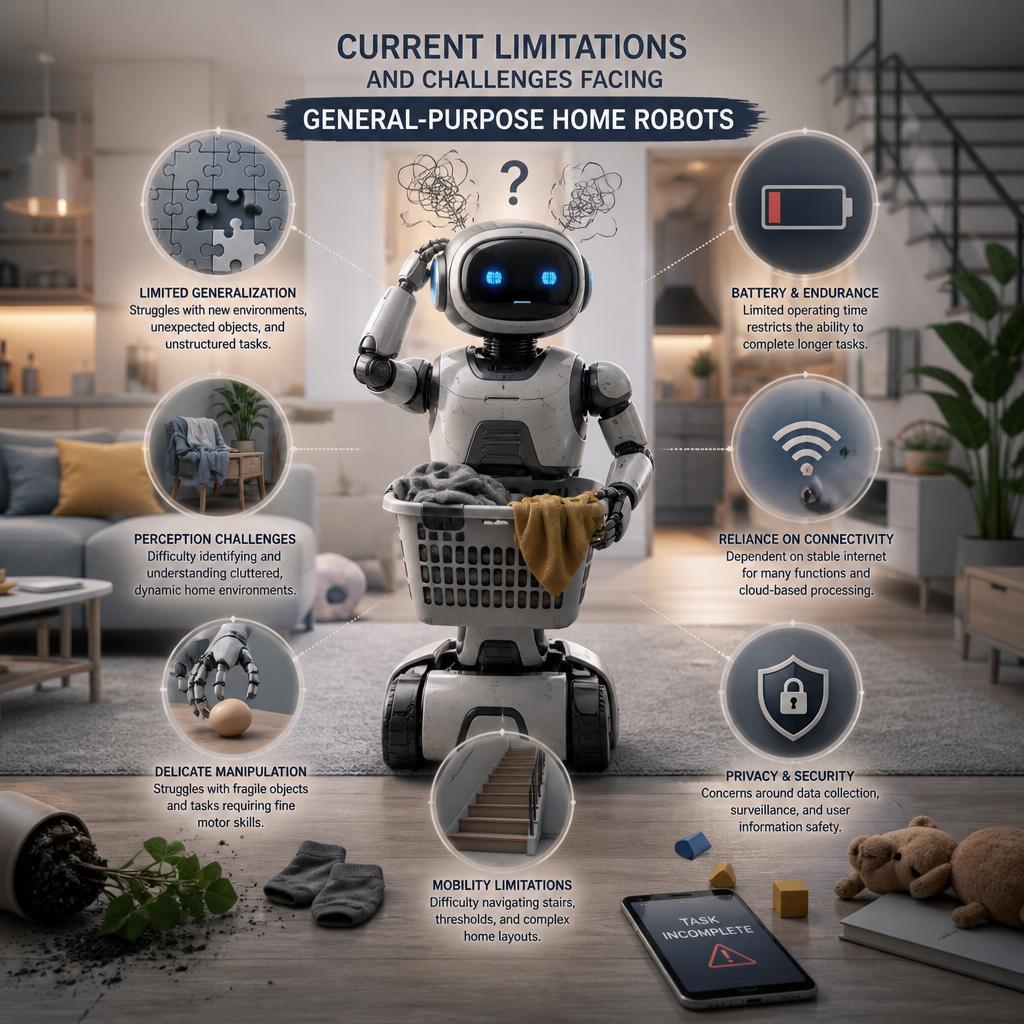
Current Limitations and Challenges Facing General-Purpose Home Robots
Despite remarkable advancements in robotics and artificial intelligence, several significant obstacles still hinder the realization of truly general-purpose home robots. One of the primary hurdles is contextual understanding and adaptability. Current robots often struggle to interpret the complexities and unpredictabilities of everyday human environments. Unlike industrial settings were conditions are controlled, homes vary widely in layout, lightingand clutter. This variability demands an advanced level of perception and cognitive versatility that most robots have yet to master.
- Sensor limitations: Many robots rely on sensors that cannot fully replicate human senses, leading to challenges in object recognition and spatial navigation.
- Processing power constraints: Real-time decision-making in dynamic environments requires massive computational resources that are difficult to miniaturize for home use.
- Energy efficiency and battery life: Mobility and prolonged operation in a household setting demand efficient power management, which remains a technical challenge.
Additionally, the integration of these robots into daily life raises ethical and operational challenges. Ensuring privacy and security when robots interact with personal spaces and sensitive data is critical. Moreover, human-robot interaction must evolve to be intuitive and trustworthy, yet achieving this balance involves complex programming of social cues and emotional intelligence. Below is a brief comparison highlighting current gaps between ideal and actual robot capabilities:
| Capability | Ideal performance | Current Status |
|---|---|---|
| environmental Adaptability | Seamless operation in any home setup | Limited to specific, controlled environments |
| Object recognition | Accurate identification of a wide range of household items | Struggles with diverse or unfamiliar objects |
| Battery Life | 8+ hours of continuous autonomous operation | Typically under 2 hours |
| Human Interaction | Natural and empathetic interaction | Mostly scripted and rigid responses |
Evaluating Practical Applications and User Adaptability in Contemporary Models
Recent advancements in robotic technology have brought us closer than ever to integrating versatile robots into daily home life. These contemporary models exhibit impressive improvements in autonomy, adaptabilityand task execution.Unlike earlier iterations, today’s devices can learn and adjust to the unique preferences and routines of individual users, enabling a personalized interaction experience. This shift from pre-programmed, single-purpose machines to adaptable, multi-functional platforms marks a pivotal moment in robotics, demonstrating potential for real-world applications beyond controlled environments.
Practical evaluations reveal several core strengths that make these robots increasingly feasible for household use:
- Dynamic navigation systems that seamlessly handle cluttered and changing environments.
- Intuitive user interfaces allowing effortless communication and command input across skill levels.
- Integrated safety protocols ensuring reliable operation around children, petsand fragile objects.
The table below synthesizes key performance factors tested in recent models, reflecting their readiness for everyday scenarios:
| Capability | Performance Rating | Real-World Impact |
|---|---|---|
| Task Flexibility | 8.5/10 | Supports diverse household chores |
| User Adaptability | 9/10 | Customizes behaviors for individual users |
| safety Compliance | 9.2/10 | Operates safely with pets and vulnerable persons |
| Environmental Navigation | 8/10 | Efficiently manages dynamic spaces |
Strategic Recommendations for Accelerating development and Consumer Adoption
To catalyze the widespread adoption of general-purpose home robots, stakeholders must prioritize an integrated approach that balances innovation with user-centric design.First, intensifying cross-industry collaboration-between robotics manufacturers, AI developersand consumer electronics companies-will ensure seamless interoperability and richer feature sets. This synergy can be complemented by government incentives and clear regulatory frameworks that reduce barriers to entry and foster trust among consumers. Moreover, emphasizing modular and upgradable hardware architectures can keep robots relevant longer, minimizing consumer hesitance related to rapid obsolescence.
Equally critical is cultivating consumer confidence through transparent communication and education initiatives. Targeted marketing campaigns that demystify robotic capabilities and clearly articulate tangible benefits-such as improved daily efficiency, eldercare assistanceand enhanced home security-can considerably increase enthusiasm and trust. The following table highlights key strategic levers and their primary impact areas, which together form the foundation for accelerating both development and adoption:
| Strategic lever | Primary Impact | Example Tactics |
|---|---|---|
| Cross-Industry Collaboration | Innovation & Compatibility | Joint R&D, Standardized APIs |
| Government Incentives | Market Entry & Trust | Tax Credits, Safety Regulations |
| Modular Design | Longevity & Flexibility | Upgradeable Components, Open Platforms |
| Consumer Education | Adoption & Confidence | Workshops, Transparent Demos |
| Targeted Marketing | Awareness & Engagement | Use-Case Storytelling, Social Proof |