
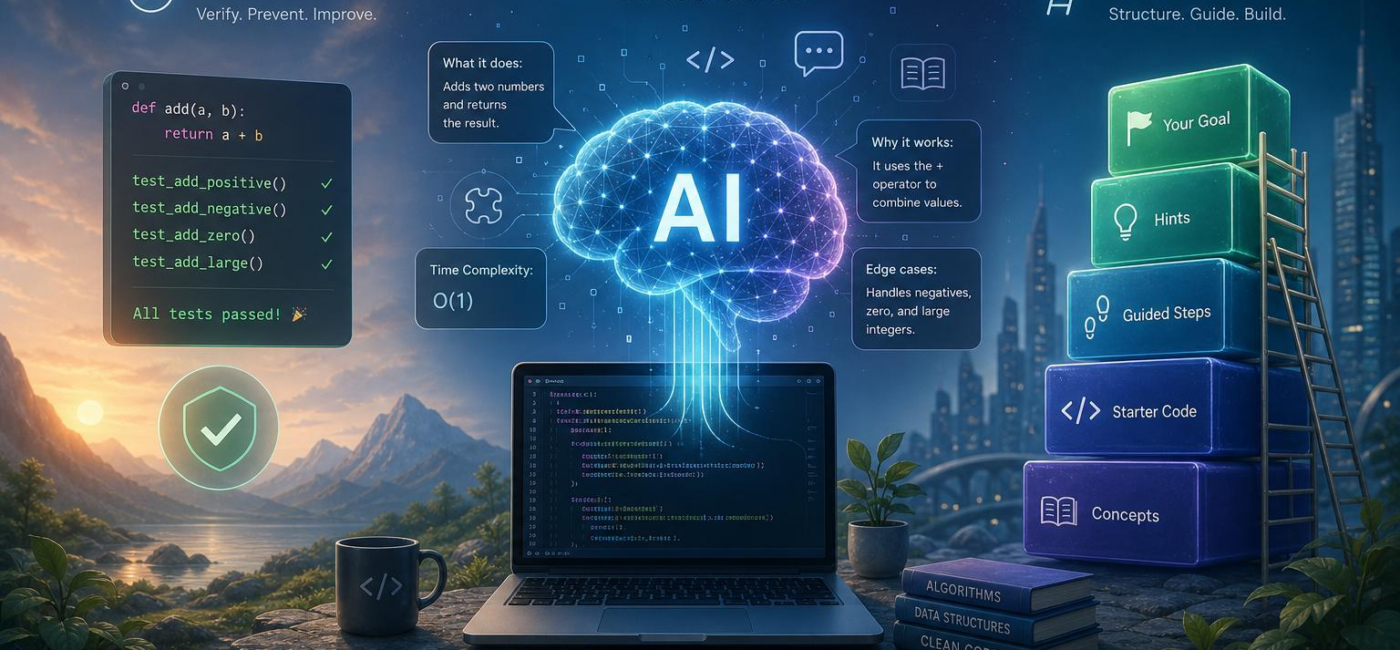
AI’s Capability to Generate Comprehensive and Reliable Code Tests
AI-driven tools excel at crafting comprehensive and reliable tests tailored to various coding scenarios.By analyzing code logic and potential edge cases, AI can generate test suites that not only validate expected behavior but also uncover hidden flaws and exceptions. This capability stems from the AI’s deep understanding of programming patterns, enabling it to produce tests that are both rigorous and context-aware. Developers benefit from automated test generation that reduces manual effort, accelerates debugging, and enhances software quality assurance.
moreover, AI-generated tests come with an array of advanced features:
- Dynamic input variation: Automatically crafted inputs to cover a wide spectrum of scenarios.
- Assertion accuracy: Precise validation statements that monitor expected outputs and side effects.
- Integration-ready scaffolding: Tests formatted for seamless inclusion in existing CI/CD pipelines.
| Test Type | Purpose | AI Advantage |
|---|---|---|
| Unit Tests | Verify individual functions | Ensures edge case coverage |
| Integration Tests | Validate component interactions | Detects interface mismatches |
| Regression Tests | Prevent code breaks post-update | Automatically adapts to code changes |
This blend of precision and context-awareness dramatically elevates the robustness of codebases and supports developers in maintaining high-quality software over time.
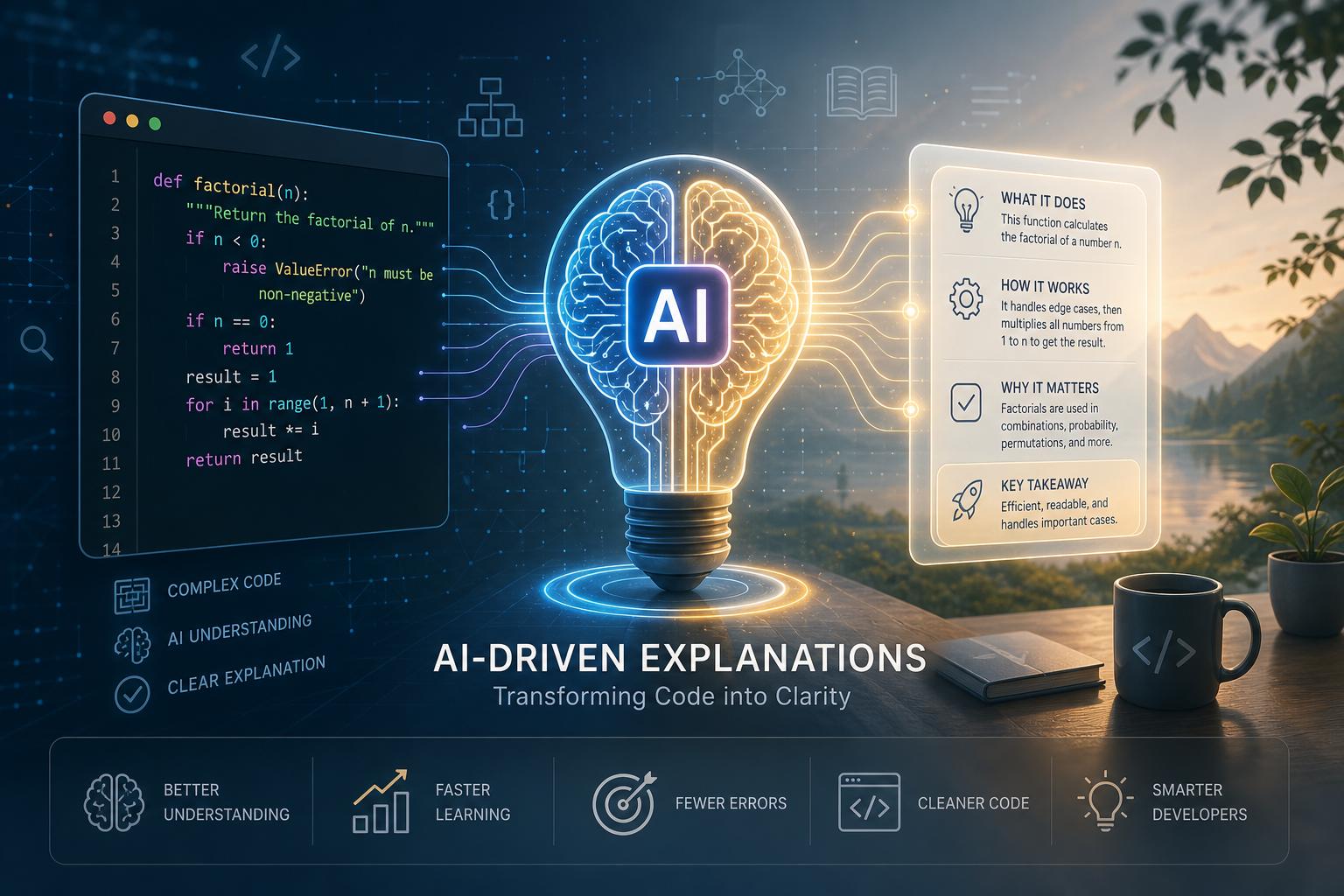
Enhancing Code Understanding Through Clear and Precise AI-Driven Explanations
Modern AI tools excel at demystifying complex code through clear, step-by-step explanations that foster deeper understanding among developers. By translating abstract algorithms and intricate logic into straightforward language, these tools empower programmers to quickly grasp functionality without becoming overwhelmed. This clarity aids not only in troubleshooting but also in learning new programming paradigms, as the AI adapts explanations to the user’s expertise level, ensuring accessibility for beginners while maintaining depth for advanced coders.
Another key advantage lies in AI’s ability to scaffold the learning process by breaking down code into manageable segments and generating targeted examples or test cases. This approach encourages active engagement, enabling developers to validate their understanding and identify gaps effectively. Below is a concise comparison showcasing how AI-driven explanations transform traditional approaches:
| Traditional Method | AI-Enhanced Clarification |
|---|---|
| Text-heavy manuals and sparse comments | Interactive, context-aware breakdowns |
| General code reviews | Personalized feedback with specific examples |
| One-size-fits-all teaching | Adaptive guidance tailored to skill level |
Utilizing AI Scaffolding Techniques to accelerate Developer Learning and Productivity
Harnessing AI’s capacity to create dynamic scaffolding within coding environments revolutionizes how developers grasp complex concepts and accelerate their workflow. By providing context-aware hints, instant code snippets, and adaptive challenges, AI scaffolding serves as an ever-present tutor that adjusts to each developer’s proficiency level. This personalized approach not only deepens understanding but also reduces cognitive overload, allowing programmers to focus on problem-solving rather than syntax memorization or debugging trial and error.
Integral to this scaffolding are AI-generated unit tests and detailed explanations that clarify the intent and functionality behind code segments. Here is a snapshot of how AI scaffolds enhance learning and productivity:
| Feature | Benefit | Example |
|---|---|---|
| auto-generated Tests | Speedy validation of code correctness | Instant feedback on edge cases |
| Explanatory Comments | Improves code readability and comprehension | Step-by-step logic breakdown |
| Incremental Challenges | Progressive skill building | Task complexity scaling with mastery |
- Enhanced Retention: Structured scaffolding promotes long-term knowledge retention through repeated, contextual practice.
- Reduced Onboarding time: New developers quickly acclimatize, supported by AI’s real-time guidance instead of lengthy manuals.
- Increased Confidence: Immediate validation and explanations foster a growth mindset and self-sufficient problem solving.
Best Practices for Integrating AI Tools into the Coding Workflow for Optimal results
Maximizing the impact of AI tools in coding involves a strategic approach that blends human insight with machine efficiency.Developers should leverage AI to automate repetitive tasks like test generation and code scaffolding, freeing mental bandwidth for more complex problem-solving. Integrating AI early in the development cycle ensures that generated tests and explanations align with project requirements from the outset, reducing debugging time later.Additionally, maintaining an active feedback loop between the developer and AI tools sharpens code quality and ensures that AI outputs are contextually relevant and precise.
Adopting AI effectively also means acknowledging its limitations while capitalizing on its strengths. for example, AI excels at creating comprehensive test cases, scaffolding project structures, and offering clear explanations for unfamiliar code segments. Here’s a quick reference table illustrating optimal AI contributions versus developer responsibilities:
| AI Strengths | Developer Focus |
|---|---|
| Generating unit and integration tests | Reviewing tests for edge cases and logical accuracy |
| Creating initial scaffolding and boilerplate code | Customizing architecture and optimizing performance |
| Providing natural language explanations of code snippets | Applying domain knowledge to validate explanations |
- Regularly update AI tool models to incorporate latest frameworks and libraries.
- ensure secure code practices to prevent AI from suggesting vulnerable or deprecated patterns.
- Use AI as a collaborative partner, not a replacement, maintaining critical thinking throughout the process.