

The Emerging Capabilities and Risks of AI Voice Cloning
Advancements in AI voice cloning have begun to blur the line between authentic human speech and synthetic reproduction. With deep learning models capable of capturing the unique tonal nuances,accents,and emotional inflections of individual voices,these technologies present *unprecedented opportunities* in entertainment,customer service,and accessibility. However, the power to recreate voices with high fidelity also raises significant ethical questions. Without explicit consent, the replication of someone’s vocal identity can lead to violations of privacy, misrepresentationand even fraud, necessitating robust control mechanisms to safeguard individuals’ rights.
Key considerations include:
- Informed Consent: Ensuring speakers fully understand and agree to how their voices will be used and replicated.
- Usage Openness: Clear disclosures when voice clones are deployed to prevent deception.
- Legal protections: Strengthening intellectual property laws to cover vocal likenesses.
- Technological Controls: Implementing digital watermarks or forensic tools to detect and label synthetic voices.
| Capability | Potential Risk | Mitigation Strategy |
|---|---|---|
| Real-time voice conversion | Impersonation in calls | Authentication protocols |
| Emotional voice synthesis | Manipulative messaging | Regulatory oversight |
| Multilingual voice cloning | Cross-border fraud | International cooperation |
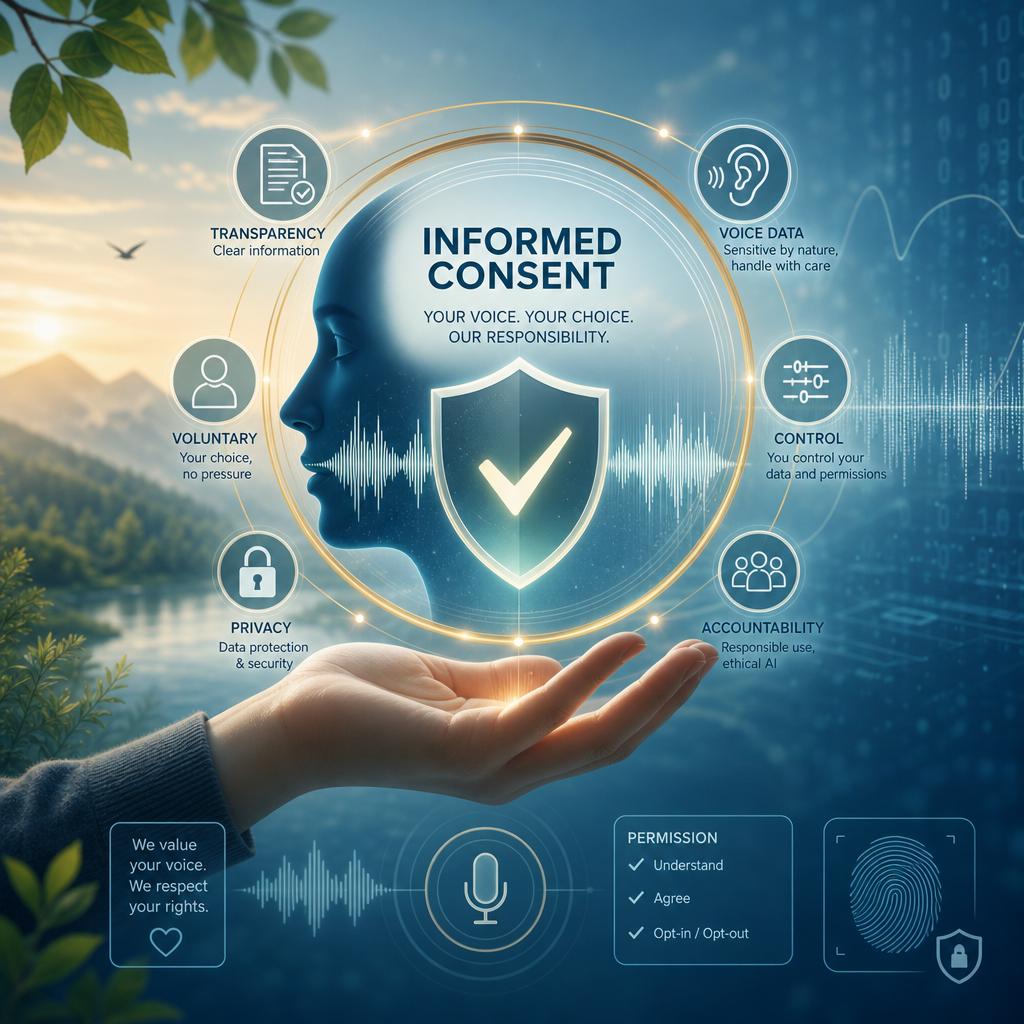
Ethical Imperatives for Securing Informed Consent in Voice Data Usage
As AI voice cloning technology advances with remarkable precision, the ethical obligation to obtain explicit and informed consent from individuals cannot be overstated. Users must fully understand not only that their voice data will be collected, but also how it will be processed, storedand perhaps replicated. consent should be a clear, ongoing agreement rather than a one-time checkbox, empowering individuals with the autonomy to withdraw permission at any stage. Ensuring transparency about possible uses-ranging from personalized services to synthetic voice creation-builds trust and respects personal agency in an era where digital identity can be effortlessly duplicated.
Institutions deploying voice data must implement stringent controls around consent management. This entails robust systems for auditing access, providing real-time notifications regarding data usageand safeguarding against unauthorized duplication or misuse. The table below outlines core ethical imperatives that form the foundation of responsible voice data practices:
| ethical Imperative | Key Considerations |
|---|---|
| Transparency | clear communication about data collection and purpose |
| Voluntary Consent | Consent obtained without coercion or obfuscation |
| Data Minimization | Collecting only necessary voice data for specified uses |
| Revocation Rights | Empowering users to revoke consent anytime |
| Security Controls | Implementing protections against unauthorized access |
Implementing Robust Controls to Prevent Misuse of Cloned Voices
Ensuring stringent safeguards in the deployment of AI-generated voices is paramount to curbing unauthorized usage. Implementing multifaceted control mechanisms empowers organizations and individuals to protect voice identities from exploitation. Key strategies include:
- Authentication Protocols: Employ biometric verification and multi-factor authentication to ensure voice data is accessed and modified only by authorized personnel.
- Watermarking Technologies: Embed inaudible digital signatures within cloned voice outputs to trace and verify origin, deterring illicit dissemination.
- Usage monitoring: Continuously track voice cloning activities through automated logs and anomaly detection systems to quickly identify misuse.
Robust governance frameworks must accompany these tools, integrating clear policies and responsibilities. The balance between innovation and ethical constraints can be visualized:
| Control Element | Purpose | Impact on Misuse Prevention |
|---|---|---|
| Consent Management Systems | Ensure explicit permissions are obtained | Reduces unauthorized cloning and replication |
| Access Restrictions | Limit who can generate or modify voices | Minimizes risk of data breaches |
| Legal & Compliance Audits | Periodic review of adherence to policies | Maintains accountability and transparency |
Policy Frameworks and Technological Solutions for Responsible AI Voice cloning
As AI voice cloning technology advances at an unprecedented rate, establishing robust policy frameworks is crucial to ensure ethical deployment and safeguard individual rights. Governments and regulatory bodies worldwide are increasingly focusing on consent-driven models where the explicit approval of voice owners is mandatory before any cloning activity can occur. Such frameworks typically incorporate stringent requirements for transparency, accountabilityand traceability to prevent malicious use. Moreover, integrating standardized audit trails helps track the origination and usage of voice data, fostering trust and compliance across industries.
Simultaneously, technological solutions are evolving to act as key enablers for responsible AI voice cloning. advanced digital watermarking and forensic voice analysis tools empower platforms to verify authenticity and detect synthetic content with high accuracy. Below is a summary of critical controls being implemented to balance innovation with protection:
| Control Mechanism | Purpose | Impact |
|---|---|---|
| Explicit Consent Protocols | Ensures voice owner authorization | Reduces unauthorized cloning cases |
| watermarking Techniques | Embed identifiable markers into synthetic outputs | Enhances traceability and detection |
| Usage Monitoring Systems | Track and report cloning activities | Improves regulatory compliance |
- Multi-layered securing: Combining legal and tech safeguards to create resilient defense mechanisms.
- Collaborative governance: Engaging stakeholders-developers, usersand policymakers-in open discourse to shape pragmatic policies.
- Continuous updating: Adapting policies and tools in alignment with AI capability growth and emerging risks.