

AI Enhancing Efficiency Through Task Automation
Artificial Intelligence is revolutionizing office workflows by seamlessly taking over repetitive tasks that once consumed considerable time and human effort. From scheduling meetings to managing emails and preparing standard reports, AI-powered tools can execute these duties with unmatched speed and precision. This transformation not only reduces the burden on employees but also significantly cuts down human errors, ensuring consistent output quality. Key benefits include:
- Automated data entry and validation
- Real-time document processing
- Smart reminders and task prioritization
- Efficient customer support through AI chatbots
To illustrate the evolving roles, consider the table below outlining conventional tasks alongside their AI-powered enhancements and the resulting new focus areas for employees:
| Traditional Task | AI Automation | Employee Focus |
|---|---|---|
| Manual Scheduling | AI-powered Calendar Coordination | Strategic Planning & Relationship Building |
| Data Entry | Automated Data Capture & Validation | Data Analysis & Insight Generation |
| Email Sorting | AI-driven Prioritization & Response Suggestions | Creative Problem Solving & Customer Interaction |
By offloading routine responsibilities to AIorganizations empower employees to engage in higher-value activities, fostering innovation and professional growth. This shift not only elevates individual roles but also drives overall business agility in an increasingly competitive landscape.
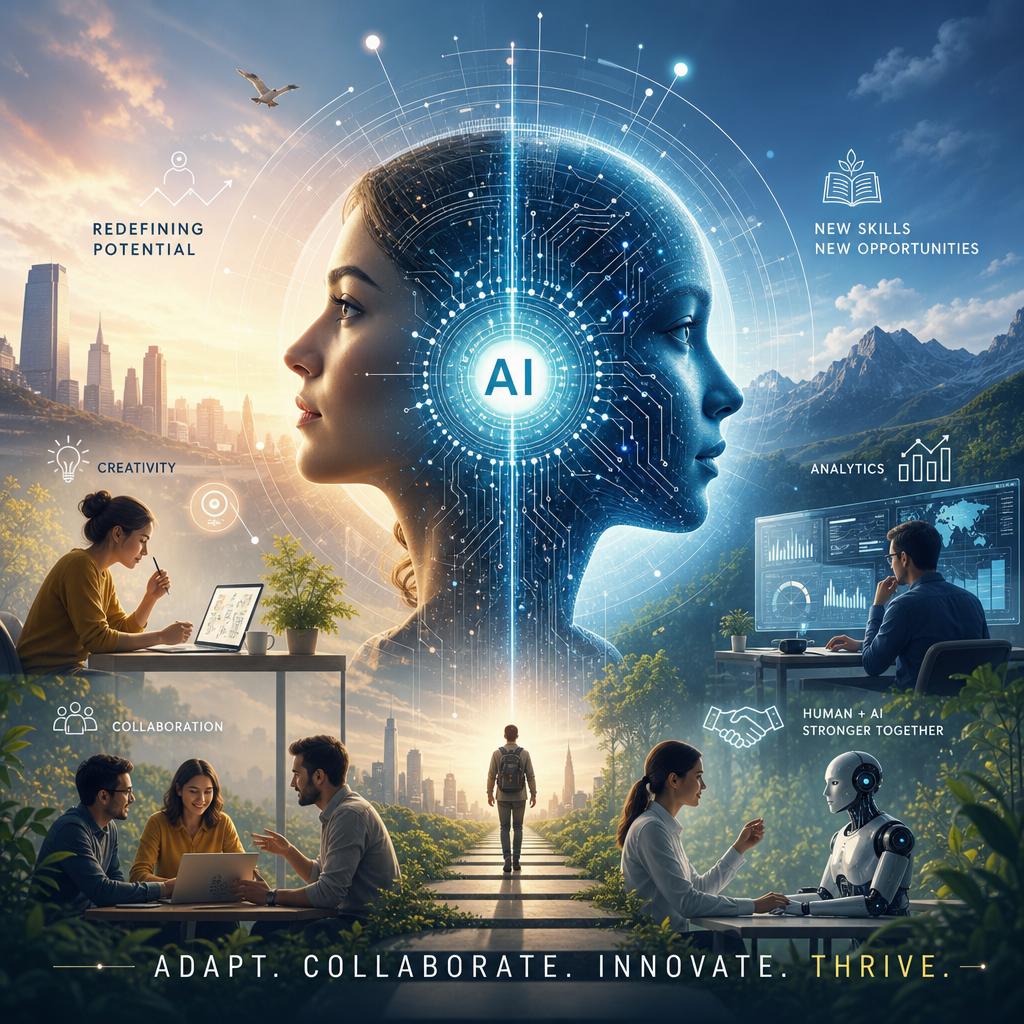
Redefining Employee Roles in the Age of Artificial Intelligence
As artificial intelligence continues to permeate office environments, the conventional boundaries of job descriptions are being redrawn. Organizations are increasingly automating routine and repetitive tasks such as data entry, appointment schedulingand report generation.This shift allows employees to repurpose their skill sets toward more strategic and creative endeavors, enhancing overall productivity and job satisfaction. Key benefits of this evolution include:
- Reduction in time spent on monotonous tasks
- Increased focus on critical thinking and problem-solving
- Opportunities for continuous learning and upskilling
- Improved collaboration through AI-driven insights
The transformation also necessitates a re-evaluation of performance metrics and role expectations. Rather than measuring success by task completion alone, businesses are prioritizing adaptability, innovationand emotional intelligence-qualities that AI cannot replicate. The table below illustrates the contrast between traditional and AI-enhanced roles:
| Aspect | Traditional Role | AI-Enhanced Role |
|---|---|---|
| Primary Focus | Task execution | strategic decision-making |
| Skill Emphasis | Manual expertise | Analytical & creative thinking |
| Collaboration | Individual tasks | Cross-functional teamwork |
| Performance Metrics | Quantity and speed | Quality and impact |
Implementing AI Solutions for seamless Office Integration
Integrating AI into office environments requires a nuanced approach that aligns technology with existing workflows and human expertise. Prosperous AI deployment hinges on understanding the unique needs of different departments, ensuring that automation complements rather than disrupts. Key strategies include:
- Customizing AI tools to fit specific operational tasks, from scheduling to data analysis, ensuring a natural extension of employees’ capabilities.
- Establishing clear dialog channels between AI systems and staff to foster trust and transparency in decision-making processes.
- Continuous training and support for employees to adapt smoothly to AI-enhanced roles, promoting an innovative and agile culture.
To illustrate the practical impact of AI integration, consider this comparison of task efficiency before and after implementation:
| Task | Time Before AI | Time After AI | Efficiency Gain |
|---|---|---|---|
| Data Entry | 3 hours/day | 30 minutes/day | 83% |
| Meeting Scheduling | 1 hour/day | 10 minutes/day | 83% |
| report Generation | 4 hours/day | 1 hour/day | 75% |
Such measurable improvements demonstrate how AI not only automates routine work but also elevates employee roles by freeing them to focus on higher-value, strategic tasks.
strategies for Balancing Automation with Human Expertise
To harness the full potential of AI in office environments, it is essential to develop frameworks where automation complements rather than replaces human insight. Businesses should focus on defining clear boundaries for automation, allowing AI to handle repetitive, data-intensive processes while reserving human expertise for judgment calls, strategyand nuanced decision-making. Creating cross-functional teams that blend AI specialists with domain experts encourages collaboration and continuous learning, ensuring that technology adapts to workplace realities rather than forcing human workflows to conform to rigid automation rules.
In practical submissionorganizations can implement strategies such as:
- Task segmentation: Separating workflows into segments best suited for AI versus human effort, optimizing efficiency without sacrificing quality.
- Continuous feedback loops: Establishing mechanisms for employees to provide input on automated tools, promoting iterative advancement.
- Skill enhancement programs: Investing in upskilling initiatives that evolve employee expertise alongside AI capabilities.
| Focus Area | Automation Role | Human Role |
|---|---|---|
| Data Processing | Extract, analyse, report | Validate, contextualize |
| Customer Interaction | Routine queries, data retrieval | Complex problem solving, empathy-driven communication |
| Decision Support | Generate options, predict outcomes | Assess risk, align with business values |