

AI as a Valuable Tool in Enhancing Peer Review efficiency
Integrating AI into peer review workflows substantially accelerates the evaluation process by automating initial checks and helping reviewers focus on more nuanced issues. AI tools can rapidly scan for plagiarism, data inconsistencies, citation errors, and even flag potential ethical concerns in submissions. These capabilities not only reduce the administrative burden on human reviewers but also help maintain consistent standards across diverse manuscripts. By handling routine tasks, AI frees up experts to dedicate more time and cognitive resources to the critical analysis of the content’s originality, scientific rigor, and relevance.
- Speed: AI shortens the turnaround time by pre-screening submissions.
- Consistency: Automated checks ensure uniform application of baseline criteria.
- Focus: Allows human reviewers to concentrate on conceptual and interpretative evaluation.
Though, despite its undeniable utility, AI cannot fully replicate the subtlety of human judgment essential for peer review. Contextual understanding, ethical considerationsand the ability to assess innovative contributions require human discernment that algorithms simply do not possess. Trust in AI must be balanced wiht critical oversight, ensuring that final decisions remain the responsibility of learned experts. this collaboration underscores the ideal future of peer review, where AI acts as an augmentative tool rather than a replacement, enhancing the overall quality and integrity of scholarly dialog.
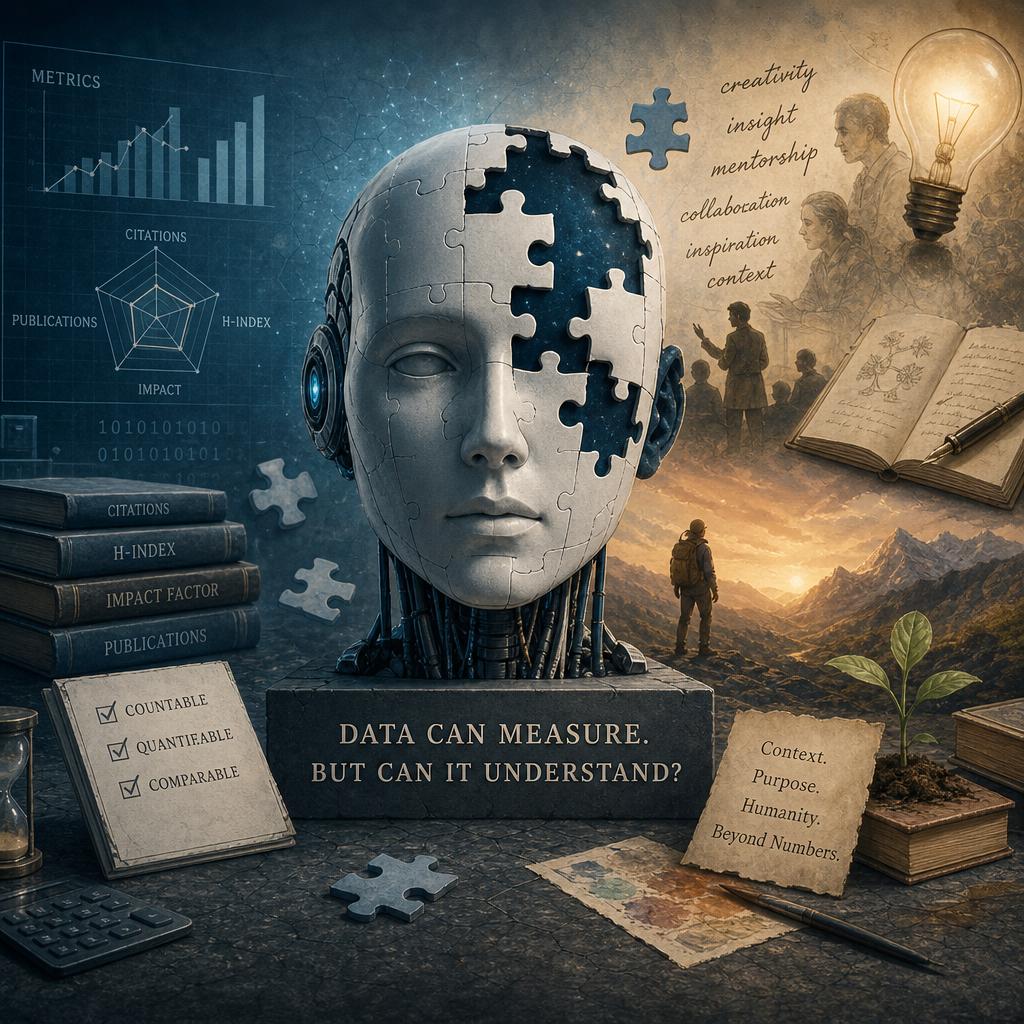
Limitations of AI in Assessing Nuanced Academic Contributions
While artificial intelligence offers powerful tools to streamline the peer review process, it fundamentally lacks the capacity to grasp the subtleties that define truly groundbreaking academic contributions. Nuanced arguments,interdisciplinary linkages,and the originality of hypotheses frequently enough require a depth of understanding and contextual awareness that AI algorithms cannot replicate. These systems predominantly rely on pattern recognition and previously available data, restricting their ability to assess innovative ideas or the broader implications of a manuscript within its scholarly ecosystem.
Furthermore, several intrinsic limitations curtail AI’s effectiveness in delivering thorough evaluations:
- Contextual Sensitivity: AI struggles to interpret the meaning of emerging theories contrasting with traditional paradigms.
- Ethical and Cultural Nuances: Evaluations often depend on cultural values and ethical considerations beyond AI’s interpretive scope.
- Subjective Quality Metrics: Elegant narrative techniques and rhetorical styles elude quantitative appraisal.
- Dynamic knowledge Landscape: AI’s reliance on training data may miss recent breakthroughs or evolving standards.
| Capability | AI Strength | Human Peer Review Advantage |
|---|---|---|
| Data Processing | Excellent at handling large datasets rapidly | Contextual understanding of data uniqueness |
| Bias Detection | Identifies some statistical biases | Detects nuanced intellectual or cultural biases |
| Interpretative Judgment | Limited to algorithmic frameworks | Rich appreciation of theoretical innovation |
Maintaining Human Expertise to Uphold Ethical Standards in Peer Review
While artificial intelligence streamlines many aspects of the peer review process, the irreplaceable value of human expertise lies in nuanced ethical discernment. Human reviewers bring contextual awareness, emotional intelligence, and the ability to detect subtle biases or conflicts of interest that algorithms might overlook. This expertise is critical in maintaining the integrity of academic publishing, ensuring that decisions respect diverse perspectives and adhere to established ethical standards. AI can highlight potential issues, but only a knowledgeable human can interpret those signals within the complex landscape of research ethics.
To reinforce these ethical foundations, journals and publishers must emphasize continuous training and mentorship of reviewers in ethical best practices. Key components include:
- Workshops on recognizing bias and conflicts of interest
- Guidelines for confidentiality and responsible feedback
- Periodic ethical audits of peer review outcomes
Such measures cultivate a vigilant, well-informed community of reviewers who leverage AI as a supportive tool rather than a substitute, thus safeguarding the credibility and fairness of scholarly evaluation.
| ethical Aspect | Human Role | AI Role |
|---|---|---|
| Bias Detection | Contextual judgment and mitigation | Highlight potential patterns |
| Conflict of Interest | Recognition and disclosure enforcement | Identify declared conflicts |
| Confidentiality | Uphold and interpret nuanced boundaries | Monitor data security protocols |
integrating AI and Human Judgment for a Balanced Review Process
The evolving landscape of peer review has been markedly enhanced by artificial intelligence, which offers unparalleled efficiency and data-driven insights. AI excels at highlighting inconsistencies, flagging potential ethical issues, and swiftly analyzing vast arrays of data-tasks that might or else be exhaustive or prone to human error. However,these intelligent tools operate best as complementary assets rather than replacements,ensuring that the nuanced understanding of context and subtlety inherent to human evaluators remains central to the process.
To achieve a truly balanced review system, the integration of AI should focus on enhancing, not overshadowing, human discernment. Consider the following key pillars in refining such a collaborative approach:
- Contextual Interpretation: Humans decipher cultural, ethicaland disciplinary subtleties where AI may lack judgment.
- Ethical Oversight: Reviewers ensure that AI recommendations align with evolving ethical standards and community values.
- Adaptive Decision-making: Editors synthesize AI-generated data and personal expertise for holistic assessments.
| role | Primary Contribution | AI Support |
|---|---|---|
| Human Reviewer | expert judgment & ethical considerations | Context synthesis & nuanced analysis |
| AI System | Data processing & anomaly detection | Speed & consistency in initial evaluation |
| Editor | Final decision & integration of insights | Overview & bias mitigation |