
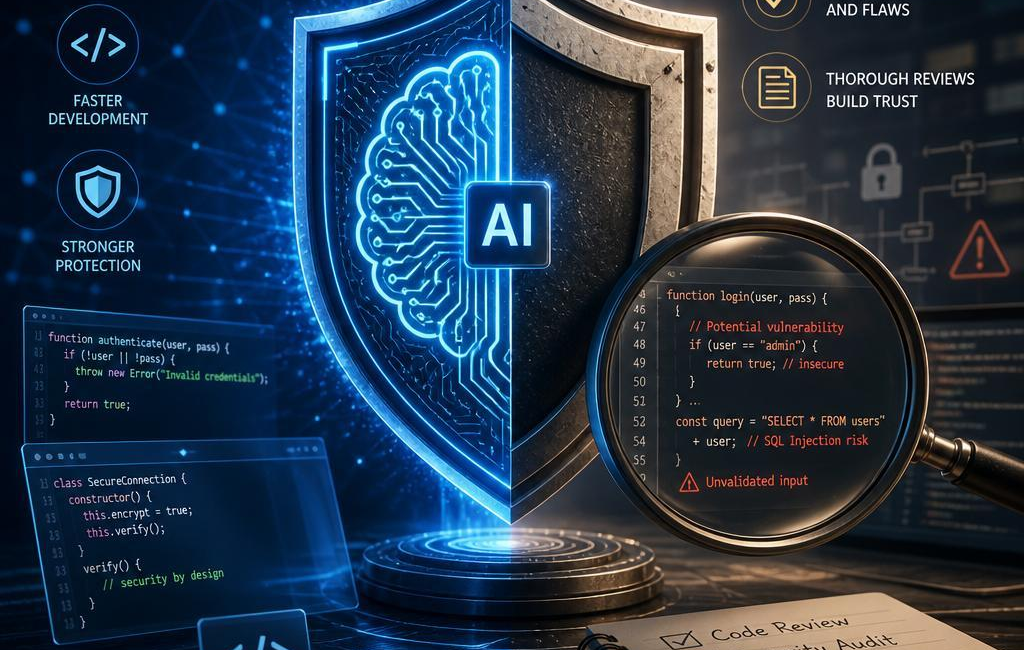
AI Integration in Security Coding enhancing Threat Detection and Response
Artificial intelligence has revolutionized teh landscape of security coding by enabling systems to identify and neutralize threats with unprecedented speed and accuracy. Leveraging advanced machine learning algorithms, AI can analyze vast datasets in real time, spotting anomalies that traditional methods might overlook. This capability enhances threat detection through pattern recognition, behavioral analysisand predictive modeling, significantly reducing the window of exposure to cyberattacks. Moreover, AI-driven automation accelerates response actions, allowing systems to isolate threats and mitigate damage autonomously, which is critical in minimizing the impact of refined breaches.
Despite these powerful benefits,the integration of AI into security coding mandates thorough and ongoing scrutiny. It is indeed essential to conduct regular reviews to ensure that AI models are free from biases, vulnerabilities, and errors that could be exploited by adversaries. Effective oversight includes validating data inputs, monitoring AI decision-making processesand updating algorithms to adapt to evolving threats. The following table illustrates a simplified comparison of threat detection capabilities with and without AI integration, emphasizing the importance of continuous review to maintain an optimal security posture:
| capability | Without AI | With AI |
|---|---|---|
| Detection Speed | Minutes to Hours | Seconds to Minutes |
| Accuracy | Moderate | High |
| Adaptability | Low | dynamic, Learns Continuously |

Balancing Automation and Human oversight to Mitigate Risks in AI-Driven Security
Integrating AI into security coding transforms protective measures with unparalleled speed and adaptability. However, solely relying on automation can introduce vulnerabilities, as AI systems may misinterpret data anomalies or fail to anticipate human ingenuity in cyberattacks. Effective risk mitigation demands a strategic blend of automated processes and vigilant human oversight. This synergy ensures that AI-driven defenses not only react swiftly but are also continuously evaluated and recalibrated against emerging threats. Security teams must prioritize ongoing review cycles where algorithmic decisions are audited, anomalies investigatedand ethical implications considered to prevent unintended consequences.
- Automated tools excel in processing vast datasets and identifying patterns imperceptible to humans.
- human analysts provide contextual understanding and ethical judgment to validate AI recommendations.
- Collaboration frameworks foster knowledge sharing between AI systems and cybersecurity professionals, enhancing adaptability.
| Aspect | Role of Automation | Role of Human Oversight |
|---|---|---|
| Threat Detection | rapid scanning of network anomalies | Verification of false positives/negatives |
| Incident Response | Initial containment protocols | Strategic decision-making and escalation |
| Policy Compliance | Monitoring for standard adherence | Ethical review and regulatory interpretation |
Critical Review Practices for Validating AI-Generated Security Code
Ensuring the integrity and security of AI-generated code requires a meticulous approach that goes beyond traditional code reviews. First and foremost, reviewers must scrutinize the logic and behavior patterns embedded in the output by AI models, as these may inadvertently introduce subtle vulnerabilities. In-depth testing protocols-such as fuzz testing, static and dynamic code analysisand manual walkthroughs-are critical in uncovering hidden loopholes or malicious payloads that automated tools might miss. An effective validation process also involves cross-referencing generated code against security best practices and compliance standards to guarantee adherence to organizational policies.
- Contextual Security Evaluation: Assess how AI-generated snippets integrate with existing architectures and data flows to avoid logical security gaps.
- Human Oversight and Expertise: Never underestimate the need for skilled security engineers to interpret, validateand re-engineer AI-produced code where necessary.
- Continuous Learning Loops: Incorporate feedback mechanisms to update AI models based on discovered flaws or exploits, enhancing future output safety.
| Practice | Purpose | Impact |
|---|---|---|
| Static Code Analysis | Detect potential vulnerabilities without running code | Early identification of common security flaws |
| Dynamic Testing | Monitor code behavior during execution | Detect runtime anomalies and exploits |
| Manual Code Review | Apply expert judgment on nuance and context | Reduce false positives and enhance trustworthiness |
Strategic Recommendations for Leveraging AI While Ensuring Robust Security Audits
Integrating artificial intelligence into security coding processes offers remarkable efficiency and insight, yet it introduces complexities that demand rigorous oversight. Leveraging AI effectively requires a dual-focus approach: capitalize on AI’s ability to detect patterns and anomalies in vast datasets, while concurrently instituting comprehensive review mechanisms that mitigate risks of algorithmic bias, false positivesor overlooked vulnerabilities. Security teams must employ advanced audit frameworks to continuously monitor AI outputs, ensuring that automated decisions align with organizational security policies and compliance standards.
Key strategic actions include:
- implement layered validation: Combine AI-driven alerts with human expert analysis to verify findings and reduce error rates.
- Establish adaptive audit trails: Maintain detailed,tamper-proof logs of AI decisions to facilitate clarity and forensic investigation.
- Ensure model explainability: Use interpretable AI models that allow auditors to understand how conclusions are reached.
- Regularly update AI systems: incorporate feedback loops from audit results to refine AI accuracy and responsiveness over time.
| Aspect | AI Benefit | Audit Consideration |
|---|---|---|
| Threat Detection | Scans large volumes swiftly | Validate alert accuracy |
| Behavior Analysis | Identifies anomalies | Review false positive rates |
| Response Automation | Accelerates mitigation | Ensure policy compliance |