

The Evolution of Romance Scams in the Age of Artificial Intelligence
Artificial Intelligence (AI) has transformed many aspects of our digital lives, and sadly, it has also become a powerful tool for romance scammers. These perpetrators use AI to create hyper-realistic profiles, employing advanced algorithms to generate convincing images and fabricate personal stories that appeal to victims on a deeply emotional level. By leveraging natural language processing,scammers can craft personalized messages that adapt in real-time,making interactions appear genuine and spontaneous. Such sophisticated tactics make it increasingly difficult for individuals to discern between authentic connections and deceptive schemes.
Key techniques employed by AI-driven romance scams include:
- Deepfake Technology: Creating photo-realistic and video content that impersonates real people.
- chatbots with Emotional Intelligence: Simulating human conversations with empathy to build trust rapidly.
- Data Mining: Gathering extensive personal data from social media to tailor communication.
| AI Feature | Scammer’s advantage | Victim Impact |
|---|---|---|
| Deepfake imagery | Authentic-looking fake personas | Increased trust, emotional attachment |
| Adaptive messaging | Real-time engagement with victims | Prolonged interaction, financial exploitation |
| Social profiling | highly targeted approaches | Greater personalization, harder detection |
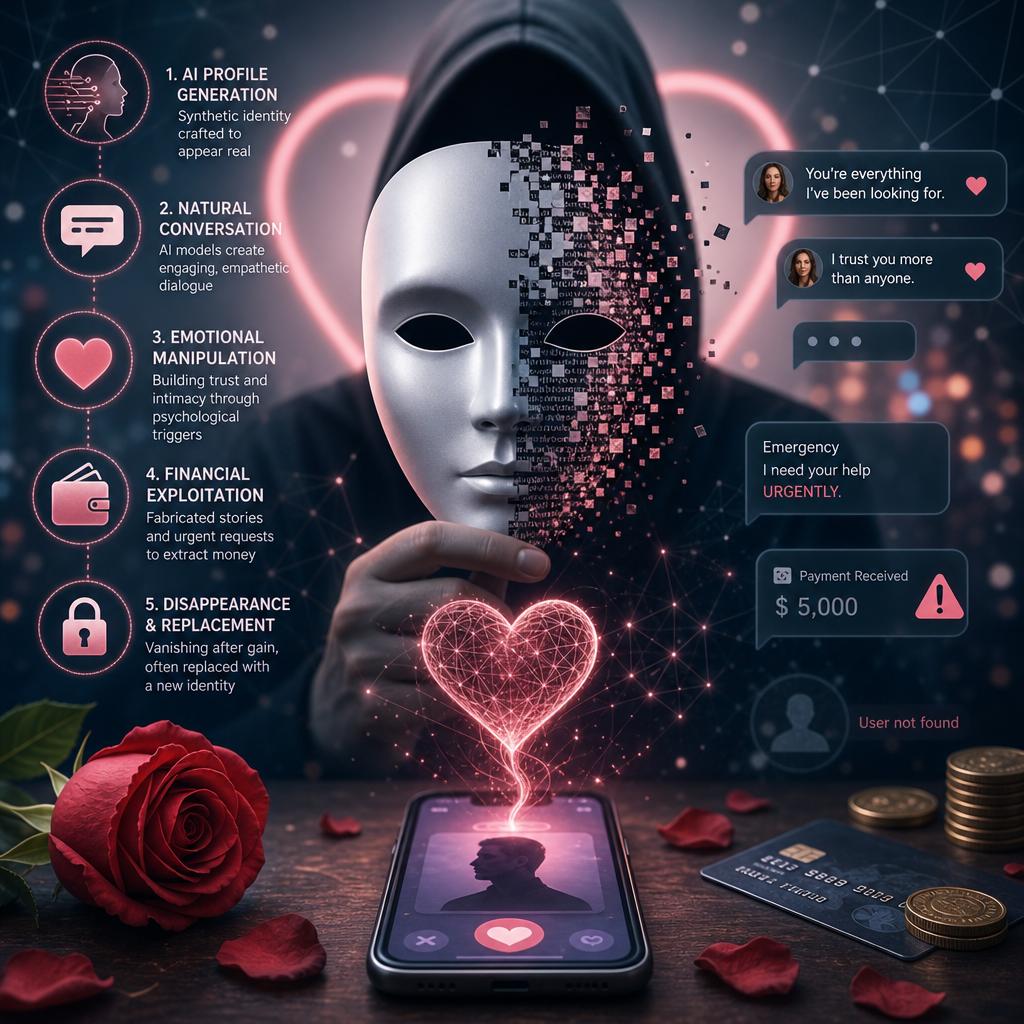
Mechanisms of AI-Driven Deception in Romantic Fraud
Artificial intelligence has revolutionized the methods scammers use to fabricate emotional connections, enabling them to execute highly sophisticated and personalized romantic frauds. By leveraging natural language processing and machine learning algorithms,perpetrators can generate convincing messages tailored to their victims’ language style and emotional triggers. This level of customization makes the deception both subtle and compelling, causing victims to lower their guard. Furthermore, AI-driven chatbots simulate real-time conversations with remarkable fluidity, fostering a false sense of intimacy and trust without the need for continual human input.
Beyond textual manipulation, AI tools facilitate the creation and use of deepfake images and videos that drastically enhance the authenticity of fake profiles. These are often accompanied by strategically curated social media content designed to reinforce a scammer’s fabricated persona. The following list highlights critical mechanisms exploited in AI-driven romantic fraud:
- Automated persona generation: Crafting believable identities using AI to stitch together photos, backgroundsand personal stories.
- Emotion analytics: Detecting and responding to emotional cues using sentiment analysis to maintain victim engagement.
- Adaptive scripting: Evolving conversation flows based on victim reactions, ensuring the dialog remains convincing.
| AI Mechanism | Function | Impact on Victim |
|---|---|---|
| Chatbot Simulation | Generates real-time messages | Enhances responsiveness, fostering trust |
| Deepfake Media | Creates realistic photos/videos | Builds visual credibility |
| Sentiment Analysis | Monitors emotional patterns | Personalizes engagement strategies |
Psychological Tactics Enhanced by Technology in Scammer Strategies
Scammers have substantially sharpened their psychological tactics by harnessing cutting-edge technologies like AI, revolutionizing the way they manipulate emotions and trust. AI-powered chatbots and deepfake technology allow fraudsters to maintain prolonged and personalized interactions, simulating empathy and understanding with unsettling precision. This creates a powerful illusion of intimacy, making victims more susceptible to emotional manipulation. The integration of machine learning enables these scammers to adapt their strategies in real-time, analyzing victims’ responses and tailoring conversations to increase emotional dependency and urgency.
Moreover, technology-enhanced persuasion techniques use social proof and scarcity principles through fabricated evidence such as AI-generated photos, voice messagesand even entire online personas. Below is a breakdown of key AI-driven psychological tactics employed in modern romance scams:
- Emotion Simulation: AI chatbots mimic affectionate language and timely responses.
- Trust Reinforcement: AI creates consistent and believable personas with fabricated histories.
- Urgency and Scarcity: Manipulating victims to act quickly by faking crises or limited opportunities.
- Confirmation Bias Exploitation: Customizing messages that confirm the victim’s desires or beliefs.
| Tactic | technological Enhancement | impact on Victim |
|---|---|---|
| Personalization | AI-driven message tailoring | Heightened emotional connection |
| Deepfake Media | Realistic fake photos, voice notes | Increased credibility and trust |
| Chatbots | 24/7 interaction without fatigue | Prolonged engagement and dependency |
| Social Engineering | Data mining to simulate life details | Enhanced believability and manipulation |
Effective Countermeasures and Best Practices to Combat AI-Enabled Romance Scams
Mitigating the risks posed by AI-driven romance scams demands a multi-layered strategy that blends technology, awareness, and vigilance. central to countermeasures is the deployment of advanced AI-based detection tools that analyze communication patterns and flag suspicious behaviors, such as inconsistencies in language use or unrealistic emotional responses. Equally critical is empowering users through continuous education: recognizing red flags like rushed intimacy, evasive behavior about personal detailsor sudden financial requests can substantially reduce victimization. Financial institutions and social platforms must collaborate by integrating real-time fraud detection algorithms, making transactional anomalies easier to catch before notable harm occurs.
Adopting best practices for online safety involves a practical checklist for users and organizations alike. Users should:
- Verify identities through video calls or multiple platforms
- Avoid sharing personal or financial information early in relationships
- Use multi-factor authentication to secure accounts
- Report suspicious profiles and interactions promptly
Organizations can enhance protection with structured approaches such as:
| Approach | Key Benefit | Example |
|---|---|---|
| Behavioral analytics | Detects abnormal user activities | flagging inconsistent messaging speeds |
| User Education Campaigns | Builds informed communities | Online workshops on scam awareness |
| Cross-Platform Monitoring | Identifies multi-channel threats | Coordinated alerts across social media |
By integrating these countermeasures and establishing a culture of skepticism coupled with advanced technology, stakeholders can diminish the impact of AI-enabled romance scams and protect vulnerable individuals effectively.