

AI-Driven Topic Refinement for Enhanced Research Focus
Artificial intelligence has revolutionized the way researchers approach topic selection by enabling precise and dynamic refinement. Leveraging AI algorithms, researchers can now distill broad subject matter into sharply defined topics that align with emerging trends and gaps in existing literature. This precision is achieved through natural language processing (NLP) models that analyze vast datasets of academic papers, identifying the most relevant keywords, conceptsand thematic clusters that merit deeper examination. The benefit is twofold: researchers save valuable time scouring endless resourcesand they gain the clarity needed to frame their studies with targeted, impactful questions.
Moreover,AI-driven topic refinement tools often incorporate interactive features allowing customization and iterative adjustment based on user feedback. Key advantages include:
- Contextual relevance: AI contextualizes terms within specific academic disciplines to ensure topic suggestions are field-appropriate.
- Trend detection: Real-time analytics spot rising themes,helping scholars anticipate where the discourse is headed.
- Enhanced focus: By narrowing topics effectively, researchers can build coherent outlines and summaries grounded in well-defined concepts.
| Feature | Benefit |
|---|---|
| Semantic Analysis | Identifies precise relationships between keywords |
| Custom Filters | Allows tailoring based on research scope and objectives |
| Predictive Modeling | Forecasts relevant future research directions |
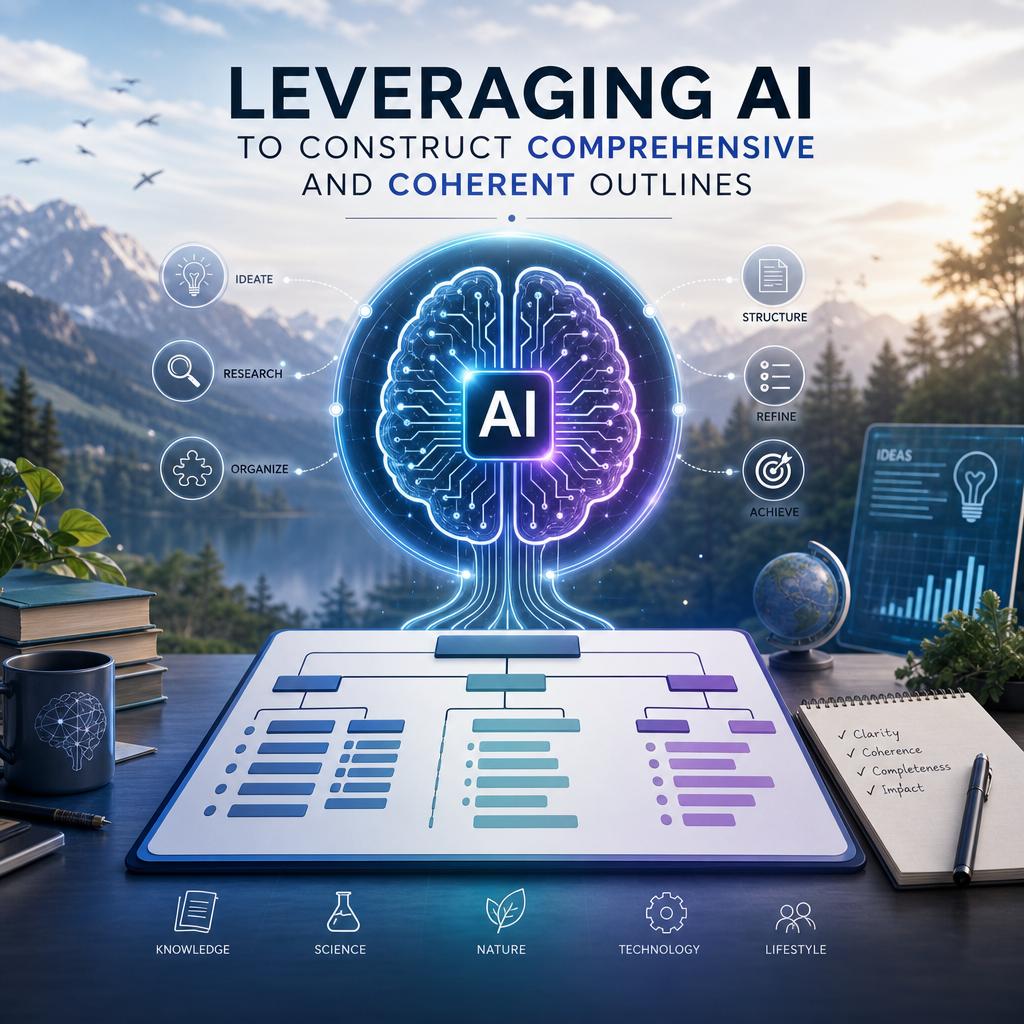
Leveraging AI to construct Comprehensive and Coherent Outlines
“`html
Artificial Intelligence tools have transformed the way researchers approach the initial phase of drafting academic papers. By analyzing vast amounts of information swiftly, AI systems generate outlines that are not only thorough but also logically structured to enhance the flow of ideas. This capability ensures that complex topics are broken down into manageable sections, making the writing process more efficient without sacrificing depth. Researchers benefit from a tailored framework that highlights key points,supporting arguments,and potential counterarguments,thus guaranteeing a balanced and comprehensive presentation of their work.
One of the primary advantages of AI-generated outlines lies in their adaptability and precision. For instance, an AI outline can emphasize critical themes while accommodating different academic styles and standards. Below is a comparison table illustrating how AI-driven outlines improve research clarity versus conventional manual outlines:
| Feature | AI-Generated Outline | Manual Outline |
|---|---|---|
| Consistency | High, automated structuring | Variable, depends on user experience |
| Speed | Minutes to generate | Hours to days |
| Customization | Based on research goals and data | Limited to writer’s foresight |
| Complexity Handling | effectively breaks down multifaceted ideas | May overlook nuanced connections |
- enhanced coherence: AI models can detect logical gaps and suggest reorganizations to improve narrative flow.
- Depth and breadth: Incorporates diverse viewpoints and dimensions, ensuring a multifaceted exploration of topics.
- Flexibility: Easily adjusted to accommodate evolving research directions or new data inputs.
Optimizing summary Generation Through Artificial Intelligence
advanced AI algorithms have transformed the way summaries are generated from dense research papers. By leveraging natural language processing and machine learning techniques,AI systems can now identify the most salient points with remarkable precision,prioritizing the essence of the research above peripheral details. This optimization not only accelerates comprehension for readers but also enhances accessibility to complex information across diverse academic fields. Key benefits include:
- Extraction of critical insights without losing context
- Consistent and unbiased summarization
- Adaptability to various writing styles and subject complexities
To illustrate the efficiency of AI-driven summary generation, consider the table below comparing traditional manual methods with contemporary AI approaches:
| Aspect | Manual Summarization | AI-powered Summarization |
|---|---|---|
| Time Required | Several hours | Minutes |
| Subjectivity | High | Low |
| Scalability | Limited | High |
| Consistency | Variable | Uniform |
Such advancements establish AI as an indispensable tool in academia, empowering researchers to focus more on innovation and less on tedious synthesis tasks, thus fostering a more productive and insightful scholarly habitat.
Best Practices for Integrating AI Tools in Academic Writing Processes
Effectively leveraging AI tools requires a strategic approach that balances technological assistance with scholarly integrity. Start by clearly defining the scope of AI use in your writing process to enhance, not replace, your critical thinking skills. Utilize AI to generate diverse topic ideas and refine them through iterative feedback, ensuring alignment with your research goals. When creating outlines, consider AI’s ability to organize content logically but always tailor the structure to suit the unique requirements of your discipline and argument flow.
Key best practices include:
- Validate AI-generated content: Cross-check summaries and data points for accuracy and relevance.
- Maintain openness: Disclose AI assistance according to academic guidelines.
- Preserve authorial voice: Use AI suggestions as a foundation, then add personal insights and critical analysis.
| Phase | AI Utility | Human Oversight |
|---|---|---|
| Topic Generation | suggest diverse themes and emerging trends | Evaluate relevance and originality |
| Outline development | Structure ideas into coherent formats | Customize flow and emphasis per discipline |
| Summary Creation | Produce concise abstracts and highlights | Verify accuracy and contextual meaning |