

The Role of Artificial Intelligence in Enhancing Emotional Support and Early Intervention
Artificial intelligence (AI) has emerged as a transformative force in mental health by offering scalable,accessible means of emotional support and early intervention. Through natural language processing and sentiment analysis, AI-driven applications can detect subtle changes in user behavior and mood, providing timely encouragement or suggesting helpful resources before issues escalate. These technologies function as a first line of emotional assistance, enabling users to express themselves in a stigma-free environment, which often leads to greater self-awareness and willingness to seek further professional help.
Key mechanisms that make AI a valuable ally in mental health include:
- Real-time mood tracking: Continuous monitoring helps identify early warning signs of distress or relapse.
- Personalized coping strategies: AI customizes interventions based on individual patterns and preferences.
- 24/7 availability: Support is always accessible, overcoming barriers related to geography or time.
- Confidential interaction: users can engage without fearing judgment, fostering honesty and openness.
| Feature | benefit |
|---|---|
| Sentiment Analysis | Recognizes emotional shifts to trigger supportive actions |
| Behavioral Predictions | Anticipates mental health risks for timely intervention |
| Conversational Agents | Provides empathetic, non-judgmental communication anytime |
| Resource Recommendations | Connects users to relevant professional services and self-help materials |
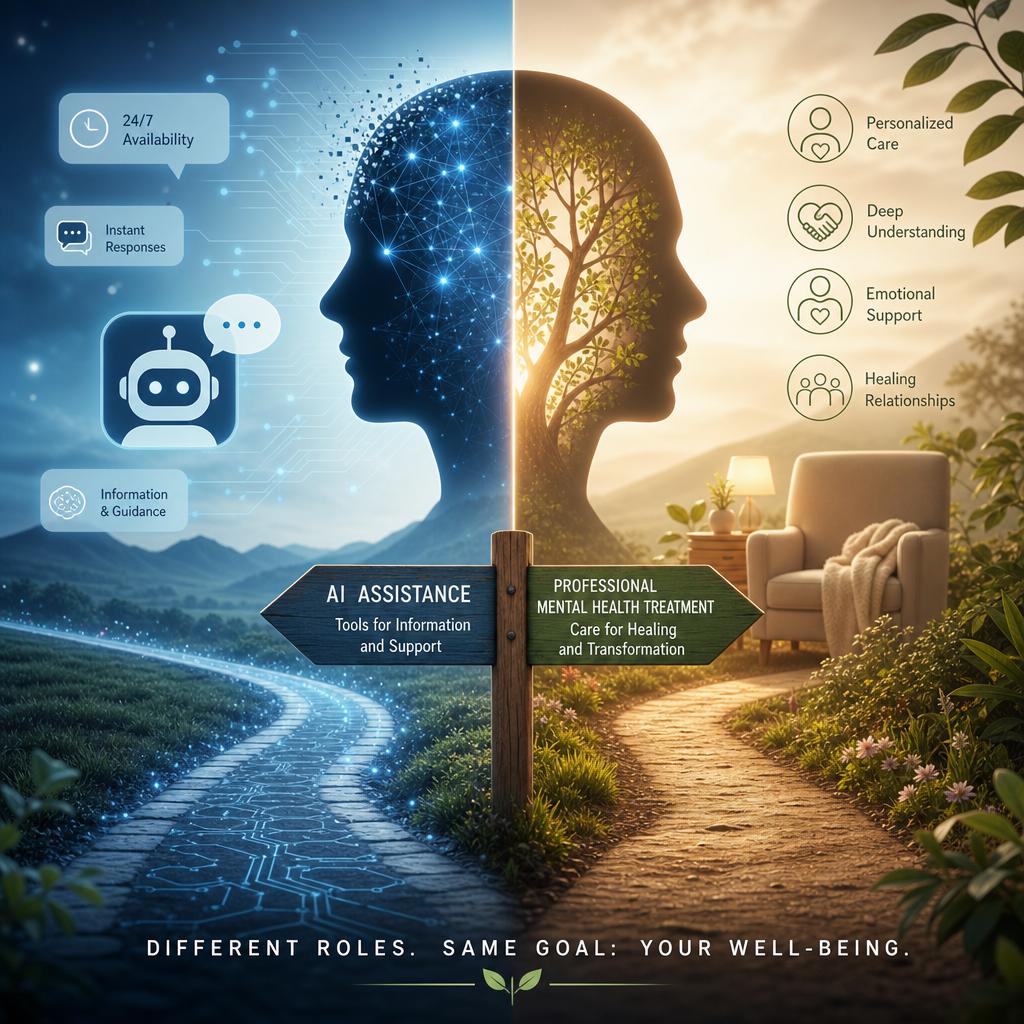
Distinguishing Between AI Assistance and Professional Mental Health Treatment
The advent of artificial intelligence in mental health has introduced powerful tools that offer valuable support, yet these technologies are fundamentally different from professional clinical care. AI-driven applications excel at providing immediate responses, mood tracking, and cognitive behavioral prompts, but they lack the nuanced understanding and personalized judgment that trained mental health professionals possess. While AI can facilitate early detection of emotional distress and encourage users to engage in self-care, it cannot replace the empathetic connection, diagnostic expertise, or tailored treatment strategies that only licensed clinicians can deliver.
key distinctions include:
- Scope of Care: AI tools primarily provide adjunctive support, such as reminders, education, and symptom tracking, rather than comprehensive diagnosis or therapy.
- Human Interaction: Professional mental health treatment involves face-to-face or telehealth sessions where a clinician interprets subtle nonverbal cues and emotional context, something AI cannot replicate.
- Accountability and Ethics: Licensed practitioners adhere to strict ethical standards and confidentiality protocols, ensuring patient safety and dignity.
| Aspect | AI Assistance | Professional Treatment |
|---|---|---|
| Personalization | Algorithmic, limited | Highly tailored, dynamic |
| Emotional Insight | Basic pattern recognition | Deep empathetic understanding |
| Clinical Expertise | None | Extensive professional training |
| Legal Responsibility | No | Yes |
Ethical Considerations and Privacy Safeguards in AI-Driven Mental Health Tools
As AI-driven tools become increasingly integrated into mental health support, safeguarding ethical standards and ensuring robust privacy protections are paramount.These technologies often handle highly sensitive personal information, requiring stringent measures to prevent unauthorized access or misuse. Developers and providers must prioritize data encryption, enforce strict access controls, and maintain obvious data handling policies. Additionally,clear consent protocols should be in place,empowering users with full understanding of what data is collected,how it is stored,and the purposes for which it is used.
Beyond technical safeguards,ethical considerations extend to maintaining the boundaries between supportive AI functionalities and clinical mental health care. While AI can offer valuable self-help resources and early intervention prompts, it must not replace professional diagnosis or treatment. To clarify this distinction, AI tools frequently enough include disclaimers and referral guidance to licensed practitioners. the following table highlights key distinctions in responsibility and function:
| Aspect | AI-Driven Tools | Clinical Mental Health Care |
|---|---|---|
| Primary Role | Support & monitoring | diagnosis & treatment |
| Data Handling | Encrypted & anonymized | Confidential & regulated |
| Accountability | Developers & users | Licensed professionals |
| Decision making | Advisory & suggestive | Clinical judgments |
Implementing AI Solutions with Clear Guidelines to Augment but Not Replace Clinical Care
Harnessing AI technology in mental health care requires a balanced approach that emphasizes augmentation rather than substitution. AI tools can efficiently handle data analysis,identify potential risk behaviors,and provide supportive resources,but human clinical judgment remains irreplaceable.Clear protocols should be established to delineate AI’s scope, ensuring it acts as an assistant-enhancing clinicians’ ability to monitor symptoms, streamline administrative tasks, and offer preliminary guidance-while complex decision-making and empathetic patient interactions remain firmly within human care. Such guidelines prevent ethical pitfalls, safeguard patient confidentiality, and help maintain the therapeutic alliance critical for positive outcomes.
implementing AI with robust boundaries also demands continuous training for healthcare providers to effectively integrate these tools into their workflows. Here is a simple overview of core principles for responsible AI integration in mental health:
- Transparency: Patients should be informed when AI tools are used in their care process.
- Accountability: Clear responsibilities must be assigned for AI-driven recommendations.
- Data Security: Stringent safeguards must protect sensitive patient information.
- Human Oversight: All AI outputs require clinician review before clinical actions are taken.
| Feature | AI Role | Human Clinician Role |
|---|---|---|
| Symptom Monitoring | Continuous data collection & flagging | Interpretation & intervention planning |
| Preliminary Assessments | Basic screening via questionnaires | Diagnosis & personalized treatment |
| Administrative Tasks | Scheduling & documentation automation | Patient engagement & therapeutic communication |