

AI Techniques Revolutionizing Genomic Data Analysis
As the volume of genomic data continues to grow exponentially, traditional analytical methods struggle to keep pace with the complexity and scale. Advanced AI techniques, such as deep learning and reinforcement learning, are now integral in decoding the intricate patterns hidden within DNA sequences. These methods excel at recognizing subtle genetic variants and epigenetic signals that might elude conventional statistical approaches. By leveraging large datasets, AI models can predict disease susceptibility, identify novel biomarkers, and even suggest personalized treatment pathways, substantially accelerating biomedical discoveries.
- Convolutional Neural Networks (CNNs) applied to sequence data for variant classification.
- Natural Language Processing (NLP) techniques for interpreting genomic literature and annotations.
- Generative Adversarial Networks (GANs) used to simulate realistic genetic variations for training robust models.
- Graph-based AI algorithms mapping complex gene interactions and regulatory networks.
| AI Technique | Key Genomic Submission | Impact |
|---|---|---|
| Deep Learning | Variant interpretation | High accuracy in predicting pathogenicity |
| Reinforcement Learning | Gene editing strategies | Optimizes CRISPR target selection |
| NLP | Automated literature mining | Faster knowledge extraction |
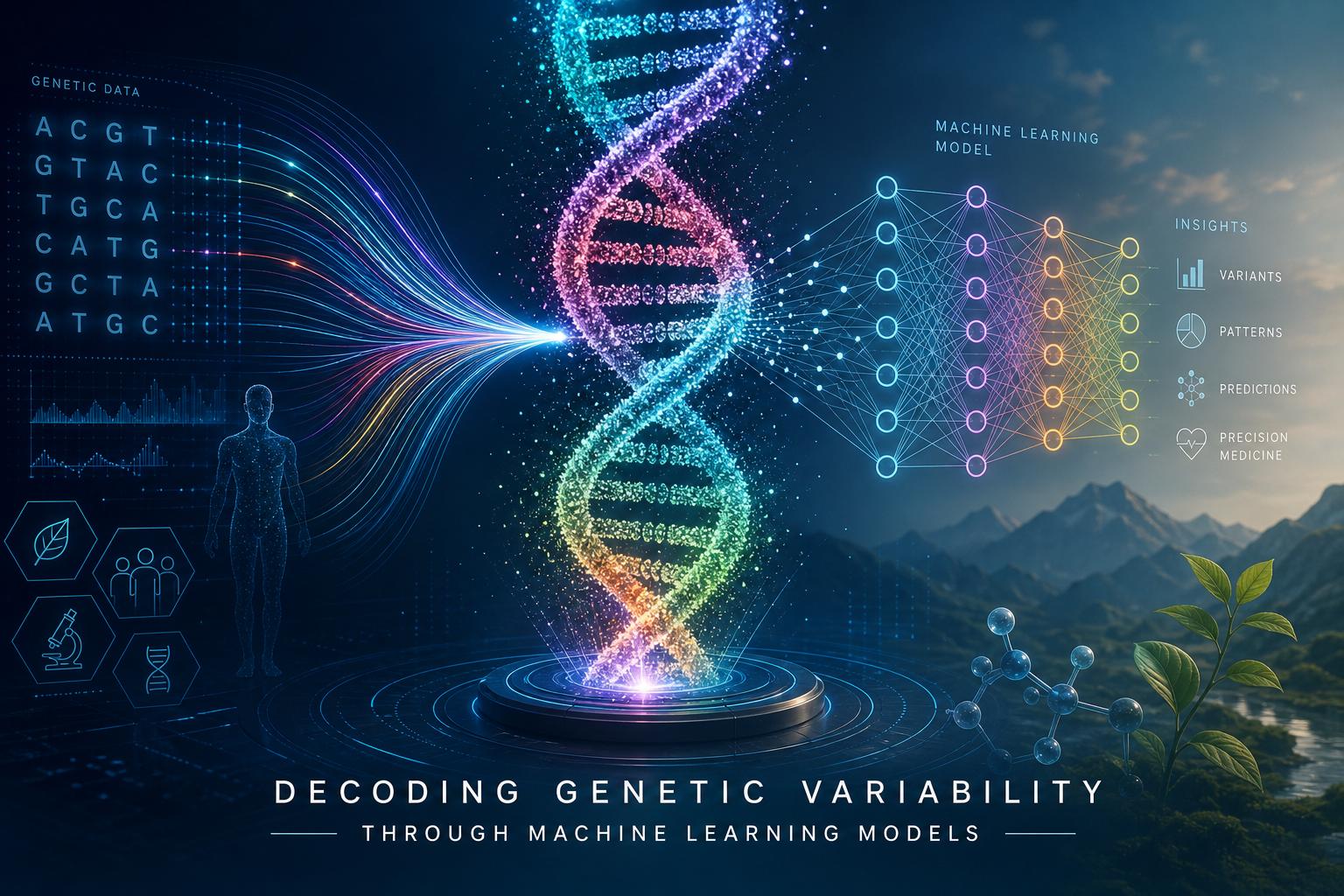
Decoding Genetic Variability Through machine Learning Models
Advanced machine learning models have revolutionized our ability to interpret the vast complexity hidden within genomic data. By harnessing algorithms such as neural networks, support vector machines, and ensemble methods, researchers can uncover nuanced genetic variations that were previously undetectable through traditional analysis. These models excel at recognizing intricate patterns and relationships amidst millions of data points, allowing for the identification of critical polymorphisms associated with disease susceptibility, drug response, and evolutionary traits.
Key advantages of employing AI-driven methods in genomic studies include:
- Scalability: Capable of processing large-scale datasets without loss of accuracy.
- Predictive Power: Enables forecasting genetic predispositions and phenotypic outcomes.
- Interpretability: Novel techniques now provide insights into the decision-making pathways of models.
| Model Type | Primary Application | Strength |
|---|---|---|
| Neural Networks | Variant Classification | High adaptability to complex data patterns |
| Random Forest | Feature Selection | Robust to noise and overfitting |
| Support Vector Machine | Disease Risk Prediction | Effective for high-dimensional spaces |
The integration of interpretive frameworks with these models ensures biological relevance, translating computational findings into actionable insights for personalized medicine, genomic research, and biotechnological innovation.
integrating AI with Genomic Databases for Enhanced Predictive Accuracy
Harnessing artificial intelligence to analyze vast genomic databases is revolutionizing how we uncover hidden correlations within complex biological data. Machine learning algorithms excel at parsing multi-dimensional datasets, revealing subtle genomic variants and patterns that traditional methods often overlook. This synergy allows researchers to predict disease susceptibility and treatment responses with unprecedented accuracy, tailoring healthcare strategies at an individual level. Key advantages include:
- Rapid identification of genetic markers linked to chronic diseases
- Enhanced recognition of epigenetic influences in genome-wide association studies
- Real-time integration of genomic and clinical data for dynamic modeling
To illustrate, AI models can incorporate gene expression profiles alongside single nucleotide polymorphisms (SNPs) and environmental factors, creating a thorough matrix that forecasts phenotypic outcomes. Below is a simplified comparison of predictive accuracy improvements when AI techniques are applied to genomic datasets versus conventional statistical approaches.
| Prediction Approach | Accuracy Rate | Data Complexity Handled |
|---|---|---|
| Traditional Statistical Models | 65% | Low to Moderate |
| AI-Based Predictive Models | 85% | High |
Strategic Recommendations for Implementing AI Solutions in Genomic Research
To effectively harness the power of artificial intelligence within the realm of genomic research, it is critical to establish a robust groundwork that respects both the complexity of biological data and the ethical considerations it entails. Prioritizing the integration of advanced machine learning models with comprehensive genomic datasets allows researchers to identify subtle patterns and correlations that traditional analysis might overlook. Key strategies include investing in data standardization protocols,ensuring high-quality input,and employing interdisciplinary collaboration between computational scientists and geneticists to refine algorithmic accuracy.
Moreover, organizations should emphasize scalable infrastructure capable of accommodating rapidly growing genomic databases while maintaining data security and compliance with regulatory standards. Adoption of agile development methodologies can facilitate iterative improvements and responsiveness to emerging scientific insights. Below is a reference table highlighting core focal areas for implementation success:
| Focal Area | Strategic Approach | Expected Outcome |
|---|---|---|
| Data Quality | establish stringent validation and preprocessing pipelines | Accurate and reliable AI predictions |
| Collaborative Teams | Form cross-disciplinary groups with diverse expertise | Enhanced model interpretability and innovation |
| Infrastructure | Implement cloud-based scalable architectures | Efficient data management and processing |
| Ethical Governance | Develop obvious policies for data use and privacy | Trustworthy and compliant AI applications |