

The Role of Artificial Intelligence in Enhancing Diagnostic Accuracy
The integration of artificial intelligence into diagnostic processes offers remarkable improvements in accuracy by analyzing large datasets and identifying subtle patterns that may elude even seasoned clinicians. AI algorithms excel in processing imaging scans, pathology reports, and genetic information, providing clinicians with detailed insights that support more confident decision-making. These technologies are designed too complement human expertise by flagging anomalies, ranking potential diagnoses, and suggesting relevant tests, thus reducing the likelihood of misdiagnosis and accelerating the diagnostic workflow.
Key advantages of incorporating AI include:
- Enhanced pattern recognition: AI can detect subtle changes in imaging or lab data early in disease progression.
- Reduction of human bias: Standardized AI analysis helps minimize subjective errors frequently encountered in manual interpretation.
- Data synthesis: AI combines diverse patient data points for a comprehensive diagnostic perspective.
| AI Strength | Clinical Impact |
|---|---|
| Radiologic Imaging Analysis | Improves early tumor detection rates |
| Pathology Slide Interpretation | increases diagnostic consistency |
| Genomic Data Processing | Supports personalized treatment planning |
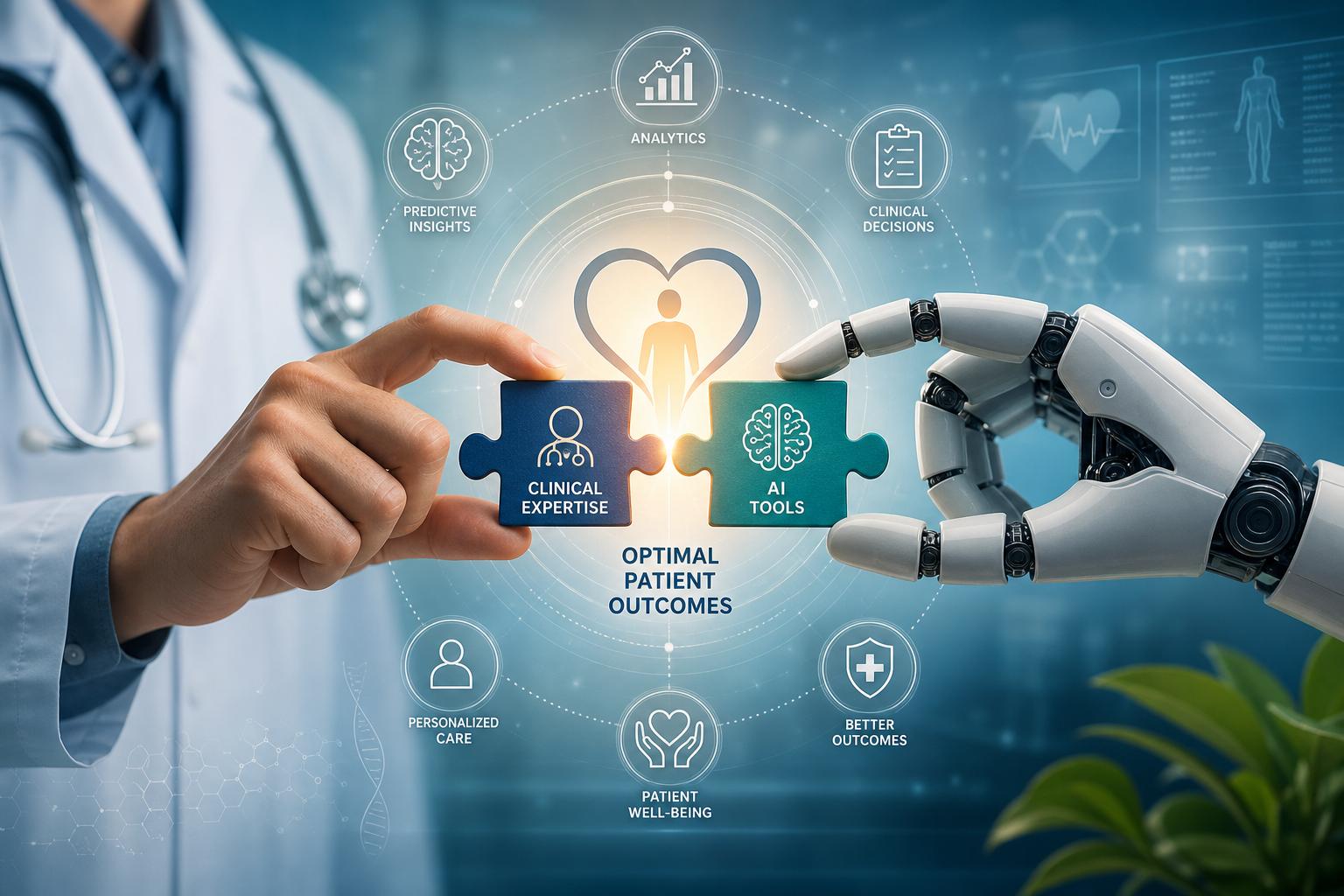
Integrating AI Tools with Clinical Expertise for Optimal Patient Outcomes
Artificial intelligence (AI) in healthcare serves as a powerful extension to clinicians’ capabilities, offering advanced data processing and pattern recognition that complement human judgment rather than replace it. By integrating AI tools with clinical expertise, medical professionals can enhance diagnostic accuracy, reduce errors, and tailor treatment plans more precisely. The synergy between AI algorithms and healthcare providers enables a deeper understanding of patient data, encompassing complex imaging, genetic profiles, and electronic health records.
- Clinician oversight ensures contextual judgment: AI findings are interpreted within the broader spectrum of patient history and clinical presentation.
- Continuous learning: Experts refine AI outputs by providing feedback, fostering iterative improvements in diagnostic models.
- Ethical and empathetic care: only humans can fully appreciate the nuances of patient interaction and emotional support.
| aspect | AI Strength | Clinical Expertise Strength |
|---|---|---|
| data Processing | Rapid analysis of large datasets | Contextualizing individual patient factors |
| Decision Making | Pattern recognition and risk stratification | Holistic interpretation and ethical judgment |
| Outcome Optimization | Predictive modeling for personalized care | adaptation based on experience and empathy |
Challenges and Ethical Considerations in AI-Driven Disease Diagnosis
While AI technologies promise to revolutionize disease diagnosis, they come with a spectrum of challenges that cannot be overlooked. One of the foremost concerns is data privacy and security.Medical data is profoundly sensitive,and AI systems require access to vast datasets to function effectively. Ensuring that these datasets are anonymized and protected from breaches is paramount. Additionally, the biases embedded in training data-frequently enough stemming from underrepresentation of certain demographics-can lead to skewed diagnostic outcomes, potentially disadvantaging vulnerable populations. Transparency in AI decision-making processes remains limited, raising questions about accountability when errors occur.
Key ethical considerations include:
- Bias mitigation: Designing AI to minimize disparities across demographics.
- Informed consent: Patients must be aware and agreeable to their data’s use in AI-driven tools.
- Accountability frameworks: Clearly defining responsibility when AI misdiagnoses happen.
- Human oversight: ensuring practitioners validate AI findings rather than blindly trusting algorithms.
| Challenge | Potential risk | Mitigation Strategy |
|---|---|---|
| Data Bias | Diagnostic inaccuracies | Diverse training sets, continuous auditing |
| Privacy Concerns | Unauthorized data exposure | Robust encryption, strict policies |
| Lack of transparency | reduced trust, accountability issues | Explainable AI models, regulatory standards |
| Human Overreliance | Neglect of clinical judgment | Mandatory clinician review, training |
Best Practices for Implementing AI as a Complementary Diagnostic Resource
Integrating AI into diagnostic workflows requires a strategic balance between technological innovation and clinical expertise. It’s essential that healthcare providers treat AI outputs as complementary insights rather than definitive answers. Establishing clear protocols where AI-generated suggestions are carefully reviewed by medical professionals ensures that final diagnoses benefit from both data-driven precision and human judgment.Additionally, ongoing training and collaboration between AI developers and clinicians can enhance model performance and tailor its use to real-world medical scenarios.
- Transparency: Ensure AI tools provide interpretable results that clinicians can easily understand and trust.
- Validation: Regularly validate AI performance against diverse and updated datasets to maintain accuracy.
- Feedback Loops: Incorporate clinician input to continuously refine AI algorithms and reduce errors.
- Ethical Oversight: Maintain strict controls to protect patient privacy and prevent misuse of AI recommendations.
| Best Practice | Purpose | Outcome |
|---|---|---|
| Collaborative Review | Combine AI suggestions with doctor expertise | Enhanced diagnostic confidence |
| Continuous Education | Train clinicians on AI capabilities and limitations | Improved tool adoption and accuracy |
| Data Diversity | Use varied patient data for training | Reduced bias and greater reliability |