

The Role of Artificial Intelligence in Enhancing Diagnostic accuracy
Artificial intelligence (AI) is revolutionizing healthcare by augmenting the capabilities of medical professionals in the realm of diagnostics.By analyzing vast datasets with remarkable speed and precision, AI systems identify patterns and anomalies that might be subtle or overlooked by human eyes. This analytical power serves as an invaluable support, enabling clinicians to confirm suspicions, prioritize casesand reduce diagnostic errors.However, it is critical to recognize that AI serves as a complement rather than a substitute for the nuanced judgment and experience of healthcare providers.
Key advantages AI introduces in diagnostic accuracy include:
- Enhanced image analysis: AI algorithms excel in interpreting medical images such as MRIs, CT scansand X-rays with a consistency that reduces variability in readings.
- Data integration: Combining patient history, lab resultsand imaging data into a unified assessment, AI aids in forming a holistic understanding of the patient’s condition.
- Continuous learning: AI systems constantly update their knowledge base through new cases and research, keeping diagnostic tools at the forefront of medical knowledge.
| aspect | human Clinician | AI Diagnostic Tool |
|---|---|---|
| Decision Making | Contextual & experiential | Data-driven & consistent |
| Speed | Varies with workload | Rapid computation |
| Error Pattern | Subjective bias possible | Limited to training data |
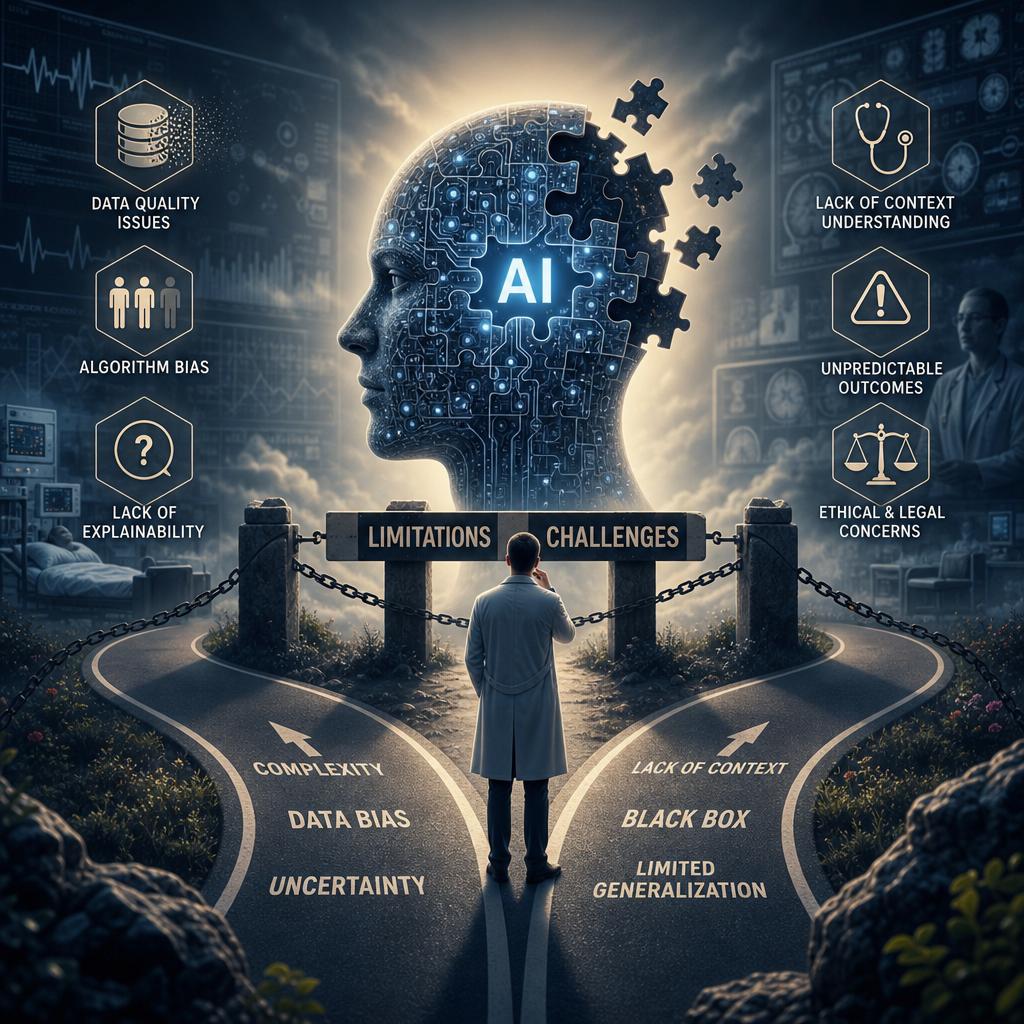
Limitations and Challenges of AI in Clinical decision Making
The integration of artificial intelligence into clinical decision making is promising but accompanied by inherent limitations that warrant careful consideration. AI systems rely heavily on the quality and diversity of the data they are trained on; any bias or gaps in datasets can lead to inaccurate or skewed outcomes. Additionally, these algorithms may lack openness, making their decision processes difficult for clinicians to interpret or trust fully. This opacity raises ethical and practical concerns when it comes to assigning responsibility for diagnostic errors or treatment recommendations.
Moreover, AI tools currently excel as *assistive* technologies rather than independent decision-makers. They function best when complementing the clinical judgment of healthcare professionals, not substituting it. Challenges such as integration with existing electronic health records, real-time adaptability to complex patient contextsand legal implications of AI-guided decisions persist. Below is a summary of key challenges encountered in deploying AI within clinical workflows:
- Data Quality Variability: Inconsistent or incomplete patient records affect reliability.
- Algorithmic Bias: Risks of perpetuating healthcare disparities.
- Interpretability Issues: Difficulty in explaining AI’s rationale to clinicians and patients.
- Workflow Disruption: technological integration can disrupt established clinical processes.
- Regulatory and Legal Concerns: Accountability in case of diagnostic errors.
Integrating AI Systems with Human Expertise for Optimal Patient Outcomes
Artificial intelligence has revolutionized the medical diagnostic process by offering rapid analysis and pattern recognition capabilities beyond human limits. Though, the true power of AI is unlocked only when it complements the nuanced judgment and clinical experience of healthcare professionals. Rather than replacing clinicians, AI acts as a decision-support tool, elevating accuracy and reducing diagnostic errors. In practice, physicians integrate AI-generated insights with patient history, physical examinationsand subtle contextual factors to arrive at a well-rounded diagnosis.
Key benefits of integrating AI with human expertise include:
- Enhanced Precision: AI quickly processes vast datasets, identifying correlations invisible to the naked eye.
- Reduced Cognitive Load: By handling routine analyses, AI frees clinicians to focus on complex decision-making and patient care nuances.
- continuous Learning: Clinicians can provide feedback on AI outputs, enabling system refinement and adaptation over time.
| Aspect | AI Role | Human Role |
|---|---|---|
| Data analysis | Rapid processing of imaging,lab results | Interpretation within clinical context |
| Diagnosis | Suggests possible conditions based on patterns | Confirms and refines diagnosis with patient-specific insights |
| Decision-making | Offers risk stratification and probabilities | Balances patient preferences and ethical considerations |
Establishing Guidelines for Ethical and Responsible Use of AI in diagnostics
Ensuring AI technologies function ethically within diagnostic processes requires a firm commitment to transparency and accountability. Developers and healthcare providers must collaborate to define clear boundaries for AI application-emphasizing that these tools serve to augment clinical judgment rather than replace human decision-making. Informed consent, data privacyand algorithmic fairness are critical pillars in this effort, guaranteeing that patient rights remain paramount while mitigating biases that could affect diagnostic outcomes.
- Regular auditing of AI models for accuracy and fairness
- Strict data governance policies protecting patient confidentiality
- clinician oversight ensuring AI recommendations are critically reviewed
- Continuous education for healthcare workers on AI capabilities and limitations
| Guideline | Purpose | Impact |
|---|---|---|
| Transparency | Clarify AI decision-making | builds trust among users and patients |
| data Privacy | Protect sensitive details | Ensures compliance with legal standards |
| Bias Mitigation | Prevent unfair outcomes | Promotes equity in healthcare delivery |
Adopting these guidelines fosters an environment where AI-driven diagnostic tools are viewed as supportive aids rather than autonomous diagnosticians. The integration of ethics into development and deployment processes not only elevates patient safety but also facilitates broader acceptance by the medical community, ensuring AI enhances rather than compromises the clinical workflow.