

AI-Driven Boilerplate Generation for Streamlined Development
Leveraging AI to automate boilerplate code creation considerably reduces development time and enhances code consistency across projects. By analyzing project requirements and common patterns, AI tools can produce standardized code snippets effortlessly, allowing developers to focus on complex logic rather than repetitive tasks. This innovation not only minimizes human error but also ensures adherence to best practices, boosting overall project quality and maintainability.
key advantages include:
- Rapid scaffolding: AI generates complete project structures tailored to specific frameworks and architectures.
- Test automation support: Smart code generation integrates unit and integration tests alongside boilerplate.
- Code uniformity: Maintaining stylistic and architectural consistency across teams and releases.
| Feature | Benefit | Impact |
|---|---|---|
| Context-Aware Generation | Tailors code to project specifics | Improved relevancy and usability |
| Error Reduction | Auto-corrects common pitfalls | Higher code reliability |
| Seamless Integration | works with CI/CD pipelines | Accelerated deployment cycles |
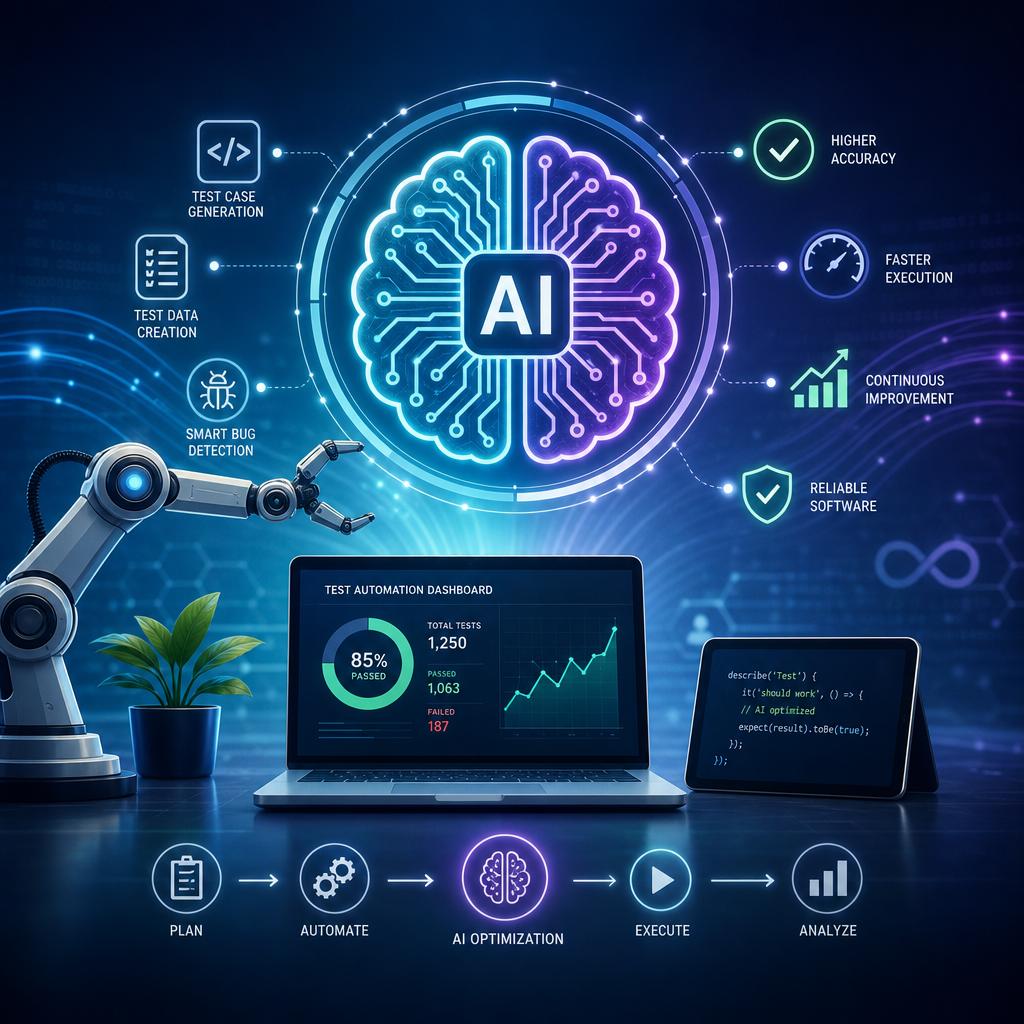
Optimizing Automated Testing with Artificial Intelligence
Incorporating artificial intelligence into automated testing frameworks revolutionizes teh way developers tackle repetitive and time-consuming tasks. With AI-driven tools, boilerplate code generation is no longer a manual chore but an intelligent, context-aware process that adapts to coding patterns and best practices. This not only accelerates development cycles but also minimizes human errors,ensuring that the foundational code structures are robust and consistent.Furthermore, AI enhances test creation by analyzing code changes and predicting the most critical areas to validate, thereby optimizing test coverage and reducing redundant test cases.
Key benefits of AI integration in automated testing include:
- Dynamic generation of test scaffolds tailored to evolving codebases
- Continuous learning from previous test results to improve future test accuracy
- Automated identification of edge cases that might be overlooked by manual testing
- Optimization of resource allocation by prioritizing high-impact tests
| Aspect | AI-Enhanced Approach | Traditional Approach |
|---|---|---|
| Boilerplate Code | Context-aware, adaptive templates | Static, manually updated templates |
| Test Generation | Predictive, prioritized test cases | Thorough but frequently enough redundant |
| Maintenance | Self-optimizing based on code evolution | Requires frequent manual revisions |
Leveraging AI to Create Robust Scaffolding Frameworks
Artificial intelligence has transformed the way developers approach scaffolding frameworks, drastically reducing manual overhead and increasing precision. By harnessing AI-driven tools, programmers can generate comprehensive and adaptable scaffolding that is tailored to the specific architecture of their projects. These frameworks not only streamline the initial setup but also integrate seamlessly with boilerplate code and testing modules, creating a cohesive development habitat. The sophistication of AI models allows them to anticipate developer needs, offer optimized design patternsand automate routine tasks – all contributing to a robust foundation from day one.
Key benefits of AI-powered scaffolding include:
- Speed: Drastically shortens setup times by auto-generating complex code structures.
- Consistency: Ensures uniform coding patterns that reduce bugs and maintenance issues.
- scalability: Produces flexible frameworks that adapt easily to project growth or changes.
- Integration: Seamlessly ties into testing suites and boilerplate components for full-cycle efficiency.
| Feature | Traditional Approach | AI-Enhanced Approach |
|---|---|---|
| Time to Scaffold | Hours to days | Minutes to hours |
| Code Consistency | Variable | Highly Uniform |
| Maintenance | Manual updates required | Adaptive, learning updates |
| Testing Integration | Often manual | Automated and embedded |
Best Practices for Integrating AI Tools into Coding workflows
Integrating AI tools effectively into coding workflows demands a strategic approach that balances automation with thoughtful human oversight. Developers should leverage AI’s capabilities to generate boilerplate code, automate scaffolding, and produce initial test cases, allowing more time to focus on complex logic and creative problem-solving. It is crucial to set clear boundaries for AI-generated content by reviewing and refining the output to ensure it aligns with project standards and security protocols.Moreover, adopting an iterative feedback loop between the developer and the AI model ensures continuous advancement and customization tailored to the unique codebase and team practices.
- Prioritize modular AI outputs: Encourage AI tools to generate modular,reusable components rather than monolithic code blocks,facilitating easier integration and maintenance.
- Enforce code reviews on AI contributions: Maintain rigorous peer reviews and static code analysis to catch subtle issues AI may introduce.
- Customize AI prompts: Tailor input prompts to produce context-specific, domain-aware code rather than generic snippets.
| Best Practise | Benefit |
|---|---|
| Modular AI Code Generation | Enhances reusability and reduces technical debt |
| Prompt Customization | Improves relevance and accuracy of outputs |
| Human Review & Testing | Ensures quality, security, and maintainability |