

AI Evidence Validity Standards and Criteria for Judicial Acceptance
Ensuring AI-generated evidence meets judicial admissibility criteria requires rigorous validation standards that address both technological and legal domains. Courts increasingly demand transparent documentation of the AI methodologies used, including algorithmic design, data provenance, and error rates. Validation involves scrutinizing if the AI processes adhere to established forensic principles such as reproducibility and reliability. Without standardized benchmarks, judges and legal practitioners risk accepting evidence influenced by opaque “black box” systems, which may undermine the integrity of the judicial process.
key criteria for judicial acceptance ofen revolve around:
- Clarity: Clear explanation of the AI algorithm and its decision-making framework.
- Bias Mitigation: Demonstrable steps taken to identify and reduce biases in training data and inference.
- Accuracy Metrics: Quantifiable performance results under real-world conditions.
- Chain of Custody: Unbroken documentation from data collection to AI analysis output.
| Validity Factor | Judicial Concerns | recommended Safeguards |
|---|---|---|
| Algorithmic Transparency | Opaque decision-making | Independent expert review |
| Data Integrity | Manipulated or biased data inputs | secure, verifiable data chains |
| Performance Reliability | False positives/negatives | replication of results under varied conditions |
| Bias Elimination | discriminatory outcomes | Algorithmic audits and bias testing |
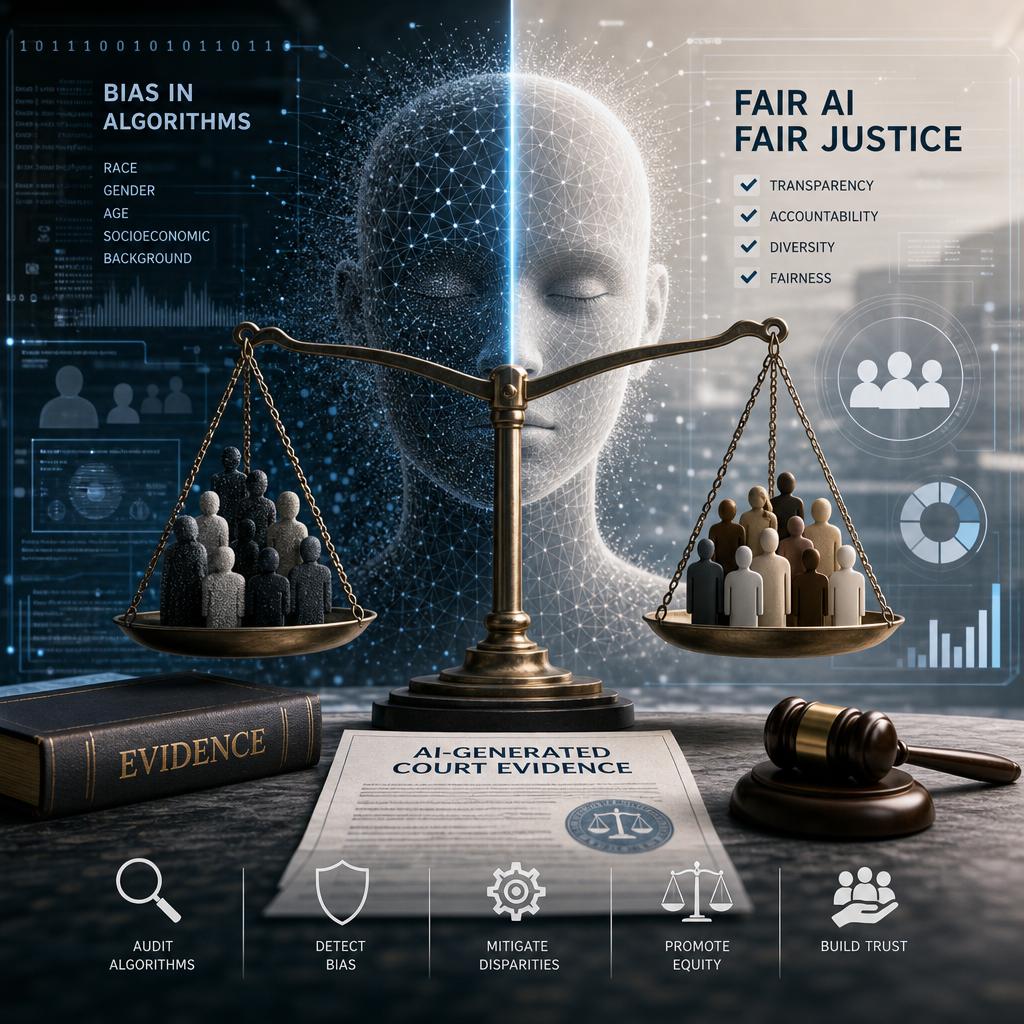
Addressing Algorithmic Bias in AI-Generated Court Evidence
Algorithmic bias in AI-generated court evidence poses a meaningful threat to equitable justice. AI systems, often trained on historical data, can inadvertently perpetuate existing societal prejudices, leading to skewed analyses that disproportionately affect certain demographics. It is crucial to scrutinize these biases to ensure that evidence presented in courts reflects an impartial reality rather then reinforcing systemic inequalities. Legal professionals must collaborate with technologists to develop rigorous audit frameworks that identify and mitigate bias before AI outputs influence judicial decisions.
Key strategies to address algorithmic bias include:
- Implementing transparency protocols that disclose how AI models arrive at their conclusions.
- Incorporating diverse datasets to reduce the risk of overfitting to biased patterns.
- Regularly updating AI systems with oversight from interdisciplinary panels combining legal experts, ethicistsand data scientists.
| Bias Type | Potential Impact | Mitigation Approach |
|---|---|---|
| Sampling Bias | Misrepresentation of minority groups | Diversify training data sets |
| Measurement Bias | Inaccurate categorization or labeling | Refine data collection methods |
| Algorithmic Bias | Unsupported pattern recognition | Continuous model validation |
Legal Challenges in Integrating AI Evidence within Current Judicial Frameworks
Integrating AI-generated evidence into courtrooms confronts several profound legal challenges that touch on the foundations of judicial integrity and fairness. One core issue is validity: courts must ascertain whether AI tools produce evidence that is not only accurate but also reliable and reproducible under legal scrutiny. Unlike traditional forensic methods with established credibility, AI algorithms frequently enough operate as “black boxes,” making it difficult for both legal professionals and judges to fully understand or challenge how conclusions were reached.this opacity raises significant concerns about the adequacy of existing evidentiary rules in accommodating data-driven insights without compromising defendants’ rights.
Furthermore, bias and transparency represent critical obstacles. AI systems trained on historical data risk perpetuating or amplifying systemic biases, which may lead to unfair treatment of certain demographic groups within the justice system. Judicial frameworks currently lack clear guidelines to evaluate and mitigate these biases effectively. to illustrate, consider the following challenges courts must navigate:
- Accountability: Determining liability when AI evidence leads to wrongful convictions.
- Standardization: Lack of uniform protocols for validating AI tools across jurisdictions.
- Expertise Gap: Limited AI literacy among legal practitioners hampers proper assessment of evidence.
| Challenge | Impact |
|---|---|
| Black Box Opacity | Obstructs legal scrutiny and defense cross-examination |
| Data Bias | Leads to discriminatory legal outcomes |
| Validation Standards | Absence creates inconsistency in evidence acceptance |
best Practices and Policy Recommendations for AI Evidence Use in Litigation
To ensure the responsible integration of AI-generated evidence within judicial processes, it is essential to adopt stringent best practices that prioritize transparency and fairness. Experts recommend implementing rigorous validation protocols for AI systems used in evidence analysis,encompassing thorough verification of algorithmic accuracy and reproducibility. additionally, thorough documentation of the AI’s decision-making parameters must accompany any AI-derived evidence submitted in court to allow opposing counsel and judges to evaluate its credibility. Establishing cross-disciplinary review panels involving data scientists,legal experts,and ethicists can further safeguard against the inadvertent introduction of bias or errors,thereby fostering greater confidence in AI tools as reliable sources of evidence.
Policy frameworks should emphasize continuous monitoring and periodic auditing of AI technologies deployed in litigation contexts to preempt emerging biases and ethical concerns. Clear guidelines are necessary to define admissibility standards tailored specifically for AI-derived data, ensuring these standards evolve alongside technological advancements. The table below outlines key areas for policy focus to enhance the equitable use of AI evidence in courts:
| Policy Area | Proposal | Impact |
|---|---|---|
| Transparency | mandatory disclosure of algorithmic models and training data | Improved scrutiny and trust |
| Bias Mitigation | Regular bias audits and fairness assessments | Reduction in discriminatory outcomes |
| Admissibility Standards | Clear criteria for AI evidence validity | Consistent court rulings |
| Training | Education programs for judges and attorneys | Better understanding and application |