

AI-driven Language Translation Transforming Patient Communication
Incorporating AI-driven language translation into healthcare settings has revolutionized communication between patients and providers, effectively eliminating language barriers. These elegant systems go beyond simple word-for-word translation, capturing medical terminologies, contextand cultural nuances that are frequently enough lost in manual translations. By delivering real-time, accurate translations, AI tools empower medical professionals to understand patient symptoms, historyand concerns with precision, ultimately enhancing the quality of care and reducing the risk of misdiagnosis caused by misunderstood information.
Key benefits of AI-powered language translation in healthcare include:
- Immediate Accessibility: Instant translation facilitates rapid decision-making during emergencies.
- Inclusive Communication: Supports patients with limited language proficiency or literacy levels.
- Confidential and Secure: Ensures sensitive patient data is handled with privacy and compliance in mind.
| Feature | Traditional Interpretation | AI-Driven translation |
|---|---|---|
| Availability | Limited to interpreter schedules | 24/7 on-demand access |
| Cost | High per-session fees | Cost-effective subscription models |
| Accuracy | Subject to human error | Consistent and scalable accuracy |
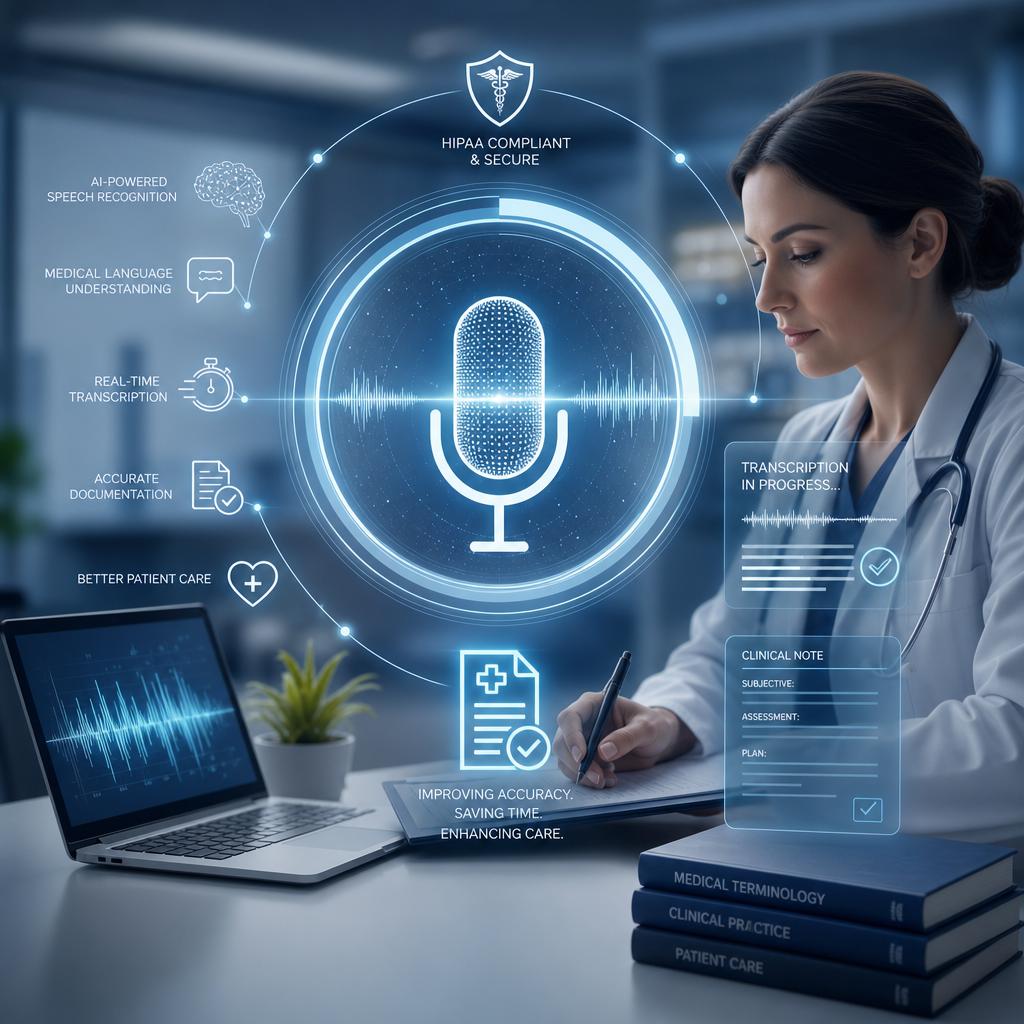
Advanced Transcription Technologies Improving Medical Documentation Accuracy
Modern transcription technologies have revolutionized medical documentation by significantly enhancing accuracy through the use of machine learning algorithms and natural language processing (NLP). These advancements allow transcription systems to discern complex medical terminology, contextual nuancesand varied speech patterns, reducing errors that traditionally plagued manual transcription methods. By integrating specialized medical vocabularies and continuous learning models,these systems ensure that patient records remain precise and detailed,facilitating better clinical decision-making and improved patient outcomes.
The practical implementation of these technologies within healthcare settings often involves:
- Real-time transcription that instantly converts physician-patient dialogues into structured electronic health records (EHRs).
- Context-aware correction engines that identify and rectify potential inaccuracies before finalizing documentation.
- Multi-modal input processing, which supports transcription from audio, videoand even handwritten notes, ensuring comprehensive record capture.
| Feature | Benefit | Impact on Accuracy |
|---|---|---|
| AI-Driven Vocabulary Expansion | Recognizes specialty-specific terms | Reduces misinterpretation of jargon |
| Voice Biometrics | Identifies speakers to assign accurate notes | Minimizes attribution errors |
| Adaptive Learning Models | Continuously improves transcription accuracy | Ensures evolving language needs are met |
Integrative Support Tools Facilitating Inclusive Healthcare Delivery
Artificial Intelligence is revolutionizing the way healthcare providers connect with diverse patient populations by offering advanced translation and transcription tools. These technologies break down language barriers, enabling real-time communication with patients who speak diffrent languages or dialects. By integrating AI-powered translation services, medical practitioners can ensure accurate delivery of critical health information, reducing misunderstandings and improving patient outcomes. Additionally, automated transcription tools convert spoken consultations into precise written records, which enhance documentation accuracy and accessibility for both healthcare professionals and patients with hearing impairments.
Key benefits of these integrative AI tools include:
- Enhanced Patient Engagement: Patients receive information in their native language, fostering trust and compliance.
- Improved clinical Accuracy: Automated, context-aware transcription minimizes human errors in record-keeping.
- Accessibility for All: Support for speech-to-text and text-to-speech functions empowers patients with disabilities.
- Resource Efficiency: Streamlined communication reduces dependency on human translators, cutting costs and time.
| Feature | Benefit | Impact on Care |
|---|---|---|
| Real-time Translation | instant multilingual support | Accelerates diagnosis and treatment |
| Speech-to-Text Transcription | Accurate documentation | improves legal and medical record integrity |
| Text-to-Speech Assistance | Accessible communication for visually impaired | Enables inclusive patient education |
Strategic Recommendations for Implementing AI Accessibility Solutions in Healthcare Systems
Triumphant integration of AI accessibility tools within healthcare systems hinges on a multi-faceted strategic approach. Prioritizing stakeholder collaboration is essential; healthcare providers, patients, technology developersand policy-makers must engage in continuous dialog to align AI functionalities with real-world needs. Establishing clear guidelines for data privacy and ethical use of AI ensures trust and compliance, especially when handling sensitive medical information. Additionally, investing in scalable infrastructure facilitates the smooth deployment of AI-powered translation, transcriptionand support tools across diverse clinical environments, from urban hospitals to remote clinics.
Another critical component is comprehensive training and support for healthcare personnel. Empowering frontline staff with both technical skills and awareness of AI limitations promotes effective adoption and mitigates errors. Regular evaluation mechanisms-such as user feedback loops and performance analytics-help refine AI systems and maintain their relevance. Consider the following framework that outlines key focus areas for implementation:
| Focus Area | Objective | Key Actions |
|---|---|---|
| Collaboration | Align AI with user needs | cross-disciplinary teams, stakeholder workshops |
| Privacy & Ethics | Maintain trust and compliance | Data anonymization, clear policies |
| Infrastructure | Ensure accessibility and scalability | Cloud integration, hardware upgrades |
| Training | Empower users | Workshops, simulation exercises |
| Evaluation | Continuous enhancement | Feedback collection, analytics monitoring |