

The Role of AI in Personalizing Educational Experiences for Learners with Disabilities
Modern AI technologies are revolutionizing the educational landscape by tailoring learning environments to meet the unique needs of individuals with disabilities. Through smart algorithms and machine learning, AI systems analyze a learner’s behavior, preferences, and challenges to deliver customized content and adaptive assistance. This personalized approach not onyl enhances engagement but also significantly improves comprehension and retention, empowering learners with disabilities to achieve their full potential. Features like speech-to-text, real-time sign language translationand predictive text input remove barriers and create a seamless interface between learners and educational material.
Key benefits of AI-assisted learning for disabilities include:
- Dynamic adjustment of difficulty levels based on real-time performance
- Multimodal content presentation, including visual, auditory, and tactile formats
- Continuous feedback loops that encourage progress and self-paced learning
- Automated tracking of learning milestones and personalized goal setting
| AI Tool | Disability Focus | Functionality |
|---|---|---|
| Real-Time Captioning | Hearing Impairment | Converts spoken language into text on-screen |
| AI Reading Assistant | Dyslexia | Highlights key text and offers phonetic support |
| Adaptive math Tools | Cognitive Disabilities | Adjusts problem complexity with visual aids |
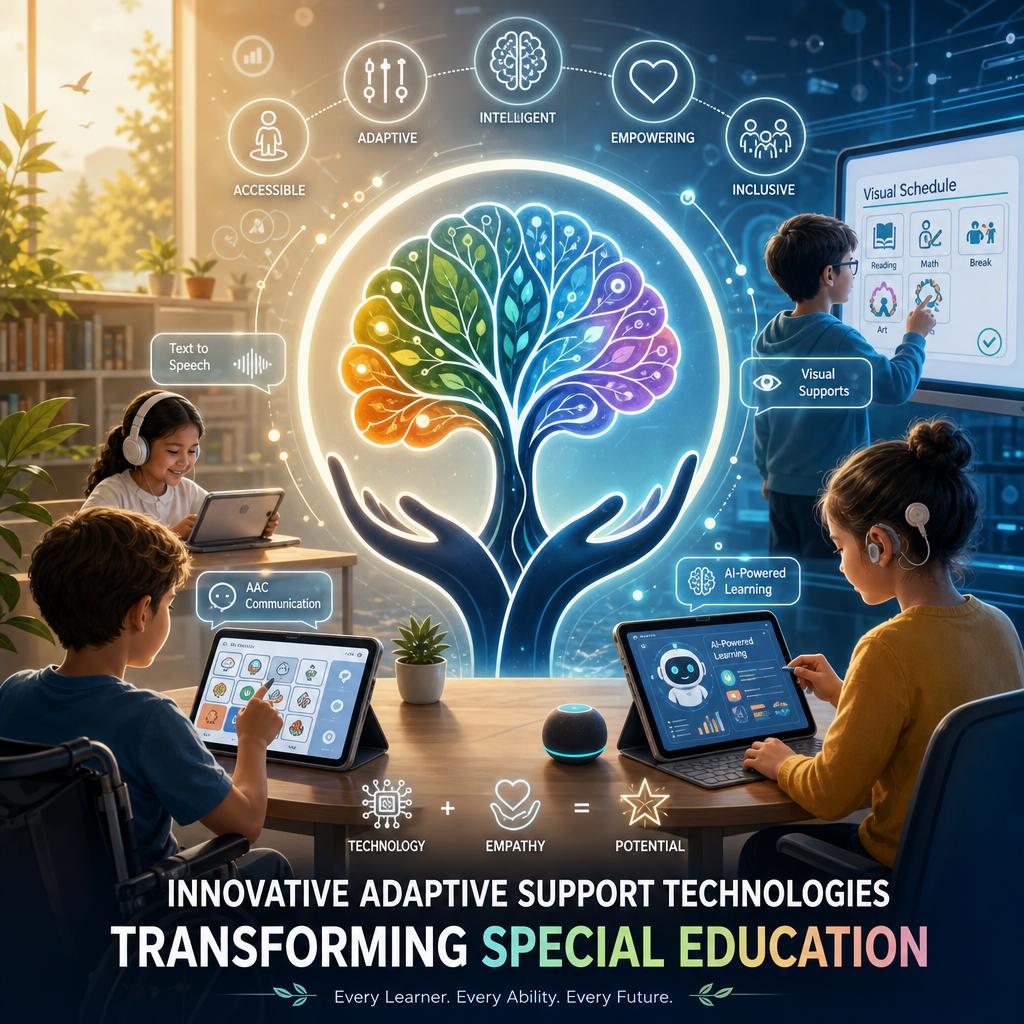
Innovative Adaptive Support Technologies Transforming Special Education
Artificial Intelligence is revolutionizing education for students with disabilities by offering tailored, adaptive support that dynamically responds to individual learning needs. These technologies analyze user interactions and cognitive patterns, enabling personalized adjustments that enhance comprehension and engagement. Key features include:
- Real-time feedback: AI-powered tools provide immediate, actionable insights, helping learners identify mistakes and improve steadily.
- Customizable learning paths: Students progress at their own pace, focusing on areas requiring reinforcement without needless repetition.
- Multisensory engagement: Integrating visual,auditory,and tactile stimuli to cater to diverse accessibility needs,fostering holistic understanding.
Beyond individual learning, educators benefit from comprehensive AI-generated analytics that support data-driven instructional strategies. This synergy creates an inclusive ecosystem where both teachers and students thrive. Consider the following capability matrix illustrating typical AI support features for various disabilities:
| Disability Type | adaptive Feature | Primary Benefit |
|---|---|---|
| Dyslexia | Text-to-Speech & Font Adjustments | Improved reading fluency and comprehension |
| Autism Spectrum | Predictable Learning Routines | Reduced anxiety and enhanced focus |
| ADHD | Distraction Management Tools | Increased concentration and task completion |
Key strategies for Implementing AI-Driven Tools in Inclusive Classrooms
Integrating AI-driven tools in classrooms requires a thoughtful approach that prioritizes personalization and accessibility. One effective strategy is to leverage adaptive learning systems that dynamically modify content based on each student’s needs. These technologies analyze real-time data to customize instruction, ensuring students with disabilities receive targeted support that aligns with their unique learning profiles. Teachers should also foster a collaborative environment where AI tools augment human expertise rather than replace it. This balance enhances engagement and helps educators better address diverse learning challenges by providing timely insights and tailored feedback.
Another critical approach involves deploying multimodal AI solutions that accommodate various sensory and cognitive preferences. These tools include voice recognition, text-to-speechand gesture-based interfaces, which can significantly reduce learning barriers. To maximize their impact, educators must consider the specific disabilities present in their classrooms and offer flexible implementation options. The table below outlines typical AI features and their adaptive benefits, guiding educators in selecting the right tools for diverse educational needs.
| AI Tool Feature | Disability Support | Benefit |
|---|---|---|
| Adaptive Text Difficulty | Learning Disabilities | Enhances comprehension and retention |
| Speech-to-Text | Physical/Motor Impairments | Facilitates communication and writing |
| Visual Customization | Visual Impairments | Improves readability and focus |
Best Practices and recommendations for Maximizing AI Benefits in Disability Learning Support
To truly harness the power of AI in supporting learners with disabilities, customization must be prioritized. Every learner presents unique challenges and strengthsand AI systems should be designed to adapt dynamically to these individual needs. Integrating continuous feedback loops where learners and educators can provide real-time input ensures that AI-driven tools remain responsive and relevant. Moreover, incorporating multimodal support-such as voice recognition, text-to-speechand visual aids-helps address a wider spectrum of disabilities, creating a more inclusive and effective learning environment.
Ensuring ethical implementation is equally critical to maximize benefits while safeguarding learners. Transparency in how AI algorithms operate builds trust and empowers users to understand the scope and limits of the technology. Equally important is regular assessment using both qualitative and quantitative methods to evaluate AI effectiveness, guide improvementsand prevent potential biases or unintended consequences. The table below summarizes key recommendations for effective AI integration in disability learning support:
| Best Practice | Impact |
|---|---|
| Personalized Learning Paths | Enhanced learner engagement and retention |
| Multimodal communication Tools | Broader accessibility across disabilities |
| Ongoing Feedback Mechanisms | Improved AI adaptability and relevance |
| Ethical Transparency | Greater trust and user empowerment |
| Regular Impact Assessments | Continuous improvement and fairness |