

The Role of AI in Enhancing Wildlife Monitoring and Data Collection
Advancements in artificial intelligence have revolutionized the capabilities of researchers and conservationists by enabling precise and scalable analysis of vast amounts of ecological data. AI-powered tools, such as machine learning algorithms and computer vision, can automatically identify animal species from images and audio recordings, greatly reducing the time and human effort traditionally required in wildlife monitoring.This results in more accurate population estimates and helps detect subtle changes in animal behaviour and habitat conditions, facilitating timely and targeted conservation interventions.
Key benefits of AI integration include:
- Enhanced data processing speed
- Improved accuracy in species identification
- Automated detection of poaching and illegal activities
- Real-time monitoring via drones and sensor networks
| Application Area | AI Technology Used | Impact |
|---|---|---|
| Camera Trap Analysis | Convolutional Neural Networks | Rapid species detection and count |
| acoustic Monitoring | Audio Pattern Recognition | Identifies species-specific calls |
| drone Surveillance | Real-time Object Detection | Tracks animal movements & human threats |
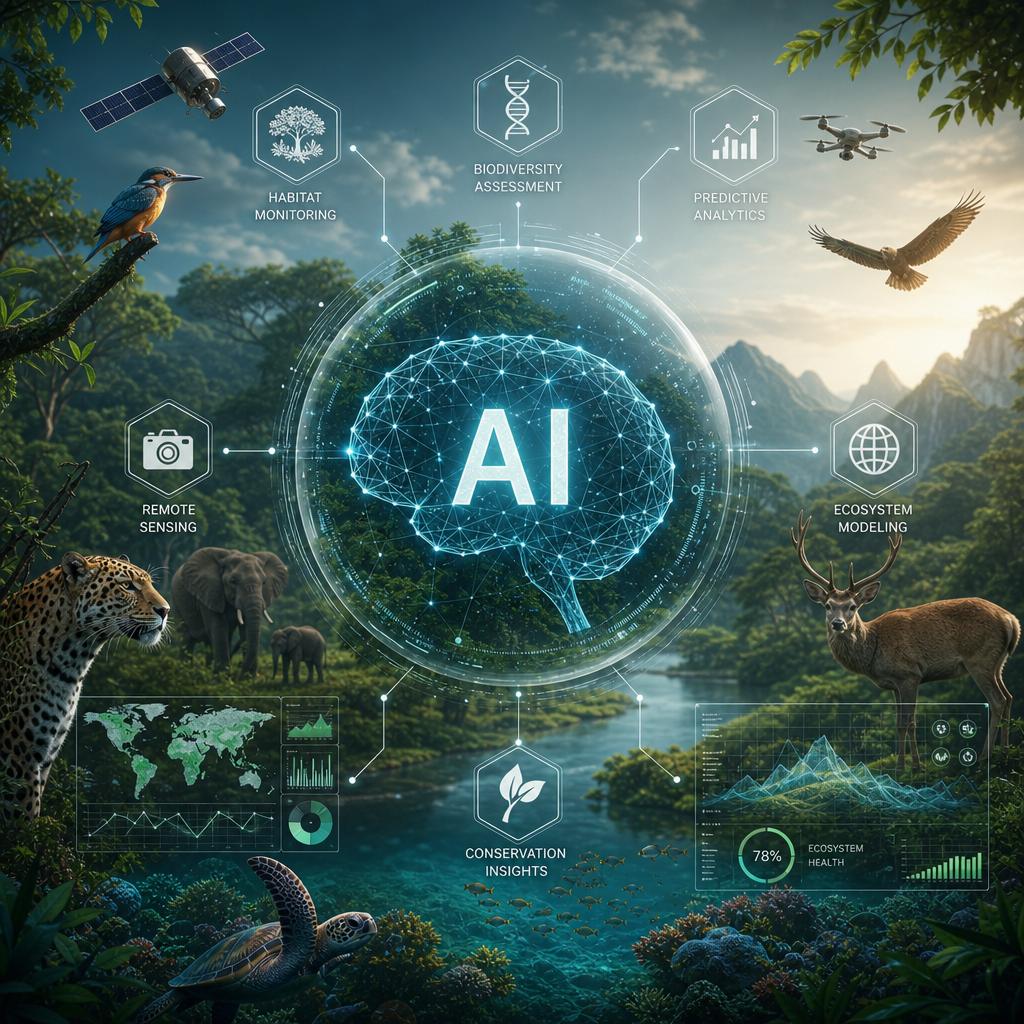
Advanced AI Techniques for Analyzing ecosystem Health and Biodiversity
Harnessing the power of artificial intelligence (AI) in conservation efforts has revolutionized the way we monitor and protect natural habitats and the intricate web of life they support. Advanced AI algorithms enable researchers to process vast datasets collected from satellite imagery, drone footageand sensor networks with unprecedented accuracy and speed. These techniques extend beyond simple data analysis, incorporating machine learning models that can identify species, track animal movements, detect environmental changesand predict potential threats to biodiversity. As a notable example, convolutional neural networks (CNNs) excel in image recognition tasks, allowing for automated species identification from camera trap photos, while recurrent neural networks (RNNs) analyze time-series data to assess ecosystem health dynamics over time.
- Multispectral Imaging Analysis: AI processes varied light spectra to detect vegetation stress and habitat degradation.
- Acoustic Monitoring: Machine learning deciphers wildlife vocalizations, offering non-invasive species inventories.
- Predictive Ecosystem Modeling: Simulations forecast impacts of climate change and human activity on biodiversity.
| Technique | Primary Application | Benefit |
|---|---|---|
| Deep Learning | Species identification in imagery | Rapid and scalable analysis |
| Reinforcement learning | Adaptive monitoring strategies | Optimized resource allocation |
| Natural Language Processing | Automated extraction from research papers | Accelerated knowledge synthesis |
Beyond data processing, AI is integral to proactive conservation planning by integrating multisource data into cohesive ecosystem models. These AI-driven insights help identify biodiversity hotspots, monitor invasive speciesand assess the effectiveness of protection policies in real time. Importantly, this fusion of technology and ecology empowers scientists and policymakers with decision-support tools that prioritize interventions with measurable outcomes, maximizing conservation impact. As AI continues to evolve, its role in advancing ecosystem resilience and safeguarding biodiversity becomes not just an innovation but a necessity in addressing the complexities of global environmental change.
Integrating AI-Driven Insights into conservation Policy and Practice
Harnessing artificial intelligence in conservation efforts revolutionizes how policy decisions and on-the-ground practices are shaped. By employing machine learning algorithms and predictive analytics, wildlife biologists and environmental managers gain deeper understanding of species behaviors, migration patterns, and habitat health. This data-driven approach allows for more precise allocation of resources and timely interventions,reducing human-wildlife conflicts and enhancing ecosystem resilience. Key benefits include:
- Real-time monitoring through AI-powered drones and sensor networks
- Pattern recognition to detect poaching hotspots and illegal activities
- Predictive modeling to assess climate impacts on biodiversity
Integrating these advanced insights into legislation and conservation strategies fosters collaborative frameworks that align scientific evidence with policy objectives. AI tools also empower local communities by providing accessible platforms for reporting environmental changes and threats, making conservation a collective and adaptive process. As a result, institutions can create responsive policies that not only protect endangered species but also promote enduring coexistence with natural ecosystems.
| AI Capability | Conservation Application | Outcome |
|---|---|---|
| Image Recognition | identifying species from camera trap footage | Faster biodiversity assessments |
| Predictive Analytics | Forecasting habitat loss due to climate change | Informed land-use planning |
| Natural Language Processing | Analyzing community reports and social media for threats | Enhanced threat detection |
strategic Recommendations for leveraging AI to Protect Endangered Species and Habitats
To maximize the impact of artificial intelligence in conservation efforts, it is indeed crucial to integrate data-driven strategies that facilitate real-time monitoring and predictive analytics. Conservationists should prioritize deploying AI tools like drone surveillance and automated audio recognition systems in remote or vulnerable habitats. These technologies can identify poaching threats, detect early signs of habitat degradationand track migration patterns with unprecedented accuracy. Collaboration between AI experts, ecologistsand local communities forms the backbone of a extensive conservation framework, ensuring that technological solutions are contextually relevant and actionable.
- Develop adaptive AI models that evolve with changing environmental conditions and species behaviors.
- Implement transparent data-sharing protocols to foster global cooperation and accelerate species recovery efforts.
- Invest in capacity building for conservationists to effectively utilize AI tools and interpret complex datasets.
| AI Application | Benefit | Key Challenge |
|---|---|---|
| Automated Image Recognition | Efficient species identification | High-quality labeled datasets required |
| Predictive Habitat Modeling | Early detection of habitat threats | Complex environmental variables |
| Poaching Alert systems | Real-time threat response | Infrastructure limitations in remote areas |
Furthermore, ethical considerations must guide AI deployment to respect indigenous knowledge and promote biodiversity without unintended ecological disturbances. Harnessing AI’s ability to analyze vast,multifaceted datasets enables conservationists to identify patterns that were once invisible,thereby optimizing resource allocation and intervention timing. By embedding AI-driven insights into policy-making and field operations, conservation programs can become more proactive, resilientand scalable, ultimately empowering efforts to safeguard the planet’s moast vulnerable species and ecosystems for future generations.