

AI Integration in Industrial Machinery Safety Protocols
Implementing AI in industrial machine safety protocols revolutionizes hazard detection and response times. Advanced sensors paired with machine learning algorithms allow these systems to predict potential failures and automatically activate emergency shutdown procedures. This real-time decision-making capability considerably reduces workplace accidents, creating a safer surroundings for operators while maintaining operational efficiency. Moreover, AI continuously analyzes past and live data to refine safety responses, adapting to new risk patterns and ensuring that machinery operates within secure parameters.
However,the deployment of AI control systems in industrial settings comes with stringent constraints to prevent unintended consequences. Key considerations include:
- Ensuring fail-safe mechanisms override AI commands in case of system malfunction
- Maintaining clarity in AI decision processes for regulatory compliance
- Periodic auditing of algorithms to mitigate bias or drift in safety assessment
- Integrating human oversight to intervene when necessary
| Constraint | Purpose |
|---|---|
| fail-safe protocols | Prevent hazardous autonomous actions |
| Regulatory compliance | Ensure legal and safety standards |
| Algorithm audits | Maintain reliability over time |
| Human oversight | Intervene in critical situations |
By balancing technological advancements with robust safety controls, industries can harness AI’s full potential without compromising on protection standards.
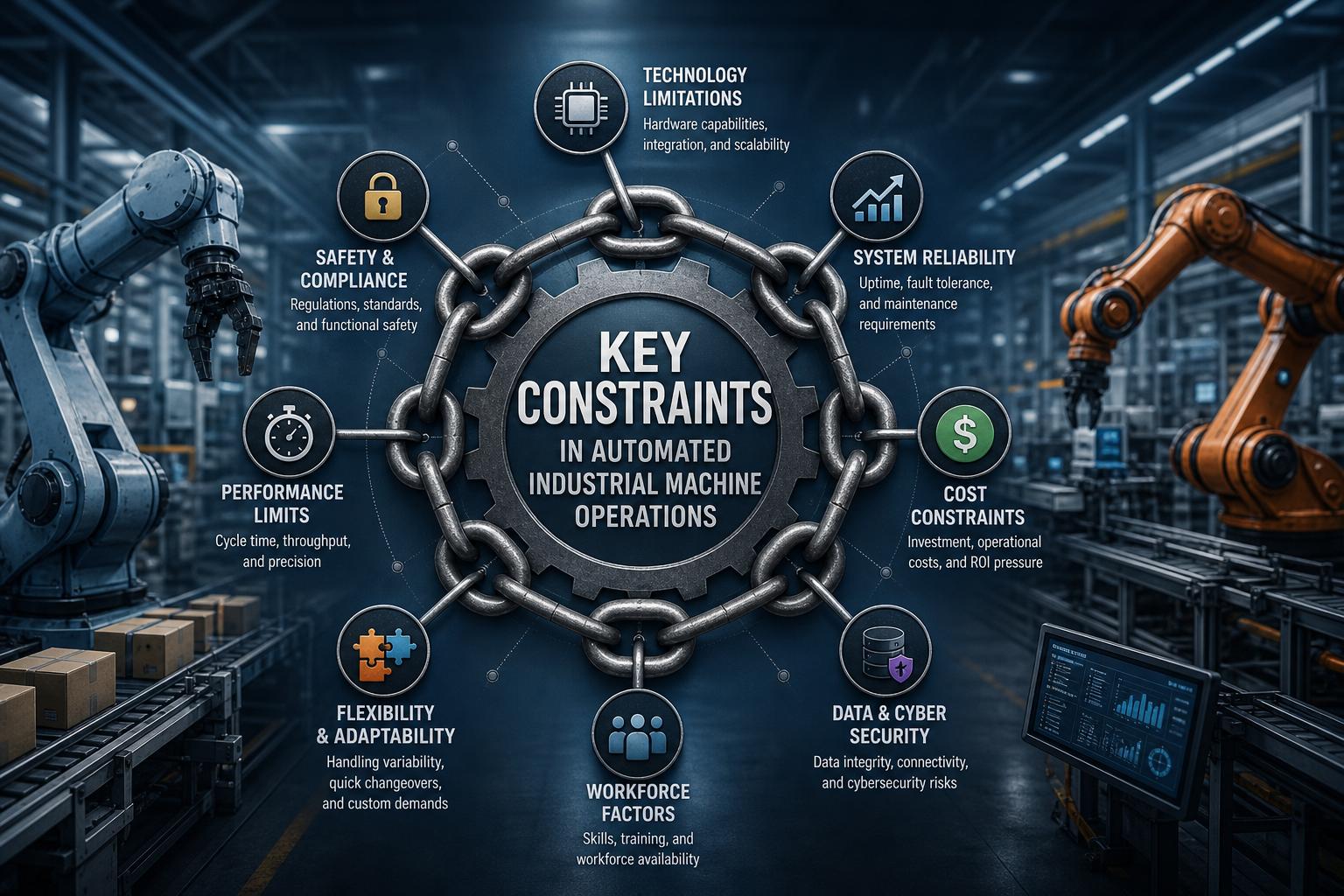
Key Constraints in Automated Industrial Machine Operations
Automating industrial machines with AI introduces a set of critical limitations that operators and engineers must continuously monitor. One major constraint is the challenge of real-time decision accuracy. AI systems rely heavily on sensor inputs and data processing capabilities, yet any delay in interpreting sudden changes in the machine environment can lead to faulty commands or unsafe operations. Additionally, hardware failures or unexpected mechanical wear can create discrepancies between AI predictions and actual machine behaviour, increasing the risk of accidents if safeguards are not robust.
beyond technological factors, regulatory and ethical guidelines impose strict boundaries on AI control in industrial settings. Compliance with safety standards necessitates layered control systems that prioritize manual override possibilities and fail-safe protocols. The table below outlines some of the primary constraints governing automated operations and their impacts on safety and functionality:
| Constraint | Impact on Operations | Mitigation Approach |
|---|---|---|
| Sensor Latency | Delayed response to hazards | High-speed data processing & redundancy |
| Hardware Wear | Unexpected machine failures | Predictive maintenance using AI diagnostics |
| Regulatory Compliance | Limited operational autonomy | Incorporation of human-in-the-loop checks |
| Cybersecurity Threats | Potential system breaches | Advanced encryption and firewall layers |
Strategies for Ensuring Human Oversight in AI-Controlled Systems
Maintaining robust human oversight in AI-controlled industrial environments demands the integration of layered monitoring protocols. First, it is critical to implement real-time alert systems that notify operators the moment an AI system deviates from predefined operational parameters. these alerts must be clearly distinguishable and designed to prevent desensitization. Alongside, establishing a systematic audit trail enables thorough post-operation reviews. This historical data is invaluable for diagnosing malfunctions,understanding decision pathways,and enhancing algorithms over time. human supervisors should be equipped with intuitive dashboards that synthesize AI outputs and sensor feedback, facilitating rapid and informed intervention.
Furthermore, cultivating a culture of accountability involves defining explicit roles and responsibilities for human overseers, emphasizing their authority to override or halt AI actions when safety concerns arise. Training programs tailored to AI system intricacies ensure that personnel recognize subtle warning signs and understand operational constraints. Below is an example of key oversight layers and their strategic purposes:
| Oversight Layer | Purpose | Example Tools |
|---|---|---|
| Real-time Monitoring | Immediate detection of anomalies | Alert dashboards, sensor fusion |
| Audit and Logs | Traceability and accountability | activity logs, decision records |
| Human Override | Enable emergency intervention | Manual shutdown controls, override switches |
| Training & Protocols | Operator preparedness and clarity | Scenario drills, certification courses |
best Practices for Regulatory Compliance and Risk Mitigation
adhering to regulatory frameworks is paramount when deploying AI systems to control industrial machinery. Organizations must ensure that AI algorithms undergo rigorous validation and continuous monitoring to comply with industry-specific safety standards such as ISO 13849 and IEC 61508. Incorporating redundant safety checks and fail-safe mechanisms enhances system resilience against unforeseen AI decision errors. Regular audits and updates of risk assessments are crucial to address evolving compliance mandates and technological changes. Establishing transparent documentation of AI behaviors assists both in internal accountability and external regulatory inspections.
Risk mitigation extends beyond regulatory compliance, necessitating a holistic approach to safeguard personnel and equipment. Critical measures include:
- Real-time anomaly detection: Integrate AI-driven sensors that can promptly flag deviations or hazardous conditions.
- human-in-the-loop systems: Maintain operator oversight to intervene when AI decisions present safety concerns.
- Robust data governance: Ensure AI training data is complete and free from biases that could skew operational safety.
| Risk mitigation Strategy | Primary Benefit |
|---|---|
| Fail-Safe Mechanisms | Prevents machinery damage |
| Continuous monitoring | Detects unsafe anomalies early |
| Operator Intervention | Ensures situational judgment |