

AI Coding Agents Transforming Software Development Workflows
The advent of AI coding agents marks a revolutionary shift in software engineering, empowering developers to focus on high-level problem-solving while routine and repetitive coding tasks are delegated to autonomous systems. These agents leverage advanced machine learning models and natural language processing capabilities to interpret project requirements, generate code snippets, and even optimize algorithms, considerably accelerating the development lifecycle. Key advantages include:
- Automated bug detection and correction, reducing time spent on debugging
- Real-time code completion tailored to project context
- Collaborative coding assistance integrating seamlessly with popular development environments
Furthermore, AI coding agents enable robust workflow automation by bridging gaps between various phases of software creation-from initial design to deployment. their ability to self-learn from vast codebases and adapt to different programming languages enhances cross-functional team productivity and consistency in code quality. The table below highlights how these agents stack up against conventional development methods:
| Aspect | Traditional Development | AI-Powered Coding Agents |
|---|---|---|
| speed | Moderate | Accelerated by parallel automated coding |
| Accuracy | Dependent on human skill | Continuous betterment through machine learning |
| collaboration | Manual coordination required | Integrated seamless interaction across teams |
| Adaptability | Limited by experience | Dynamic learning from diverse codebases |
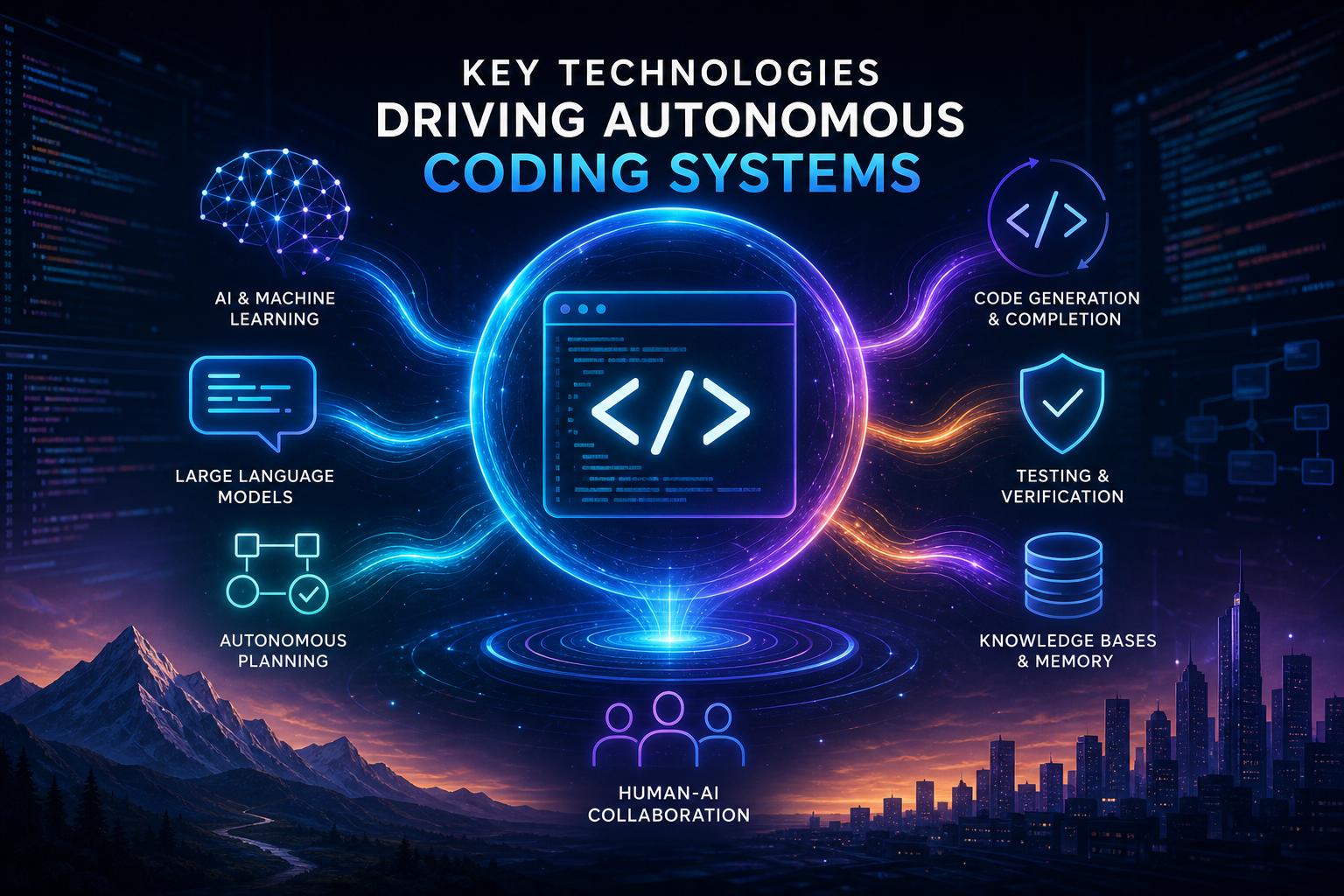
Key Technologies Driving Autonomous Coding Systems
Autonomous coding systems hinge on a synergy of advanced AI technologies that collectively elevate software development towards new heights of efficiency and innovation. Among these, machine learning algorithms serve as the foundational engine, enabling coding agents to learn from vast repositories of code, identify patterns, and generate optimized solutions autonomously. paired with natural language processing (NLP), these systems can comprehend and translate complex human instructions into executable code, bridging the gap between developers’ intent and machine execution. Moreover, reinforcement learning enhances adaptability by continuously refining coding strategies based on feedback and performance outcomes, ensuring the generated software meets evolving requirements without human intervention.
Complementing these AI-driven cores are critical supporting technologies that fortify the robustness and scalability of autonomous coding systems. Cloud computing provides the necessary computational power and storage to manage large-scale datasets and enable real-time code synthesis, while containerization and microservices architecture facilitate modular and maintainable development workflows. Additionally, complex debugging tools integrated with AI capabilities allow these systems to detect, isolate, and resolve errors autonomously, vastly reducing development cycles. The following table highlights the key technologies along with their primary roles in developing autonomous coding agents:
| Technology | Primary Role |
|---|---|
| Machine Learning | Pattern recognition & code generation |
| Natural Language Processing | Understanding developer intent |
| Reinforcement Learning | Adaptive improvement via feedback |
| Cloud Computing | Scalable processing & storage |
| containerization | Modular deployment & testing |
| AI-Enhanced Debugging | Autonomous error detection and fix |
Challenges and Ethical Considerations in AI-Driven Programming
As autonomous AI coding agents become more integrated into software development pipelines, developers and organizations confront an evolving landscape of concerns. A primary challenge lies in ensuring openness and accountability. while AI models can generate code at remarkable speeds, their decision-making processes often remain opaque, making it arduous to identify the origin of bugs or security vulnerabilities. Additionally, there is a growing need for rigorous validation mechanisms to verify that AI-generated code adheres to industry standards and does not introduce unintended behaviors. This challenge is compounded by the dynamic nature of software requirements, which frequently enough demand adaptability beyond the current scope of AI programming agents.
Beyond technical hurdles, ethical considerations demand careful attention. Data privacy and intellectual property rights emerge as paramount issues, especially when AI systems are trained on vast repositories of existing code, some of which may be proprietary or licensed under restrictive terms. The risk of inadvertent plagiarism or misuse of copyrighted algorithms raises important legal and moral questions.Moreover, there are concerns around the potential erosion of human expertise, with reliance on autonomous agents possibly diminishing the nuanced judgment that experienced developers bring to complex problem-solving.
| Challenge | Potential Impact |
|---|---|
| Transparency in AI Decisions | Difficulty in debugging and trust-building |
| Data Privacy | Risk of exposing sensitive data |
| Intellectual Property | Legal disputes over code ownership |
| human Expertise Erosion | Reduced critical thinking in code review |
Best Practices for Integrating AI Coding Agents in Development Teams
Seamlessly incorporating AI coding agents into development teams demands a blend of strategic planning and ongoing evaluation.Start by clearly defining the scope and limitations of the AI tools-understanding their strengths in code generation, bug detection, or documentation enhancement helps align expectations and optimize workflows. Equally crucial is fostering a culture of collaboration where human developers and AI agents complement each other’s skills rather than compete. This ensures that engineers retain full oversight of critical decisions while leveraging AI’s ability to accelerate routine tasks.
To maximize effectiveness, teams should embrace iterative feedback loops between developers and AI agents. This includes regularly assessing the AI’s output quality and tuning parameters to better fit project needs. Establishing standardized protocols for code review and integration can mitigate risks of introducing subtle errors from automated suggestions. below is a concise framework illustrating key elements of successful integration:
| Best Practice | Objective | Benefit |
|---|---|---|
| Define Roles & Boundaries | Clarify AI agent tasks | Reduces misuse and confusion |
| Encourage Human-AI Partnership | Promote collaboration | Enhances code quality |
| Implement Feedback Loops | Continuous improvement | Adapts AI to team needs |
| Standardize Review Processes | Ensure code safety | Minimizes risk of errors |