

Establishing a Robust Framework for AI Center of Excellence
Building a successful AI center of Excellence requires a meticulously designed framework that fosters innovation while ensuring alignment with organizational goals. At its core, this framework must emphasize governance, scalabilityand talent development. Governance ensures that every AI initiative complies with ethical standards and data privacy regulations, establishing trust both internally and externally.Scalability enables the rapid deployment of AI solutions, supporting the organization’s growth without sacrificing quality. Meanwhile, a focused talent development program nurtures expertise across data science, engineeringand domain knowledge, creating a continuous pipeline of skilled professionals who drive AI advancement.
To operationalize this approach,it is essential to establish clear roles,responsibilities,and standardized processes that facilitate collaboration across departments. Below is a sample breakdown of key framework components that exemplify best practices:
| Component | Purpose | Key Activities |
|---|---|---|
| Governance | Ensure compliance and risk management | Policy formulation,audit trails,ethical reviews |
| talent Development | Build AI skills and expertise | Training programs,knowledge sharing,mentoring |
| Technology Standards | Maintain consistency and interoperability | Tool selection,coding guidelines,architecture reviews |
| Collaboration | Encourage cross-functional teamwork | Workshops,joint projects,dialog platforms |
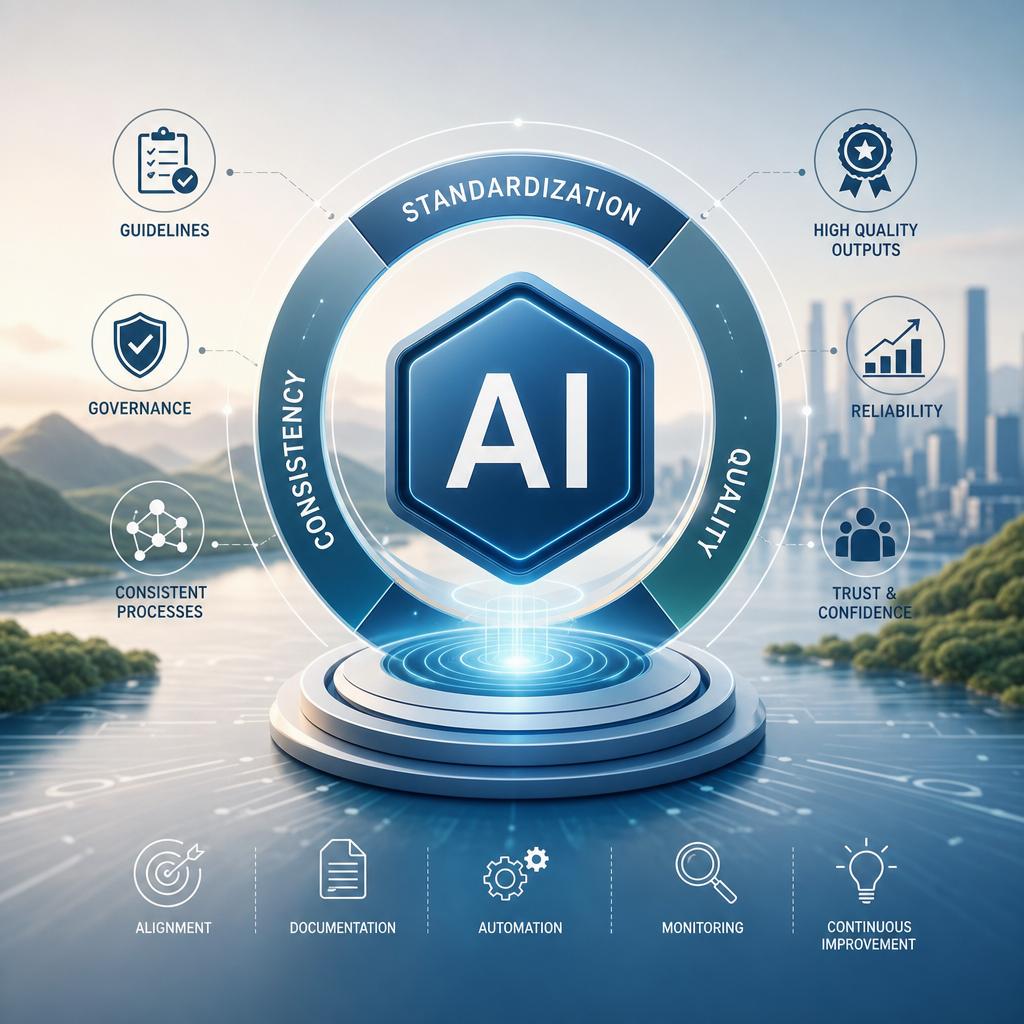
standardizing AI Practices to Ensure Consistency and Quality
Establishing uniform AI methodologies across an organization is crucial to delivering dependable and scalable solutions. A centralized framework helps align various teams, ensuring that projects adhere to best practices in data governance, algorithmic transparencyand ethical considerations. By codifying these standards, companies minimize risks associated with bias, security vulnerabilities, and inconsistent performance. Key components often include:
- Data Quality Checks: Rigorous validation processes to maintain accuracy and relevance.
- Model Validation Protocols: Standardized testing to ensure robustness across use cases.
- comprehensive Documentation: Clear records of development stages to facilitate reproducibility and audits.
Maintaining these standards provides a strong foundation for continuous enhancement and fosters trust both internally and externally.It also accelerates adoption by simplifying the integration of AI solutions into existing workflows. The following table illustrates typical roles and their responsibilities within a standardized AI governance framework:
| Role | Primary Duty | Key deliverable |
|---|---|---|
| AI Governance Lead | Oversees compliance and ethical standards | policy and guideline documentation |
| Data Scientist | Develops and validates models | Model performance reports |
| Data Engineer | Ensures data pipeline integrity | Validated data sets and pipelines |
Fostering Cross-Functional collaboration for Accelerated AI Adoption
Building a successful AI initiative requires a unified approach that bridges diverse expertise and functional areas within an organization. By establishing clear communication channels and fostering a culture of shared goals, teams from data science, IT, operationsand business units can align their efforts efficiently. Cross-functional collaboration not only accelerates problem-solving but also facilitates the integration of AI solutions into existing workflows, ensuring the technology delivers real, measurable impact. Encouraging regular knowledge exchange through workshops, joint planning sessionsand collaborative platforms empowers each stakeholder to contribute their unique perspective, driving innovation and adoption concurrently.
To support effective collaborationorganizations can implement practical frameworks that clarify roles, responsibilitiesand milestones for AI projects. The following table highlights key elements for cross-functional collaboration that enhance AI adoption:
| Element | Purpose | Benefit |
|---|---|---|
| Clear Governance | Define decision-making authority | Reduces delays and confusion |
| Shared metrics | Align success criteria across teams | Ensures unified objectives |
| Collaborative Tools | Facilitate real-time interaction | Enhances transparency and feedback |
- Establishing AI-focused centers or guilds that bring specialists together nonetheless of their departmental origin.
- Embedding AI champions within business units to bridge technical and operational domains.
- Promoting a fail-fast mindset to encourage experimentation and iterative learning across teams.
Implementing Continuous Improvement Mechanisms to Sustain AI Excellence
Maintaining a culture of continuous improvement is pivotal for organizations aiming to sustain AI excellence through their Center of Excellence. This requires embedding robust feedback loops that capture insights from AI projects and operational outcomes. By systematically analyzing these insights,teams can identify areas of refinement,optimize algorithms,and realign AI strategies with evolving business goals. Key to this process is the establishment of cross-functional review boards that convene regularly to assess AI performance metrics and risk factors, ensuring that innovations are both effective and ethically sound.
Critical components of these ongoing improvement mechanisms include:
- Dynamic Performance Dashboards: Real-time monitoring tools that highlight AI system health, accuracyand adoption rates.
- Iterative model Retraining: Scheduled updates to models based on new data and shifting contexts to avoid performance degradation.
- Stakeholder Engagement Forums: Collaborative sessions were feedback from end-users, data scientistsand business leaders converges to drive enhancements.
| mechanism | Purpose | Key Outcome |
|---|---|---|
| Feedback Loop Integration | Gather continuous user and system insights | Improved AI adaptability |
| Regular AI Audits | Validate model compliance and ethics | Risk mitigation and trust building |
| Knowledge Sharing Platforms | Enable cross-team learning and innovation | Accelerated capability growth |