

AI Center of Excellence as a Strategic catalyst for Organizational Innovation
The establishment of an AI Center of Excellence (coe) acts as a pivotal force in unifying disparate teams under a cohesive framework, ensuring that AI initiatives not only align with organizational goals but also adhere to robust standards. By centralizing expertise, resourcesand best practices, the CoE cultivates an surroundings where innovation thrives yet remains consistent with compliance and ethical guidelines. This strategic hub accelerates adoption across departments, transforming AI from isolated experiments into scalable, enterprise-wide solutions.
Key functions empowered by the CoE include:
- Governance and Standardization: Defining clear protocols that guarantee quality, securityand interoperability across AI projects.
- Cross-Functional Collaboration: Breaking down silos by fostering communication between data scientists, engineersand business leaders.
- Continuous Skill Progress: Providing ongoing training and certification programs to keep teams future-ready.
| Area | Impact | Result |
|---|---|---|
| Standard Operating Procedures | Consistent model deployment | Reduced errors and improved reliability |
| Resource Sharing | Optimized tool usage across teams | Cost savings and faster innovation cycles |
| Knowledge Repository | Centralized AI insights and lessons learned | Accelerated learning curve institution-wide |
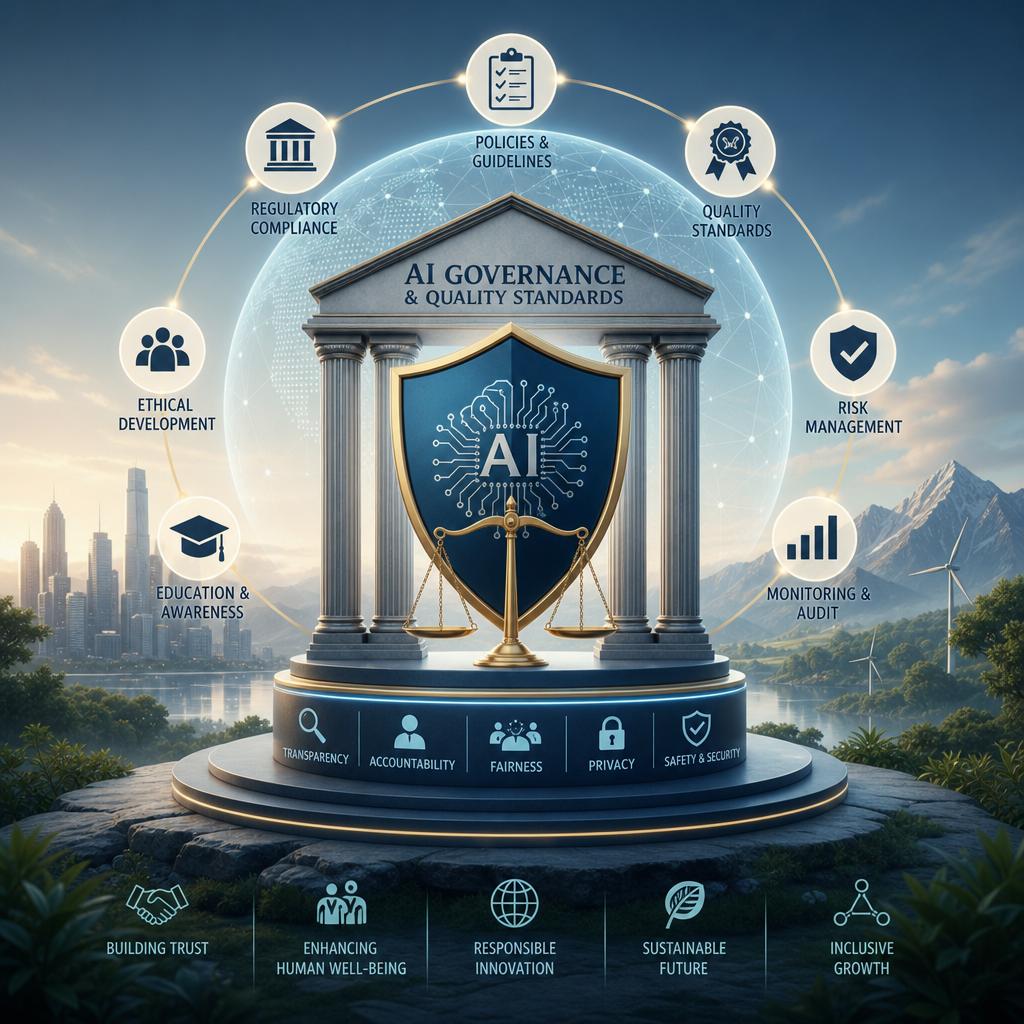
Establishing Robust frameworks for AI Governance and Quality Standards
To ensure transformative AI initiatives deliver consistent value, it is indeed imperative to implement a extensive framework that governs deployment, ethicsand quality at every stage. This framework acts as a backbone, enabling organizations to maintain transparency while promoting responsible innovation. Key components of an effective framework include:
- Clear accountability structures: Assigning distinct roles and responsibilities to ensure compliance and oversight.
- Standardized evaluation metrics: Utilizing consistent benchmarks for accuracy, fairnessand performance across all AI models.
- Ethical guidelines: Embedding principles that respect user privacy, prevent bias, and prioritize societal impact.
- Continuous monitoring and feedback loops: Enabling real-time auditing and adaptive risk management through automated systems and human review.
| Governance Element | Objective | Key Benefit |
|---|---|---|
| Policy Framework | Set consistent rules and protocols | Ensures unified standards across teams |
| Model Validation | Verify output reliability and fairness | Reduces risks from biased or erroneous AI |
| Data Integrity Controls | Maintain clean and representative datasets | Enhances model accuracy and trustworthiness |
| Audit Trail Systems | Document all AI decision-making processes | Supports transparency and regulatory compliance |
Equipping teams with a robust governance and quality assurance framework fosters confidence in AI solutions and accelerates adoption across business units. By codifying these standards, organizations not only safeguard against operational risks but also create a culture rooted in ethical AI innovation. The Center of Excellence serves as the steward of these frameworks, bridging technical expertise and strategic oversight to uphold best practices throughout the AI lifecycle.
Fostering Cross-Functional Collaboration to Accelerate AI Adoption
Accomplished acceleration of artificial intelligence initiatives hinges on the seamless integration of diverse functions within an organization. By uniting data scientists, business strategists, IT specialists, and operational leadersorganizations create a dynamic ecosystem where AI solutions are not only developed but also tailored to meet multifaceted business demands.This collaborative spirit fosters shared accountability and cross-pollination of ideas,essential for overcoming technical challenges and aligning AI deployment with strategic priorities. Emphasizing standardized communication channels and joint problem-solving frameworks ensures that innovation thrives while minimizing duplication of efforts and resource waste.
- Aligning objectives: Ensuring all teams share common goals related to AI impact and scalability.
- Knowledge exchange: Encouraging regular workshops and hands-on sessions to broaden AI literacy.
- Resource sharing: Centralizing access to data, tools, and platforms to enhance efficiency.
| Team Role | Primary Contribution | Collaboration Benefit |
|---|---|---|
| Data Scientists | Algorithm development | Technical innovation & validation |
| Business Analysts | Needs assessment | Market alignment & user focus |
| IT Infrastructure | System integration | Robust and scalable deployment |
| Operations | Process optimization | Efficient adoption & feedback loop |
Best Practices for Scaling AI Competencies and Embedding Continuous Improvement
Scaling AI competencies across an organization demands a strategic approach that balances skill development with practical applications.To ensure sustainable growth in AI capabilities, it is indeed essential to establish a structured learning pathway that includes hands-on projects, mentorship programsand cross-functional collaboration. Embedding continuous improvement requires organizations to adopt a feedback-driven culture where data scientists and AI practitioners routinely share insights, challenges, and solutions. This approach not only enhances individual proficiency but also fosters collective intelligence, enabling teams to accelerate innovation and stay aligned with evolving business needs.
Implementation of standard governance frameworks and performance metrics plays a pivotal role in embedding continuous improvement within AI initiatives. Organizations should maintain a dynamic repository of best practices, toolsand templates to streamline repeatable processes and reduce knowledge silos. The table below highlights key elements that organizations should prioritize for effective scaling and improvement:
| Focus Area | key Action | Outcome |
|---|---|---|
| Skill Development | Ongoing training & mentorship | Enhanced expertise & retention |
| Cross-team Collaboration | Regular knowledge-sharing sessions | Faster problem resolution |
| Governance | standardized protocols & audits | Consistent quality & compliance |
| Performance Tracking | real-time dashboards & KPIs | Data-driven improvement cycles |