

Establishing a Robust Framework for AI Governance and Ethics
To build a resilient and ethical AI ecosystemorganizations must embed clear principles that guide development, deployment, and oversight processes. Central to this is establishing a comprehensive governance framework that aligns with legal requirements, societal valuesand organizational objectives. Such a framework should emphasize openness,accountability,and fairness,ensuring that AI systems operate without bias and are subject to rigorous audit trails. Key components include:
- Policy Integration: Embedding AI ethics policies into existing corporate governance protocols.
- Cross-functional Oversight: Creating committees that consist of diverse stakeholders, including legal, technicaland ethical experts.
- Risk management: Continuous evaluation of AI model risks with mechanisms for rapid remediation.
These pillars create a foundation that not only supports responsible AI innovation but also facilitates trust across internal teams and external partners. By integrating structured ethical checkpoints and governanceorganizations can systematically address challenges such as data privacy, algorithmic biasand unintended consequences. The table below outlines a simplified governance lifecycle that captures essential stages for ethical AI management:
| Stage | Key Activities | Governance Focus |
|---|---|---|
| Design & Development | Ethics Impact Assessment, Bias Mitigation | Transparency & Fairness |
| Deployment | Compliance Checks, Stakeholder Approval | Accountability & Risk Control |
| Monitoring & Auditing | Performance Audits, Incident Response | Responsiveness & Adaptability |
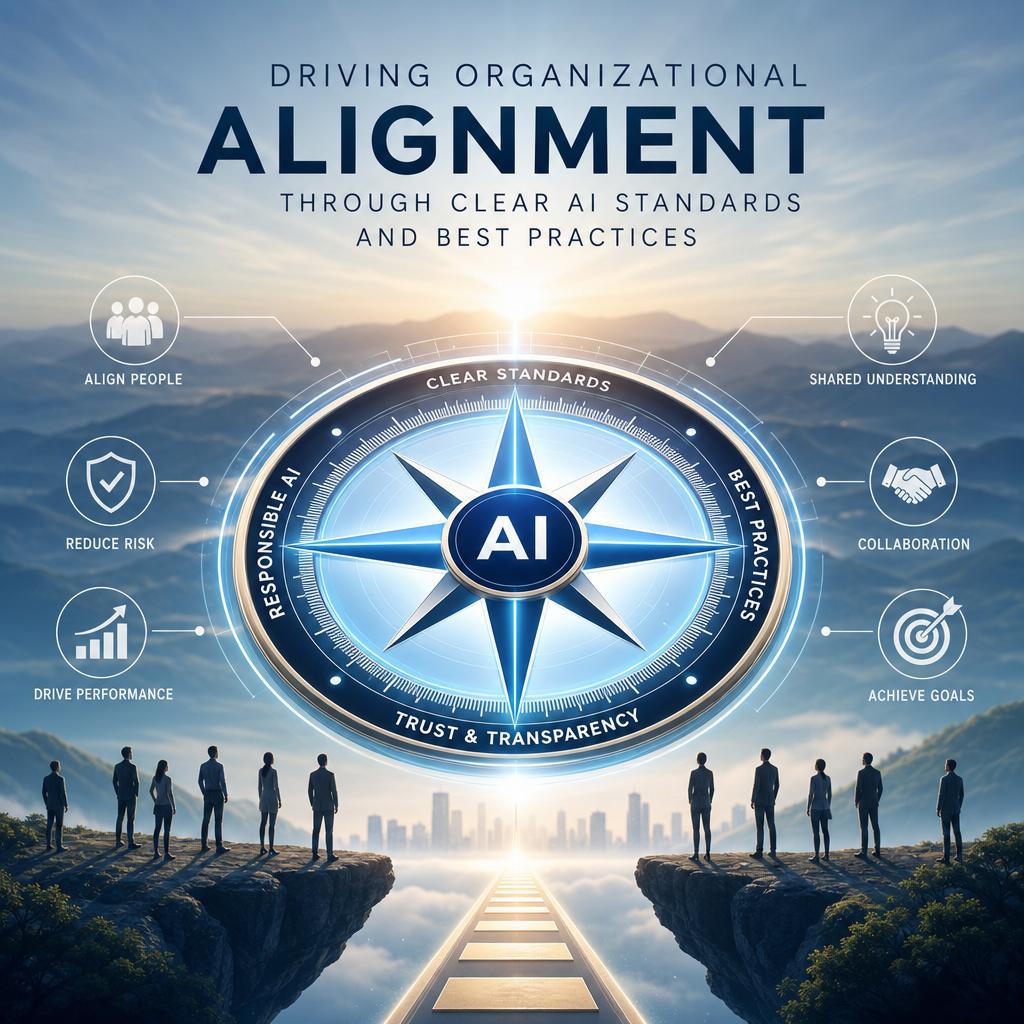
Driving Organizational Alignment Through clear AI Standards and Best Practices
Establishing a clear framework of AI standards is essential for harmonizing efforts across diverse teams in an association. This framework acts as the backbone for consistent decision-making, ensuring models are developed, testedand deployed under uniform guidelines that emphasize ethical considerations, data privacyand performance reliability. Key elements such as model governance, data quality benchmarksand algorithmic transparency empower stakeholders to align their objectives and reduce risks associated with AI adoption.By fostering a collective understanding of these standardsorganizations enhance cross-functional collaboration and accelerate innovation cycles while maintaining robust control mechanisms.
- Enforce standardized documentation: Clear protocols for model development and iteration.
- create reusable AI components: Promote efficiency and scalability within workflows.
- Implement continuous training programs: equip teams with the latest best practices and tools.
- Monitor compliance rigorously: maintain accountability through regular audits and reviews.
Driving adoption through these well-defined best practices also hinges on nurturing a culture where AI literacy and ownership are widespread. The AI Center of Excellence acts as an institutional champion, not only setting standards but also facilitating knowledge sharing and resource allocation. By integrating governance with practical enablementorganizations ensure that every team-from data scientists to business leaders-can confidently utilize AI technologies to solve real-world problems. This strategic alignment ultimately transforms AI from a set of isolated experiments into a core capability that propels sustained competitive advantage.
Implementing Scalable Adoption Strategies to Maximize AI Impact
Successfully embedding AI into an enterprise’s DNA requires more than just technology deployment; it demands a thoughtfully crafted framework that supports continuous growth and adaptation.Central to this effort is developing repeatable processes that allow organizations to scale AI initiatives efficiently while maintaining alignment with business goals. Key components include:
- Governance structures that define roles, responsibilitiesand compliance measures;
- Robust training programs designed to equip teams across departments with necessary AI literacy and skills;
- Collaborative platforms that foster cross-functional innovation and shared learning;
- Iterative feedback loops to rapidly refine AI models based on real-world performance and user insights.
Embedding these elements into a scalable adoption strategy ensures the AI Center of Excellence is not merely a project team but an enduring organizational competency. To track progress and continuously benchmark adoption success, practical metrics should be established, as shown below:
| Metric | Purpose | Frequency |
|---|---|---|
| Model Deployment Rate | Measures speed of AI integration across business units | Monthly |
| User Adoption Percentage | Tracks end-user engagement with AI tools | Quarterly |
| Operational Impact | evaluates efficiency gains and cost reductions | Bi-annually |
| Training Completion Rates | Assesses effectiveness of skill development efforts | Ongoing |
By institutionalizing these measuresorganizations create an agile ecosystem where AI adoption not only accelerates but evolves sustainably, maximizing impact at every stage.
Measuring Success and Continuously Evolving AI Capabilities Within the Center of Excellence
Establishing clear metrics is crucial to gauge the real impact of AI initiatives within the Center of excellence (CoE). Success is not merely about launching projects but about delivering tangible outcomes that align with the organization’s strategic goals. Key performance indicators (KPIs) should span across multiple dimensions such as accuracy of AI models, reduction in operational costs, time-to-market acceleration, and user adoption rates. Implementing continuous monitoring frameworks ensures that AI solutions remain effective and responsive to evolving business needs. With clear dashboards and regular performance reviews, stakeholders can make data-driven decisions to recalibrate efforts where necessary.
The CoE’s commitment to continuous evolution hinges on fostering a culture of innovation and agility. This involves proactive knowledge-sharing, incorporating feedback loopsand leveraging cutting-edge technologies.Key components to prioritize include:
- Skill Development Programs: Upskilling talent to keep pace with emerging AI trends.
- Iterative Improvement Cycles: Regular updates to models and processes based on real-world performance data.
- Collaboration Frameworks: Encouraging cross-functional teams to drive creative problem-solving.
- Resource Allocation Reviews: Adjusting investments to high-impact areas efficiently.
| Measurement Area | Example KPI | Frequency |
|---|---|---|
| Model Performance | Accuracy, Precision, Recall | Monthly |
| user Adoption | Active Users, Feedback Scores | Quarterly |
| Business Impact | Cost Savings, Revenue Increase | bi-Annually |