

The evolving landscape of AI careers and the diminishing role of formal degrees
In today’s rapidly shifting AI industry, formal academic credentials are becoming less indicative of one’s potential than practical, domain-specific expertise. The emphasis has decisively moved towards demonstrable skills in programming, data handling, and real-world problem solving.Employers prioritize candidates who can adapt quickly, innovate within niche sectors, and deploy AI solutions effectively-qualities often honed outside customary degree programs.
Practical experience and continuous learning are now cornerstones of success in AI careers. mastery of specialized tools, frameworks, and case-specific knowledge often outshine theoretical foundations from formal education. The following points highlight key factors gaining importance:
- Hands-on project experience: Building,testing,and deploying models in live environments
- domain expertise: Deep understanding of the target industry,e.g., healthcare, finance, or robotics
- Technological agility: Keeping pace with evolving AI libraries and cloud computing platforms
- Collaborative skills: Working across multidisciplinary teams embracing AI tools
| traditional Degree Focus | modern AI Career Focus |
|---|---|
| Theoretical algorithms and math | Applied AI solutions and domain-specific models |
| Exams and grades | Portfolio of projects and contributions |
| General computer science concepts | Specialized frameworks and tools (TensorFlow, PyTorch) |
| Multi-year degree programs | Bootcamps, certifications, self-directed learning |
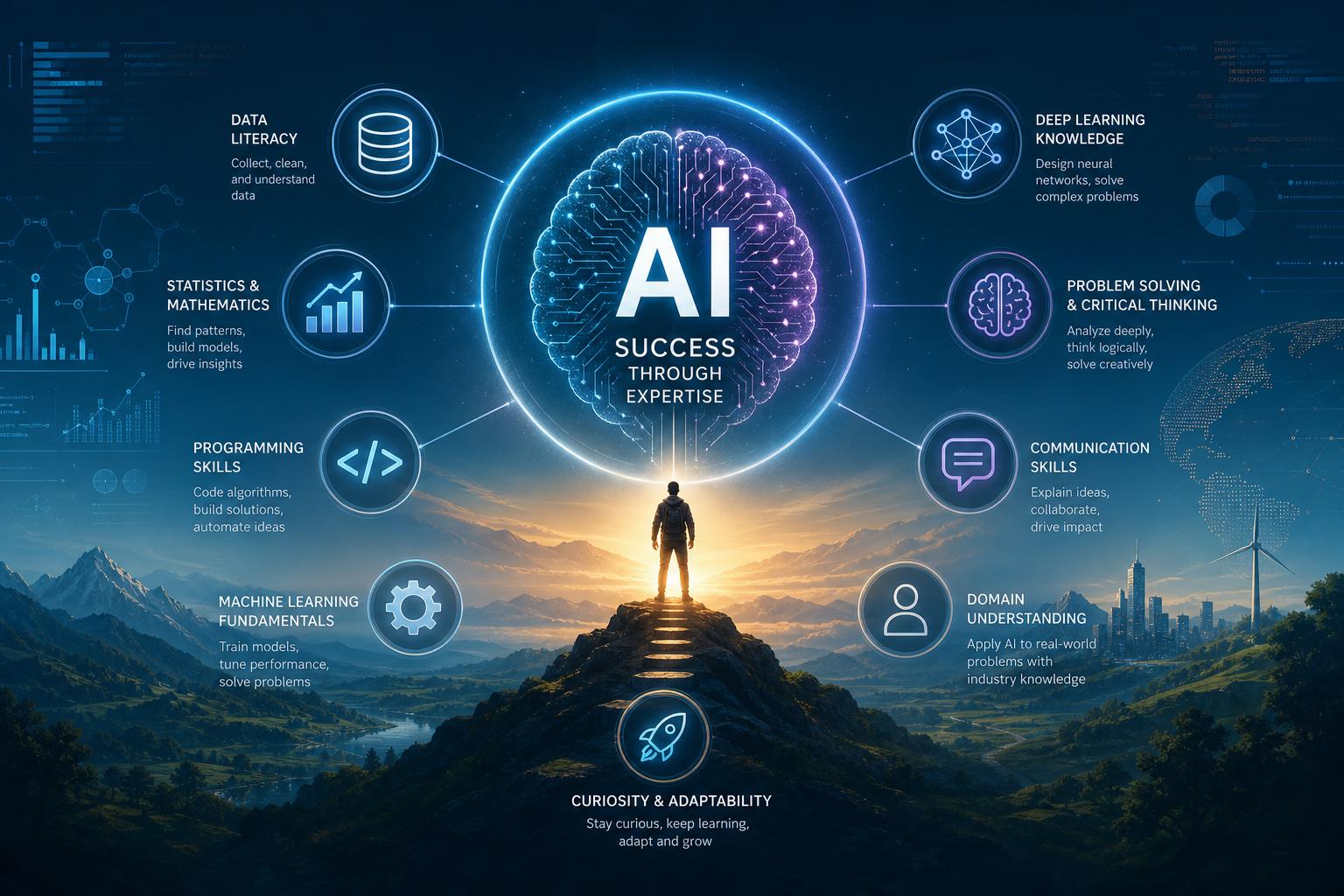
Key domain skills that drive success in artificial intelligence roles
Excelling in artificial intelligence roles is less about formal degrees and more about mastering specific domain skills that foster innovation and practical impact. Professionals who thrive typically demonstrate a robust understanding of data analysis techniques,enabling them to extract meaningful insights from complex datasets. Complementing this, expertise in machine learning algorithms allows them to design models that solve real-world problems efficiently. Equally critically important are skills in software engineering and data wrangling, which ensure the seamless integration and deployment of AI solutions within diverse technology environments.
Beyond technical prowess, success hinges on a keen grasp of the industry or sector in which AI is applied. For instance, in healthcare, familiarity with medical terminologies and regulatory standards can significantly enhance model relevance and compliance. The ability to communicate complex AI concepts clearly to non-technical stakeholders further amplifies impact. Below is a concise overview of these critical skills:
| Skill Category | Key Competencies | Role Impact |
|---|---|---|
| Technical Expertise | Data Analysis, ML Algorithms, Software Engineering | Builds robust AI models and systems |
| Domain Knowledge | Industry-specific Insights, Compliance, Terminology | Enhances AI applicability and accuracy |
| interaction | Translation of AI Concepts, Stakeholder Engagement | Drives effective collaboration and adoption |
Strategies for acquiring practical expertise without traditional academic paths
In the rapidly evolving AI landscape, gaining hands-on experience often outweighs formal degrees. Immersing yourself in real-world projects, participating in open-source communities, and engaging in hackathons can provide unparalleled insights into practical applications. These experiences cultivate problem-solving abilities and adaptability-skills highly sought after by employers. Emphasizing continuous learning through online courses,workshops,and tutorials tailored to specific AI tools and frameworks enables aspiring professionals to stay current without traditional academic constraints.
Effective approaches include:
- Contributing to open-source AI projects to build a demonstrable portfolio
- Networking with industry experts via meetups and AI forums
- Taking on freelance gigs to solve real business problems
- Utilizing simulation platforms and AI sandboxes for experimentation
| Method | Key Benefit | Resource Example |
|---|---|---|
| Open-source contribution | Portfolio building | GitHub AI repositories |
| Hackathons | Rapid skill application | Kaggle competitions |
| Freelancing | Real-world problem solving | Upwork AI projects |
| Online courses | Structured learning | Coursera, edX, Udacity |
Recommendations for building a competitive AI career portfolio through hands-on experience
Building a strong AI career portfolio hinges on active engagement with real-world projects that showcase your applied skills rather than theoretical knowledge alone. Aspiring AI professionals should immerse themselves in diverse challenges that demand creative problem-solving, such as participating in open-source AI initiatives, contributing to hackathons, or developing personal projects that address practical domain-specific problems.This hands-on approach not only deepens expertise but also signals to employers a candidate’s readiness to tackle complex challenges independently. Showcasing these projects on platforms like GitHub or Kaggle provides tangible evidence of your capabilities and commitment to continuous learning.
To strategically curate an impressive portfolio,focus on a mix of skills and experiences that reflect both depth and breadth. Consider including:
- Domain-specific Applications: Projects that demonstrate knowledge of AI applications in fields such as healthcare, finance, or natural language processing.
- Algorithm Implementation: Hands-on coding of machine learning models, neural networks, and data preprocessing pipelines.
- Collaborative Work: Contributions to team projects or interdisciplinary collaborations emphasizing communication and teamwork skills.
| Portfolio Element | Purpose | Example |
|---|---|---|
| Open-Source Contributions | Demonstrate collaborative skills and code quality | Contributing to TensorFlow or PyTorch repos |
| Personal AI Projects | Showcase initiative and domain expertise | Chatbot for customer service automation |
| Competitions & Challenges | Prove problem-solving under constraints | Winning solutions on Kaggle contests |
Ultimately, your portfolio should tell a story of continuous improvement and adaptability, aligning your skills with the evolving demands of the AI field.This practical evidence of expertise will carry far more weight with industry leaders than formal credentials alone.