

AI as an Effective tutor in Personalized Learning environments
AI-driven tutoring systems harness elegant algorithms too customise the learning journey for each individual student. By continuously analyzing a learner’s progress and adapting instructional strategies accordingly, AI tutors can provide clear explanations tailored to the user’s current understanding and learning style. This dynamic interaction helps clarify complex concepts in real-time, enhancing comprehension significantly. Moreover, these systems offer opportunities for incremental practice through targeted exercises, ensuring learners consolidate knowledge before moving on to advanced topics.
Timely and precise feedback is a cornerstone of effective education, and AI excels in delivering it instantly and consistently. by evaluating student responses,AI tutors can identify errors and patterns of misunderstanding,providing corrective guidance that supports mastery. Below is a sample comparison of AI feedback features versus traditional methods, illustrating the advantages in a personalized learning context:
| Aspect | AI Tutor | Traditional Tutor |
|---|---|---|
| Response Time | Immediate | Delayed, dependent on availability |
| Feedback consistency | Objective and uniform | Subject to human variability |
| Adaptation | Continuously adjusts to learner’s needs | Limited by tutor’s attention span |
- Personalized explanations that address learning gaps precisely
- Interactive practice sessions adaptable to performance levels
- Continuous feedback loops fostering deeper engagement and retention
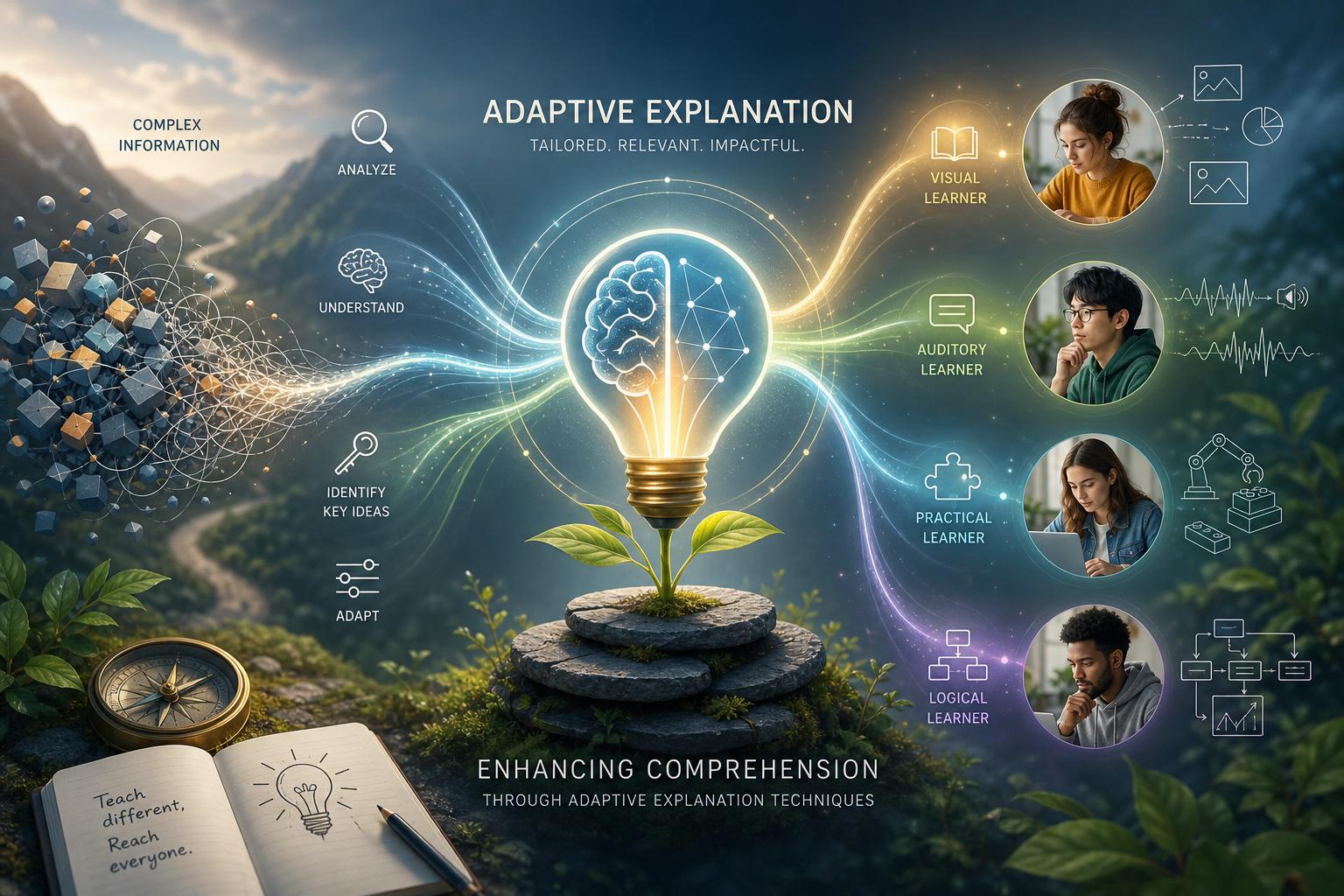
Enhancing Comprehension through Adaptive Explanation Techniques
Adaptive explanation techniques leverage AI’s dynamic capabilities to tailor learning experiences according to each student’s unique cognitive needs. By analyzing real-time responses and learning patterns, AI can shift from foundational concepts to advanced insights seamlessly, ensuring that students always receive explanations that resonate wiht their current understanding. Key strategies include:
- Contextualizing details to connect new content with prior knowledge
- Progressive scaffolding that breaks down complex ideas into manageable steps
- Utilizing multiple modalities such as visuals, analogies, and interactive elements to enhance retention
Such responsiveness not only boosts comprehension but also encourages active engagement.Consider the following comparison of traditional static explanations versus adaptive AI explanations:
| Aspect | Static Explanation | Adaptive AI Explanation |
|---|---|---|
| customization | One-size-fits-all content | Personalized according to learner profile |
| Response to Difficulty | Generic repetition | Dynamic simplification or elaboration |
| Engagement Methods | Text and speech | Multi-sensory with interactive feedback |
Optimizing Skill Acquisition with Targeted Practice Modules
Targeted practice modules play a pivotal role in transforming abstract knowledge into concrete skills. By isolating specific competencies and focusing on incremental challenges, learners receive concentrated exposure that fosters deep understanding and retention. These modules are typically designed with adaptive difficulty,ensuring that practice remains within the learner’s zone of proximal progress-neither too easy to cause boredom nor too difficult to induce frustration.Key benefits include:
- Immediate request of newly acquired concepts
- Enhanced muscle memory through repetition in varied contexts
- Focused correction of specific errors without overwhelming the learner
Integrating data-driven feedback mechanisms within these modules accelerates progress by identifying patterns in learner responses and tailoring subsequent exercises. The following table summarizes how targeted practice can systematically sharpen diverse skills:
| Skill Area | Practice Focus | Expected Outcome |
|---|---|---|
| Language | Vocabulary drills, sentence structure | Fluent, accurate communication |
| Mathematics | Problem-solving steps, formula application | Increased precision and speed |
| Programming | Code syntax, algorithm design | Efficient, error-free coding |
Delivering Constructive Feedback to Foster Continuous Improvement
Effective feedback is a cornerstone of learning, especially when integrated thoughtfully into AI-driven tutoring systems. Feedback must be precise,actionable,and timely to maximize its impact on learners. By leveraging AI’s capacity for detailed analysis and pattern recognition, feedback can be tailored to individual progress, highlighting specific strengths while gently addressing areas that require improvement.This personalized approach fosters an environment where learners feel supported rather than judged, encouraging a growth mindset and sustained engagement.
Key elements of constructive feedback in AI tutoring include:
- Clarity: Feedback should clearly explain what was done well and what needs adjustment, avoiding ambiguity.
- Relevance: Comments must be directly related to the learner’s recent performance to maintain context and usefulness.
- Encouragement: Positive reinforcement sustains motivation and resilience in the face of challenges.
- Specific Recommendations: Suggestions for improvement should be practical and actionable, guiding learners towards their next steps.
| Feedback Aspect | AI Implementation | Learning outcome |
|---|---|---|
| Precision | Analyzes learner errors at granular level | Clear understanding of mistakes |
| Timeliness | Provides instant feedback after tasks | Immediate correction and reinforcement |
| Personalization | Adapts feedback according to learner’s style | Enhanced engagement and retention |