
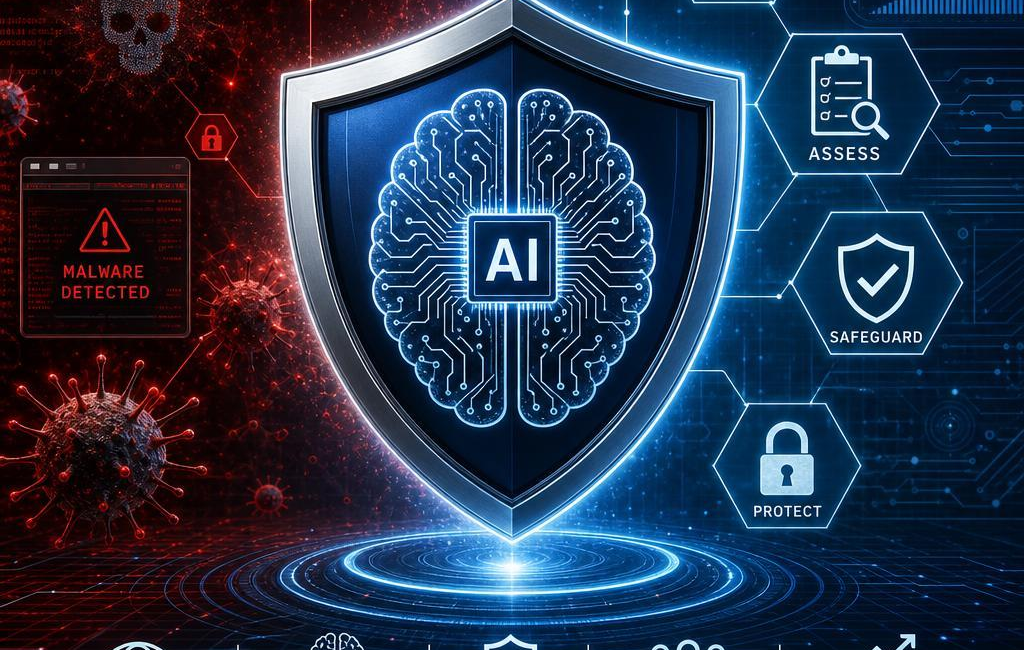
The Intersection of Artificial Intelligence and Malware Evolution
As artificial intelligence continues to advance, its dual-use nature becomes increasingly apparent, particularly in the realm of cybersecurity. Malicious actors are leveraging AI to craft malware that adapts, learns, and evades conventional detection mechanisms with unprecedented sophistication. This evolution poses a stark challenge to defenders, necessitating the implementation of stringent safeguards and continuous oversight to prevent AI from becoming a vector of harm rather than a tool for protection.Robust safeguards not only help contain the ethical risks associated with AI-driven malware but also serve as critical checkpoints to identify and mitigate emerging threats early in thier lifecycle.
Successful defence against these dynamic threats hinges on multifaceted strategies that combine proactive review with cutting-edge technology. Key components include:
- Automated code analysis: To detect anomalous patterns indicative of AI-generated threats.
- Continuous behavior monitoring: Tracking software actions post-deployment to identify malicious intent.
- Human-in-the-loop oversight: Enabling expert intervention when anomalies surpass automated system thresholds.
Additionally, the following table outlines critical factors that influence the effective management of AI-driven malware threats:
| Factor | Impact | Recommended Action |
|---|---|---|
| Algorithm transparency | Increases trust & understanding | Adopt explainable AI models |
| Data Integrity | Prevents manipulation and false positives | Strict validation & audit trails |
| Response Speed | Limits spread of infection | Implement real-time alert systems |

Inherent Risks and Vulnerabilities in AI-Driven Threats
AI-driven malware introduces a set of inherent risks rooted in its capacity to autonomously learn, adaptand evolve beyond traditional cybersecurity controls. These systems can exploit vulnerabilities at unprecedented speed, bypassing static defenses through continuous self-optimization. The very features that make AI a powerful tool for innovation-such as pattern recognition and decision-making autonomy-also render malware more unpredictable and harder to contain once unleashed. Without rigorous safeguards and ongoing review, AI-enhanced threats risk evolving into sophisticated digital weapons capable of targeting systems with pinpoint accuracy, thereby magnifying the potential damage across critical infrastructure.
Key vulnerabilities include:
- Autonomous Adaptation: AI malware can modify its behavior in real-time to evade detection algorithms.
- Data Poisoning Attacks: Attackers can subtly corrupt training data used by AI defenses, leading to compromised threat identification.
- Exploitation of Zero-Day Vulnerabilities: AI accelerates the discovery and exploitation of unknown security flaws.
- Lack of Transparency: complex AI decision-making processes ofen lack explainability, complicating incident analysis and response strategies.
| Risk Factor | Potential Impact |
|---|---|
| Autonomous Learning | Rapid mutation of malware strains |
| Data Poisoning | Compromised detection reliability |
| opaque AI Models | Challenges in forensic analysis |
| Accelerated Exploit Discovery | Increased attack surface exposure |
Implementing Robust Safeguards for AI Systems against Malware
Ensuring the safety of AI systems from malicious software requires a multifaceted approach, integrating both proactive defenses and continuous monitoring. Core to this strategy is the implementation of layered security protocols that combine traditional malware detection with AI-specific safeguards. this includes employing behavior-based analysis to detect anomalous activities within AI processes and leveraging encryption to protect AI model integrity during both training and deployment phases.additionally, routinely updating AI frameworks with the latest threat intelligence ensures resilience against evolving malware tactics aimed at exploiting vulnerabilities in AI algorithms.
To maintain robust defensesorganizations must prioritize regular code audits and vulnerability assessments, complemented by dynamic threat simulations to identify potential points of compromise before actual attacks occur.Consider the following essential safeguards for AI infrastructure:
- Implementing strict access controls to limit system entry points
- Using adversarial testing to detect weaknesses in AI decision-making
- enforcing secure software supply chains to prevent injected vulnerabilities
- integrating automated rollback mechanisms to restore AI systems to safe states after detection of malicious interference
| Safeguard | Purpose | Impact on AI Security |
|---|---|---|
| Behavioral Analytics | Monitor AI system actions | Rapid anomaly detection |
| Encrypted Model Storage | Protect AI data integrity | Prevent unauthorized modifications |
| Adversarial Testing | Expose vulnerabilities | Strengthen AI robustness |
Best Practices for Continuous Review and Adaptive Security Measures
Maintaining robust security in an AI-driven landscape requires an ongoing commitment to vigilance and flexibility. Organizations must establish a dynamic review process that integrates real-time analytics and behavior-based monitoring.Adaptive security frameworks leverage machine learning to detect anomalies and update defense protocols without human delay, ensuring that new malware variants are countered swiftly. It is essential to incorporate a feedback loop where insights from incident responses directly inform the evolution of security policies. Key components of this approach include:
- Continuous threat intelligence gathering to anticipate emerging attack vectors.
- Automated patch management to reduce exposure time from known vulnerabilities.
- Regular penetration testing enhanced by AI simulations to identify hidden weaknesses.
- Collaborative information sharing across industry networks to heighten collective defenses.
To illustrate the importance of adaptive security measures, consider the following comparison between static and adaptive security postures:
| Aspect | Static Security | Adaptive Security |
|---|---|---|
| Response Time | Delayed, manual updates | Immediate, AI-driven adjustments |
| Threat Detection | Signature-based only | Behavioral and predictive analytics |
| Policy Update Frequency | Periodic, scheduled | Continuous and dynamic |
| Resource Allocation | Fixed and rigid | Flexible, adjusts to threat landscape |
Ultimatelyorganizations that embrace continuous review combined with adaptive security protocols create a resilient defense ecosystem, capable of evolving alongside ever-changing AI-powered malware threats.