

AI-Driven Code Generation Transforming Software Development
Modern AI models have revolutionized teh software development lifecycle by automating complex coding tasks that once required extensive human effort. These intelligent systems not only generate code snippets tailored to specific functions but also perform real-time debugging and testing, drastically reducing development time. Developers now harness AI’s capability to translate natural language descriptions into efficient, production-ready code, making the entire process more intuitive and accessible.Key innovations include:
- Automated bug detection and correction to improve code quality
- Generation of unit and integration tests to ensure robustness
- Context-aware code suggestions for multiple programming languages
By integrating AI-driven tools, teams can focus on higher-level problem-solving while routine coding chores are handled autonomously. The table below highlights the primary advantages offered by AI-powered code generation platforms, emphasizing improved speed, accuracy, and scalability.
| Aspect | Customary Development | AI-Driven Development |
|---|---|---|
| Speed | Moderate, reliant on manual coding | Accelerated through automated generation |
| Debugging | Manual review, time-consuming | Proactive AI detection & fast fixes |
| Testing | Requires human-designed test scripts | Automated creation of comprehensive tests |
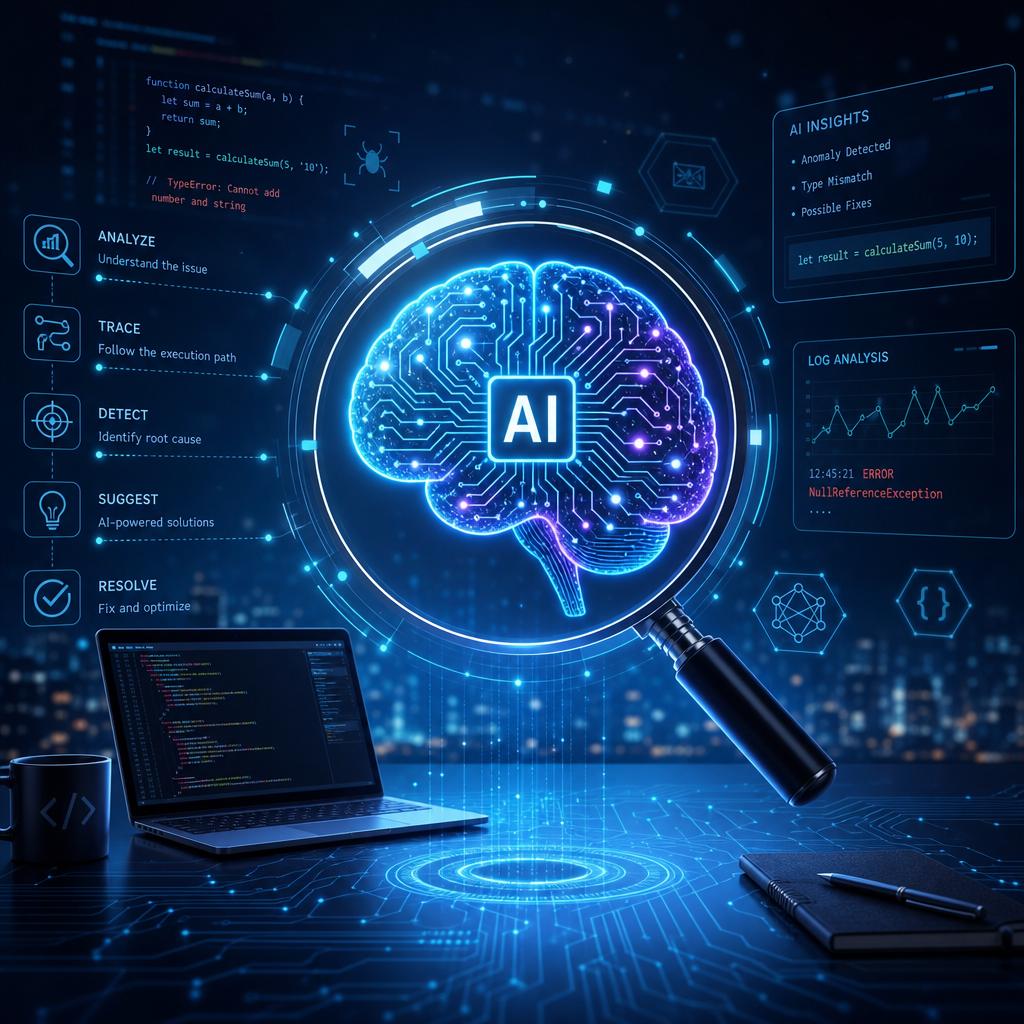
Advanced Debugging Techniques Powered by artificial Intelligence
Incorporating artificial intelligence into debugging workflows has revolutionized how developers identify and resolve code issues swiftly. Modern AI-driven tools analyze vast codebases and learn from previous bug patterns, enabling them to predict potential problem areas before errors manifest at runtime. This proactive approach minimizes downtime and reduces the time spent on manual troubleshooting. These advanced systems utilize techniques such as pattern recognition, anomaly detectionand natural language processing to deliver more precise diagnostics than traditional debuggers.
Key capabilities offered by AI-powered debugging include:
- Automated root cause analysis that pinpoints problematic lines of code instantly.
- Real-time suggestions for fixes and alternative code snippets based on learned best practices.
- Integration with test suites to validate corrections and ensure comprehensive coverage.
- Continuous learning algorithms that improve accuracy and adapt to evolving codebases.
| Technique | Benefit | Example Use Case |
|---|---|---|
| Pattern Recognition | Detects repetitive bugs from similar code segments | Automatically flags common logic errors in loops |
| Anomaly Detection | Identifies outlier behaviors in runtime data | Finds memory leaks impacting application performance |
| Natural Language Processing | Interprets developer comments and documentation | Matches user stories with test case coverage gaps |
Automated Testing Frameworks Enhanced Through Machine Learning
Machine learning algorithms have substantially revolutionized testing workflows by infusing intelligence into traditional frameworks.These enhanced systems can predict potential failure points by analyzing past bug data and code changes, allowing developers to focus on critical issues and optimize testing efforts. By continuously learning from each iteration, these frameworks adapt to evolving codebases and generate more relevant test cases that improve coverage while reducing redundant manual interventions. This advancement has led to a marked increase in both the efficiency and accuracy of automated testing processes.
Core benefits achieved through this integration include:
- Automated generation and prioritization of test scripts based on code changes and risk analysis
- Intelligent anomaly detection detecting subtle, context-based failures beyond rule-based systems
- Enhanced debugging guidance through root cause analysis powered by historical failure patterns
- Real-time feedback loops that dynamically adjust test suites to shifting requirements and environments
| Feature | Machine Learning Contribution | Outcome |
|---|---|---|
| Test Case Generation | pattern recognition in code changes | Optimized suite coverage |
| Bug Prediction | Historical defect data analysis | Focused testing efforts |
| Root Cause Analysis | Correlating failure modes | Faster issue resolution |
| Test prioritization | Risk scoring models | Efficiency in execution |
Best Practices for Integrating AI Models into Coding Workflows
Implementing AI models into coding workflows requires a strategy that balances automation with human oversight to maximize efficiency without sacrificing code quality. Start by selecting AI tools that seamlessly integrate with existing development environments such as IDE plugins or command-line interfaces. This ensures minimal disruption while promoting faster adoption across the team. Additionally, prioritize models that support continuous learning and adaptation, allowing the AI to evolve alongside your evolving codebase and coding standards. A key practice is to establish checkpoints where generated code undergoes rigorous peer reviews combined with AI-driven static analysis, ensuring any potential issues are caught early.
To effectively leverage AI in debugging and testing, it’s essential to create a feedback loop that consistently refines the model through real-world use cases. Encourage developers to annotate AI-generated suggestions and report inaccuracies,thereby contributing to dataset enrichment and improved model accuracy. Below is a concise reference table outlining critical integration checkpoints for smoother workflows:
| Workflow Stage | Best Practice | Expected Benefit |
|---|---|---|
| Code Generation | Use incremental prompts to focus code scope | reduced irrelevant output, higher precision |
| Debugging | cross-verify AI suggestions with test results | Increased debugging accuracy |
| Testing | Automate test case generation with AI insights | Broader coverage with less manual effort |