
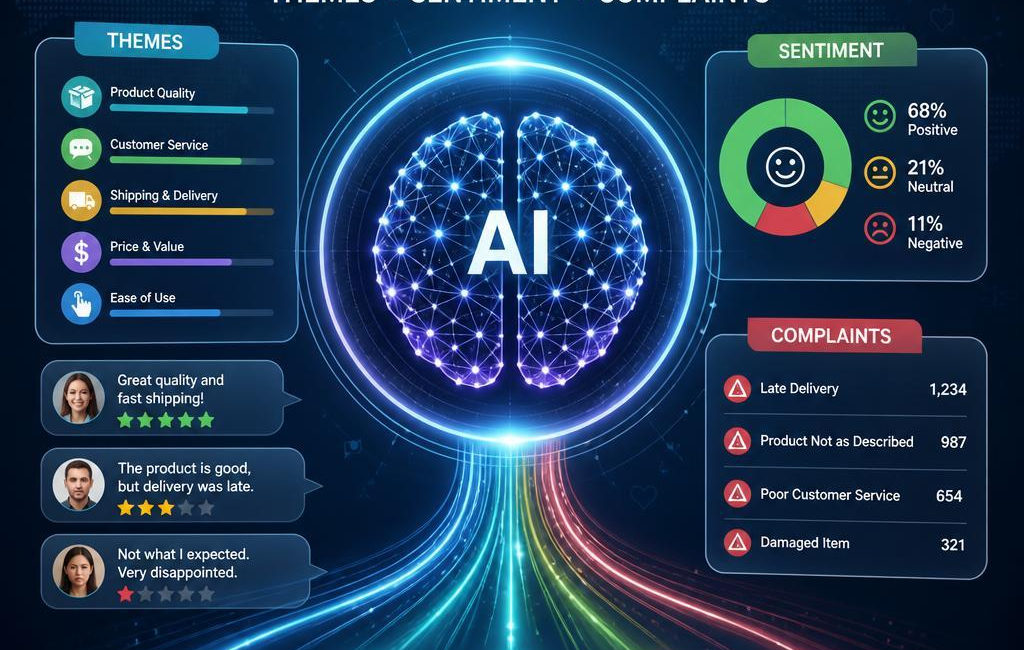
AI-Driven Identification of Recurring Themes in Customer Feedback
“`html
Leveraging artificial intelligence to sift through vast volumes of customer feedback reveals patterns that would otherwise remain hidden. Through refined natural language processing algorithms, AI can identify recurring themes with remarkable accuracy, categorizing comments by product features, service qualityand user experience. This thematic analysis allows businesses to pinpoint the areas most frequently praised or criticized, providing actionable insights that help drive targeted improvements. Rather of manual review,AI enables continuous and scalable understanding of customer sentiments expressed across multiple channels,from social media posts to survey responses.
The power of AI extends beyond theme identification to thorough sentiment analysis and complaint detection. By classifying feedback into positive,neutral,or negative sentiments,organizations can prioritize issues and allocate resources more effectively. For instance, AI can highlight if certain complaints are concentrated around delivery times or product durability and alert teams to resolve these pain points quickly.the following table exemplifies a simplified sentiment breakdown of recent feedback collected by an AI system:
| Theme | Positive Feedback | Neutral Feedback | Negative Feedback |
|---|---|---|---|
| Product Quality | 67% | 20% | 13% |
| Customer Support | 50% | 25% | 25% |
| Delivery Service | 40% | 15% | 45% |
- Real-time trend monitoring enables proactive response.
- Automated categorization reduces human bias and error.
- Data-driven strategies enhance product growth and marketing.
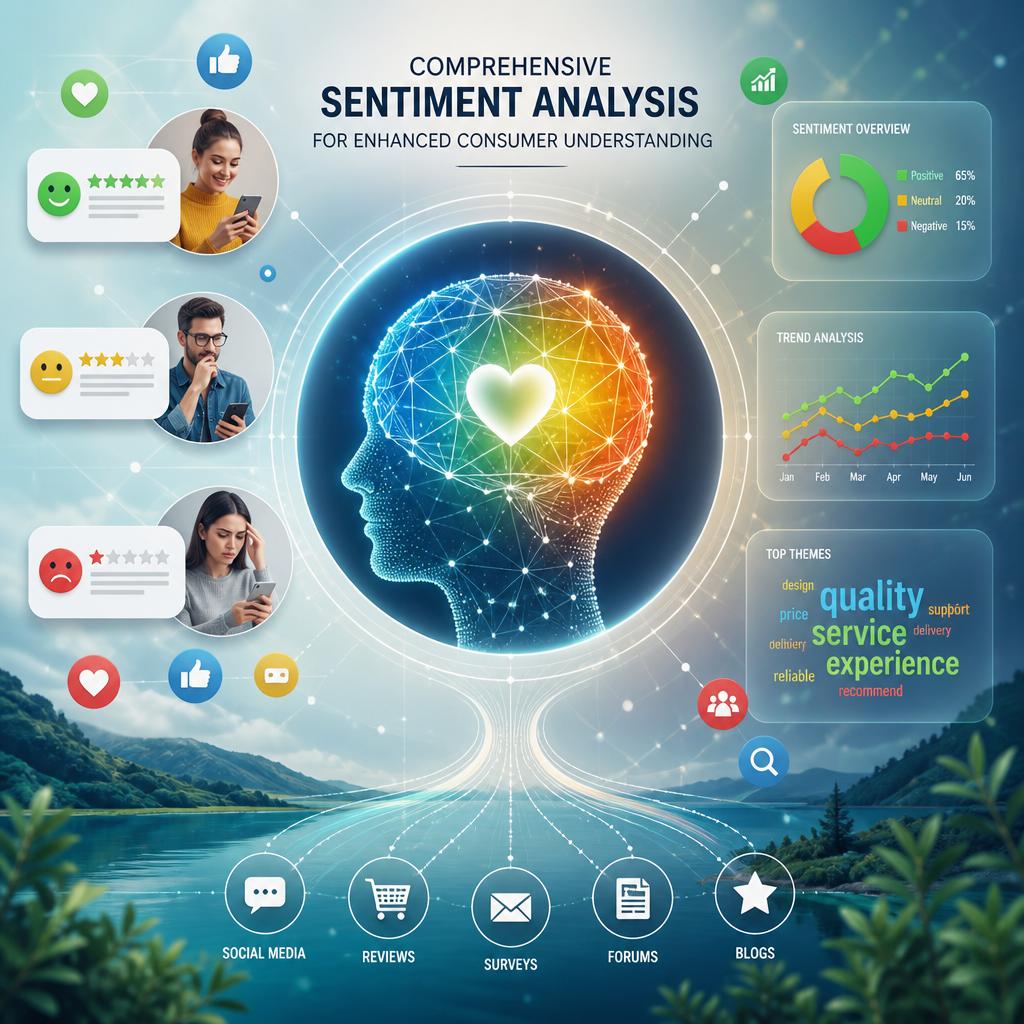
Comprehensive Sentiment Analysis for Enhanced Consumer Understanding
Deep sentiment analysis powered by AI technologies enables businesses to capture not only the explicit opinions expressed in customer feedback but also the subtle emotional undertones that influence purchasing behavior. By categorizing feedback into positive, neutral, and negative sentiments, companies can pinpoint which aspects of their product or service resonate well with consumers and which areas require urgent attention. The use of natural language processing (NLP) algorithms facilitates this granular understanding, allowing for swift identification of emerging themes and recurring complaints that conventional analysis might overlook.
Integrating sentiment insights with thematic breakdowns provides a multi-dimensional view of consumer experience. Below is a simplified illustration of how AI can organize and prioritize feedback components:
| Feedback Aspect | Common Sentiment | Key Complaints |
|---|---|---|
| Product Quality | Mostly Positive | Inconsistent durability |
| Customer Service | Mixed | Slow response times |
| Delivery Experience | Negative | Late shipments, damaged packages |
- Automated trend detection: Recognizes shifting customer priorities over time.
- Actionable insights: Directs management focus to critical areas impacting satisfaction.
- Competitive edge: Enhances product development and service strategies through data-driven decisions.
Pinpointing and Prioritizing Customer Complaints through Artificial Intelligence
By leveraging advanced natural language processing and machine learning algorithms, businesses can now transform vast volumes of customer feedback into actionable insights with unprecedented accuracy.AI tools systematically categorize complaints by identifying key themes such as product defects, service delaysand user interface challenges. This thematic analysis allows companies to swiftly detect recurring issues that impact customer satisfaction, enabling a proactive approach to quality improvement. Furthermore, sentiment analysis highlights the intensity of customer emotions, providing a nuanced understanding of dissatisfaction levels that might otherwise be overlooked.
Key benefits of AI-driven complaint analysis include:
- Efficient Prioritization: Automatically ranking complaints by severity and frequency to focus resources on the most critical problems.
- Real-Time Monitoring: Continuous feedback evaluation to promptly react to emerging trends and prevent escalation.
- Data-Driven Decision Making: Empowering management with clear, quantified insights derived from unstructured text data.
| complaint Theme | Frequency Score | Sentiment Score | Priority Level |
|---|---|---|---|
| Shipping Delays | 87 | -0.75 | High |
| Product Quality | 72 | -0.65 | High |
| Customer Service | 58 | -0.55 | Medium |
| Pricing Concerns | 40 | -0.30 | Low |
Strategic Recommendations for Leveraging AI Insights to Improve customer Experience
To fully harness the power of AI-driven customer feedback analysis, businesses must prioritize actionable insights that pinpoint key themes and sentiment shifts. organizations should implement dynamic dashboards that continuously track and update critical feedback trends, enabling real-time responses.Embedding AI outputs into cross-functional team workflows-such as marketing, product developmentand customer support-ensures that insights translate into targeted improvements. Additionally, leaders should establish regular review cycles featuring sentiment and complaint data to identify emerging pain points before they escalate.
- Integrate AI feedback loops into CRM platforms for centralized data accessibility.
- Segment customer voices by demographics and purchase behavior for personalized interventions.
- Prioritize high-impact complaints for swift resolution via AI-generated urgency scores.
| AI Insight | Strategic Action | Expected Outcome |
|---|---|---|
| Negative sentiment spike | Deploy targeted customer recovery campaigns | Boost retention by 15% |
| Recurring theme: delivery delays | Optimize supply chain responsiveness | Decrease complaints by 20% |
| Frequently mentioned product feature | Accelerate feature enhancements roadmap | Increase NPS by 10 points |
Ultimately, operationalizing AI insights through clear, measurable strategies cultivates a customer-centric culture and drives enduring improvements in satisfaction and loyalty.