
The Evolution of job Roles in the Age of Artificial Intelligence
As artificial intelligence continues to advance, the landscape of work undergoes a profound conversion. Rather than rendering jobs obsolete, AI reshapes the nature of tasks within many roles, emphasizing adaptability and new skill acquisitions. The reality is that while some manual or repetitive functions become automated, human creativity, emotional intelligence, and strategic thinking remain irreplaceable. This shift calls for a workforce that embraces continual learning and leverages technology to enhance productivity rather than fear displacement.
Key factors illustrating this evolution include:
- Task Automation: Routine and data-heavy tasks are increasingly delegated to AI systems, allowing employees to focus on higher-level responsibilities.
- Role Hybridization: Job descriptions expand as workers combine traditional expertise with digital literacy and AI oversight capabilities.
- Human-AI collaboration: Many roles now center on working alongside AI tools to improve decision-making and innovation.
| Job Category | Before AI | After AI integration |
|---|---|---|
| Data Entry | Manual typing and records update | Supervising AI for accurate data capture |
| Customer Support | Answering FAQs via phone | Handling complex inquiries and emotional engagement |
| Manufacturing | Manual assembly line tasks | Monitoring automated systems and quality control |
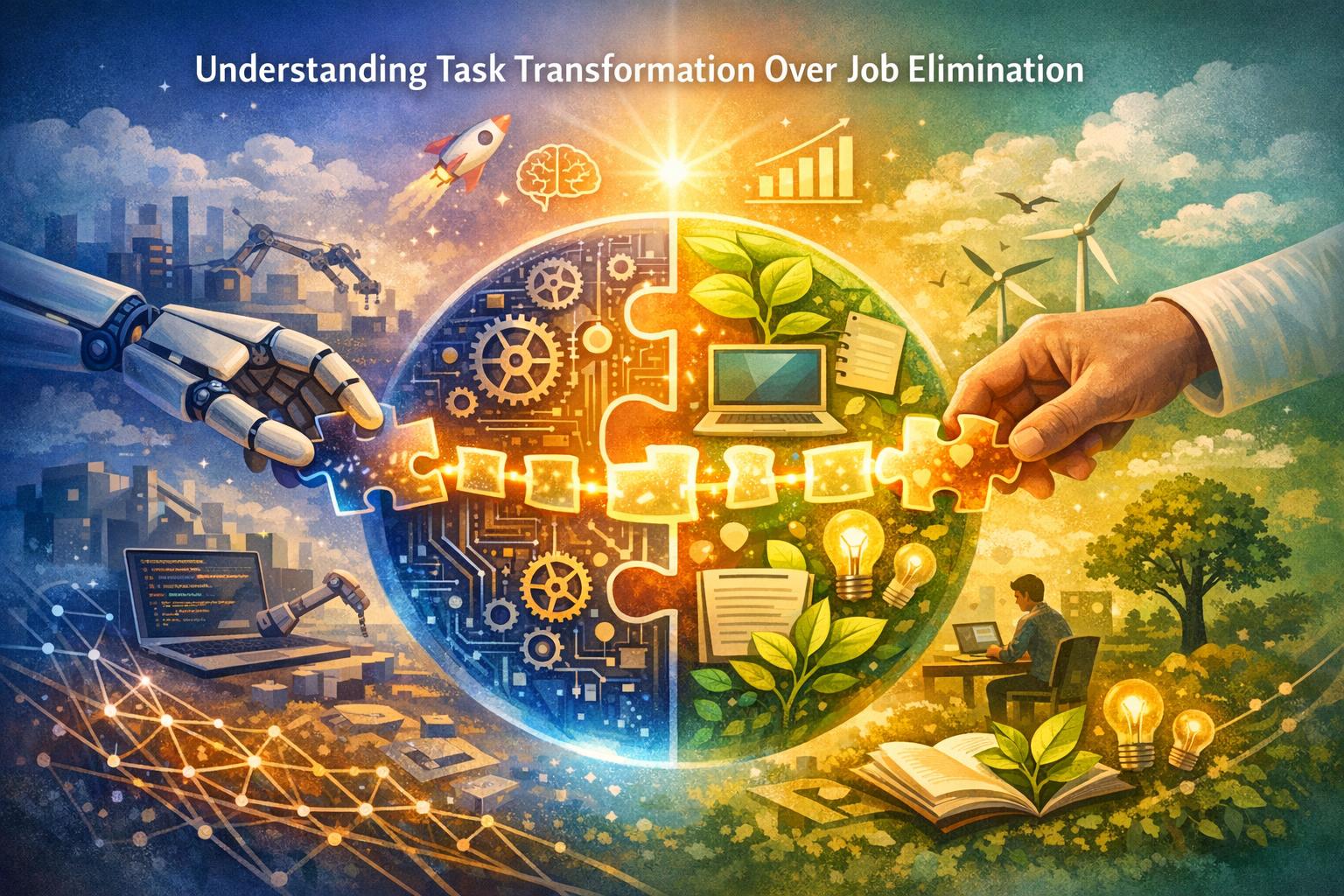
Understanding Task Transformation Over Job Elimination
As artificial intelligence continues to advance, the narrative around employment frequently enough gravitates towards fears of widespread job loss. However, the reality is that AI predominantly changes the nature of tasks within roles rather than fully eliminating jobs. Instead of wholesale replacement, AI automates repetitive, mundane, or highly predictable activities, freeing human workers to focus on more complex and creative responsibilities. This evolution necessitates a shift in workforce skills, emphasizing adaptability, problem-solving, and interpersonal interaction over routine manual or cognitive functions.
Consider the following key ways tasks are transformed rather than removed:
- Automation of Routine Tasks: Enables heightened efficiency and accuracy in data entry, scheduling, and monitoring processes.
- Augmentation of Human Decision-Making: AI systems provide insights and predictive analytics that assist professionals in making better, faster decisions.
- Creation of New Task Categories: With AI tools, workers often undertake new tasks such as AI supervision, data annotation, and ethical evaluations that never existed before.
| Task Type | Before AI | After AI |
|---|---|---|
| Data Processing | Manual entry and analysis | Automated processing with human oversight |
| Customer Support | Full human interaction | Hybrid AI-human collaboration |
| Quality Control | Visual/manual inspection | AI-assisted detection and human judgment |
Key Sectors Experiencing Significant AI-Driven Task Changes
Across industries, AI is reshaping how tasks are performed rather than erasing entire job roles. In healthcare, AI systems assist with diagnostic imaging and patient data analysis, allowing professionals to focus on complex decision-making and personalized care. Meanwhile, in finance, automated algorithms handle routine data processing and fraud detection, freeing analysts to concentrate on strategic planning and client consultation. This shift underscores a trend where AI amplifies human capabilities rather than substituting them wholesale.
Several sectors illustrate this transformation through specific task reallocations:
- Manufacturing: AI-driven robotics automate repetitive assembly line tasks, enhancing precision and safety.
- Retail: Inventory management and demand forecasting are increasingly AI-optimized,optimizing stock levels and customer satisfaction.
- Customer Service: Chatbots and virtual assistants manage initial inquiries, enabling human agents to address nuanced or escalated issues.
| Sector | tasks Automated | Human Role Focus |
|---|---|---|
| Healthcare | Image recognition, data entry | Patient care, complex diagnosis |
| Finance | Fraud detection, reporting | Financial advising, strategy |
| Manufacturing | Assembly, quality checks | supervision, maintenance |
| Retail | inventory tracking, sales analytics | Customer engagement, merchandising |
Strategic Recommendations for Workforce Adaptation and Skill Development
To effectively navigate the evolving landscape where AI reshapes job roles, organizations must prioritize continuous learning and dynamic upskilling frameworks. Emphasizing flexible skill development that aligns with emergent technologies and cross-disciplinary competencies helps ensure that the workforce remains resilient. Encouraging employees to embrace adaptability prepares them to take on transformed tasks rather than facing job obsolescence. A core strategy involves integrating learning platforms that facilitate micro-credentials, peer-to-peer knowledge exchange, and real-time skill assessments, fostering an agile labor pool poised for change.
- Invest in Human-AI Collaboration Training: Equip teams with the skills to work alongside AI tools efficiently.
- Promote Critical Thinking and Problem-Solving: Areas AI cannot automate require enhanced cognitive skills.
- Encourage Cross-functional Expertise: Break down silos to create versatile employees who can transition between roles.
| Approach | benefit | Example |
|---|---|---|
| adaptive Learning Platforms | Personalized skill growth paths | AI-driven course recommendations |
| Mentorship Programs | Organic knowledge transfer | senior experts guide upskilling |
| agile project rotations | Broader task exposure | Temporary role shifts across teams |
Leadership must also foster a culture that values lifelong learning and innovation. By establishing clear communication around the changing nature of work and setting expectations about evolving job functions, organizations can reduce resistance to change. Incentivizing skill acquisition and recognizing efforts to adapt ensures motivation remains high, while strategic workforce planning incorporates predictive analytics to anticipate future task shifts. This forward-thinking approach enables companies to proactively redesign roles, minimize displacement, and strengthen alignment between human talents and AI capabilities.