
The Transformative Impact of AI Agents on Workflow Efficiency
Modern AI agents act as catalysts in reshaping traditional workflows, offering an unparalleled combination of speed, accuracy, and adaptability. These autonomous systems seamlessly integrate into varied work environments, enabling businesses to offload repetitive and time-consuming tasks onto clever software. by doing so, companies can redirect human creativity and decision-making skills towards more strategic initiatives, fostering innovation and accelerating growth. The continuous learning mechanisms embedded within AI agents ensure constant betterment, making task handling progressively more efficient over time.
- Real-time data processing: AI agents sift through massive data sets instantly, uncovering insights and patterns that would elude manual efforts.
- 24/7 operational capability: Unlike human workers, AI agents maintain consistent productivity around the clock without fatigue or downtime.
- seamless multi-tasking: These agents can monitor, analyze, and respond to multiple task streams simultaneously, optimizing overall workflow throughput.
| Feature | Traditional Automation | AI Agents |
|---|---|---|
| Adaptability | Rigid, rule-based | dynamic, context-aware |
| Learning Ability | None | Continuous improvement |
| Decision Making | Predefined scripts | Predictive and analytical |
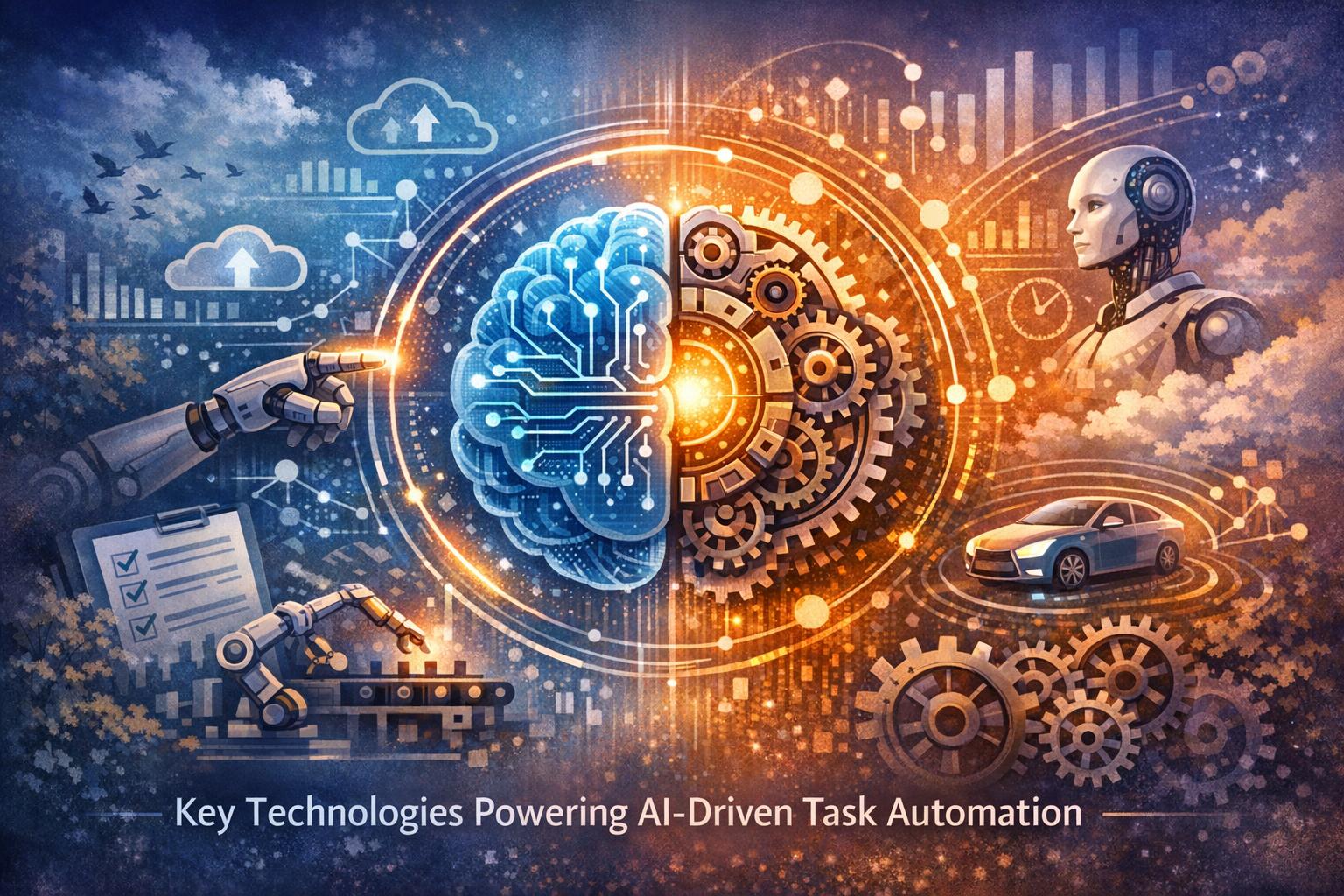
Key Technologies Powering AI-Driven Task automation
At the heart of modern AI-driven task automation lie several pivotal technologies that collectively enhance efficiency and intelligence. Machine learning algorithms enable systems to analyze vast amounts of data, recognize patterns, and make decisions without explicit programming. Simultaneously, Natural Language Processing (NLP) allows AI agents to understand, interpret, and generate human language, making interaction with machines seamless and intuitive. Complementing these is computer vision, wich empowers AI to perceive and analyze visual data, allowing for automation in fields ranging from quality control in manufacturing to healthcare diagnostics.
Another core ingredient spurring this revolution is the integration of cloud computing with powerful data processing frameworks, facilitating scalable and real-time task execution. Additionally,reinforcement learning enhances AI adaptability by enabling systems to learn from environmental feedback,refining task execution strategies over time. Below is a simplified overview of how these technologies contribute to the automation ecosystem:
| Technology | Primary function | Key Benefit |
|---|---|---|
| Machine Learning | Data pattern Recognition | Adaptive Decision Making |
| Natural Language Processing | Language Understanding | Human-like Interaction |
| Computer Vision | visual Data Analysis | Automated Inspection |
| Reinforcement learning | Learning from Feedback | Continuous Improvement |
| Cloud Computing | Scalable resource Access | real-time Processing |
Overcoming Common Challenges in implementing AI Agents
One of the most notable hurdles when deploying AI agents is ensuring their integration into existing workflows without causing disruption. Traditional systems often lack the flexibility to accommodate new AI-driven processes, which can lead to resistance from users and technical bottlenecks. Addressing this requires a strategic alignment between AI capabilities and business objectives, emphasizing clear dialogue and incremental implementation. Moreover, understanding data quality and availability is crucial, as AI agents thrive on vast, clean datasets to deliver accurate, actionable insights. Without this foundation, even the most advanced AI solutions may underperform or produce unpredictable outcomes.
Security and ethical considerations also present critical challenges. Protecting sensitive information while allowing AI agents to operate autonomously demands robust encryption methods and strict access controls. Organizations must also grapple with algorithmic transparency, ensuring AI decisions are explainable and fair to avoid bias or unintended consequences. The following table summarizes key challenges and strategic responses to optimize AI agent deployment:
| Challenge | Strategic Response | impact |
|---|---|---|
| Workflow Integration | Use modular AI components with phased rollout | Minimizes disruption and user resistance |
| data Quality | Implement rigorous data governance | Enhances AI accuracy and reliability |
| Security Risks | Adopt strong encryption and access protocols | Protects sensitive data from breaches |
| Ethical Bias | Ensure algorithmic transparency and auditing | Promotes fairness and accountability |
Best Practices for Integrating AI Agents into Business Processes
To harness the full potential of AI agents within organizational workflows, it is essential to adopt a strategic and thoughtfully phased implementation approach. Begin by identifying key repetitive tasks that are high-impact yet routine, such as data entry, customer inquiry handling, or compliance monitoring.Focus on seamless integration with existing software systems to avoid disruption and allow AI agents to operate harmoniously with established processes. Additionally, prioritize transparency and explainability in AI decisions to build trust among stakeholders and enable easy troubleshooting when necessary.
Successful integration also hinges on ongoing evaluation and optimization. Establish clear KPIs to measure AI agent performance, monitoring metrics like task accuracy, time savings, and user satisfaction. Encourage cross-functional collaboration between IT teams, business units, and AI specialists to adapt workflows dynamically as the technology evolves. Consider the following essentials for smooth assimilation:
- Scalability: ensure AI solutions can grow with your business demands
- Data Security Compliance: Maintain strict protocols to protect sensitive information
- Employee Training: Empower staff with the knowledge to effectively collaborate with AI agents
- Iterative Feedback Loops: Continuously refine AI behavior based on real-world usage
| Integration Phase | Primary Objective | Key Outcome |
|---|---|---|
| Assessment | Identify automation candidates | Focused AI deployment roadmap |
| Implementation | Deploy and integrate AI agents | Seamless workflow adoption |
| Optimization | Refine performance metrics | Continuous efficiency improvement |
AI tools built by Emerald Force
Built and supported by Emerald Force.




You might also like
- How AI Reads PDFs, Charts, Screenshots, and Photos
- Access Control in AI: Rules for Use and Access
- AI Rationales Aren’t Always Faithful Explanations
- AI for Homework: Tutoring Allowed, Final Answers Limited
- AI in Healthcare: The Risks of Overtrust
- Large Language Models: How They Learn Language
- The New Jobs AI Is Creating Across the Economy
- AI Can Support Peer Review, Not Replace Reviewers
- Can AI Create Logos? Speed, Originality, and Legal Risk
- How AI Learns Your Codebase Through Repository Retrieval