
Wage Disparities Driven by AI Adoption across Key Economic Sectors
The transformative influence of artificial intelligence is reshaping wage landscapes unevenly across various economic sectors. Industries embracing AI at a faster pace often see amplified productivity gains, yet these benefits are not uniformly distributed among workers. Sectors with high AI adoption typically experience a rise in demand for specialized skills, which in turn inflates wages for those equipped to complement technology. Conversely, employees in roles susceptible to automation may face wage stagnation or decline. The divergence in wage trajectories hinges significantly on the interplay between technological advancement and the prevailing labour market dynamics.
Crucial factors affecting wage disparities include:
- Extent of AI Integration: Sectors with deep AI embedding, such as finance and information technology, tend to reward technical expertise more than traditional industries.
- Bargaining Power of Workers: Unions and collective bargaining entities can mediate wage disparities by securing better compensation structures for workers threatened by automation.
- Skill Adaptability: Workers who can upskill to manage or collaborate with AI tools generally benefit from wage premiums.
| Sector | AI Adoption Level | average Wage Growth | Bargaining Power |
|---|---|---|---|
| Information Technology | High | +6.5% | moderate |
| Manufacturing | Moderate | +2.1% | High |
| Retail | Low | +0.5% | Low |
| Finance | High | +5.8% | Moderate |
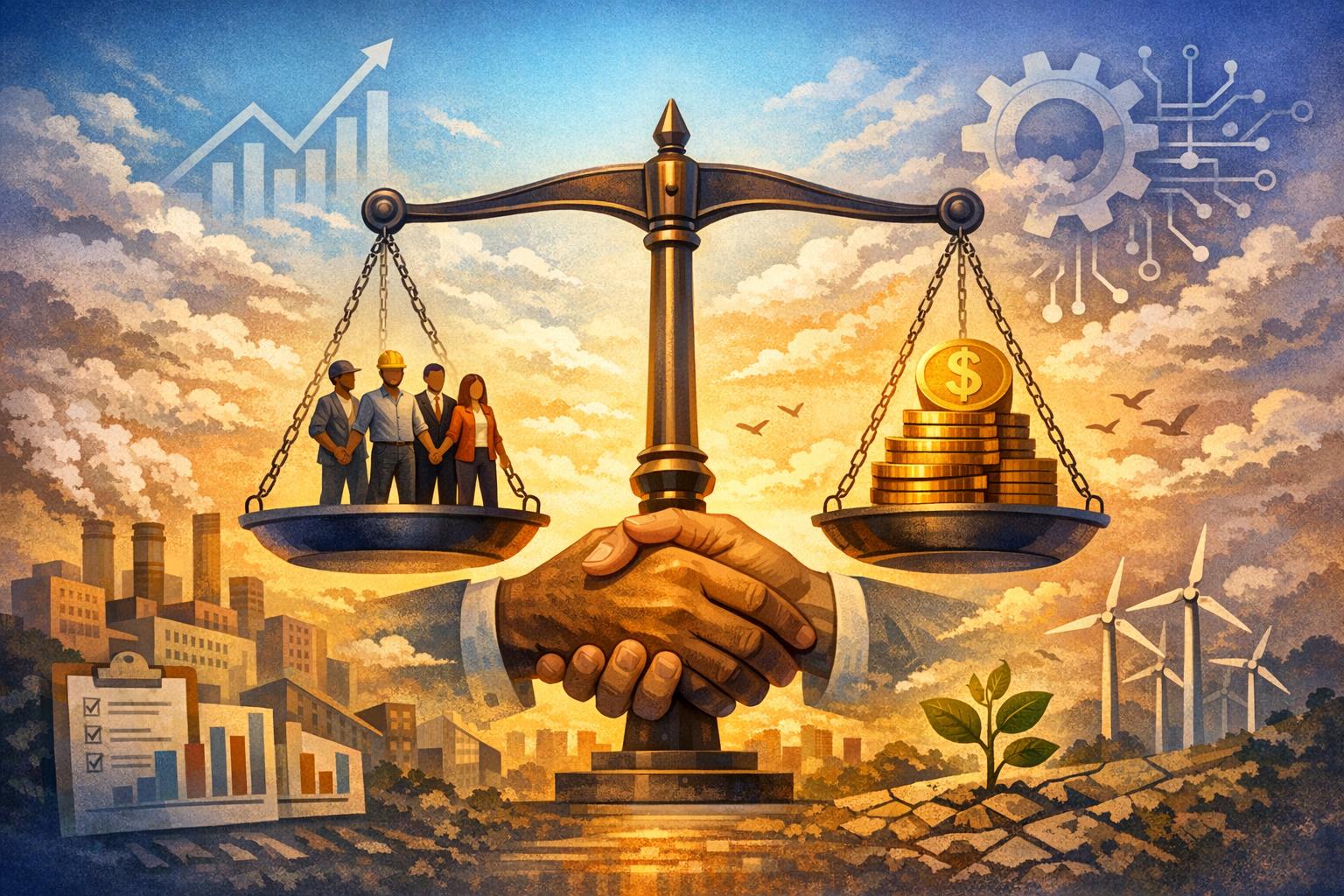
The Role of Workforce Bargaining Power in Mitigating Wage Inequality
The influence of workforce bargaining power significantly shapes how wage adjustments unfold amid the increasing integration of AI technologies. Workers with strong collective representation, such as unions or industry councils, can negotiate to ensure that wage growth keeps pace with productivity gains generated by AI-driven efficiencies. This capacity to bargain effectively acts as a critical counterbalance to market forces that might otherwise funnel disproportionate income towards capital owners. Key mechanisms through which bargaining power mitigates wage inequality include:
- Establishing wage floors that prevent stagnation among lower-paid employees
- Negotiating profit-sharing schemes linked to AI-driven productivity improvements
- Promoting transparent wage-setting practices to reduce unexplained pay disparities
Furthermore, bargaining power interplays with sectoral dynamics in complex ways. In sectors where AI adoption threatens job displacement but bargaining structures are robust, wage adjustments tend to be more equitable and cushioned. The following table illustrates a conceptual comparison between sectors with varying levels of bargaining power and typical wage outcomes in response to AI adoption:
| Sector | Bargaining Power | Average Wage Change (Post-AI Adoption) |
Wage Inequality Impact |
|---|---|---|---|
| Manufacturing | High | +6% | Reduced |
| Retail | Low | -2% | Increased |
| Information Technology | Moderate | +4% | Stable |
| Transportation | High | +3% | Reduced |
Strategic Approaches for Enhancing Labor Negotiation Strength in the AI Era
In the rapidly evolving AI landscape, strengthening labor negotiation requires a multifaceted approach tailored to the unique dynamics of each sector. Workers and unions must leverage data-driven insights to understand how AI deployment affects wage trends and employment conditions across industries. As an example, in sectors where AI automates routine tasks, negotiations can emphasize re-skilling and wage premiums for advanced skills, ensuring labor remains a critical asset.Conversely, in industries where AI complements human labor, stronger bargaining power can be cultivated through collective demands for profit-sharing mechanisms linked to AI productivity gains.
- Sector-Specific Strategies: Tailor negotiation tactics based on the degree of AI impact-automation, augmentation, or disruption.
- skill Enhancement Focus: Advocate for wage frameworks that reward continuous learning and adaptation to new technologies.
- Collaborative AI Governance: Promote inclusion in decision-making processes on AI implementation to safeguard workers’ interests.
| Sector | AI Impact Type | Negotiation Focus |
|---|---|---|
| Manufacturing | Automation | Reskilling & Wage Premiums |
| Healthcare | Augmentation | Profit Sharing & Training |
| Finance | Disruption | Job Security & Innovation Incentives |
Policy Recommendations to Ensure Equitable Wage Outcomes Amid Technological Change
Addressing wage disparities triggered by rapid AI adoption requires targeted policies that recognize the diverse impacts across sectors and the varying influence of worker bargaining power. Strengthening collective bargaining frameworks is fundamental to ensuring that workers can negotiate fair wages amid automation pressures. This involves modernizing labor laws to support unionization in AI-disrupted industries and incentivizing sector-wide agreements that distribute productivity gains equitably.
Moreover,policymakers must institute proactive measures to support sectors facing disproportionate wage declines by implementing:
- Retraining and upskilling programs focused on digital competencies and AI-augmented roles.
- Wage subsidy schemes targeted at vulnerable worker groups to stabilize income during technological transitions.
- Sector-specific minimum wage floors that reflect evolving productivity baselines strengthened by AI.
| Policy Measure | target Group | Expected Outcome |
|---|---|---|
| Collective Bargaining Support | All Sectors | Stronger wage negotiation power |
| Sector-Specific upskilling | Tech-Impacted Workers | Improved employability |
| Wage Subsidies | Lower-skilled Workers | Income stability |