
Understanding the Fundamentals of Text-to-Image AI Technology
The core mechanism behind text-to-image AI technology lies in its ability to translate natural language descriptions into vivid, coherent images. utilizing advanced neural networks,these models interpret the semantic meaning of words and phrases,transforming them into pixel patterns that visually represent the input prompt. At the heart of this process are deep learning architectures such as diffusion models and generative adversarial networks (GANs), which have revolutionized the capacity to generate detailed and creative imagery based solely on textual cues.
Key components enabling this technology include:
- Text Encoder: Converts textual descriptions into numerical vectors that capture contextual meaning.
- Image Generator: Uses these vectors to construct images by iteratively refining visual features.
- Training Data: Vast datasets of images paired wiht descriptive text enable the model to learn associations between language and visuals.
| Component | Function | Example |
|---|---|---|
| Text Encoder | Transforms text into meaningful numerical data | CLIP |
| Image Generator | Generates images from encoded text | Stable Diffusion |
| Training Dataset | Pairs images with descriptive captions for learning | LAION-5B |
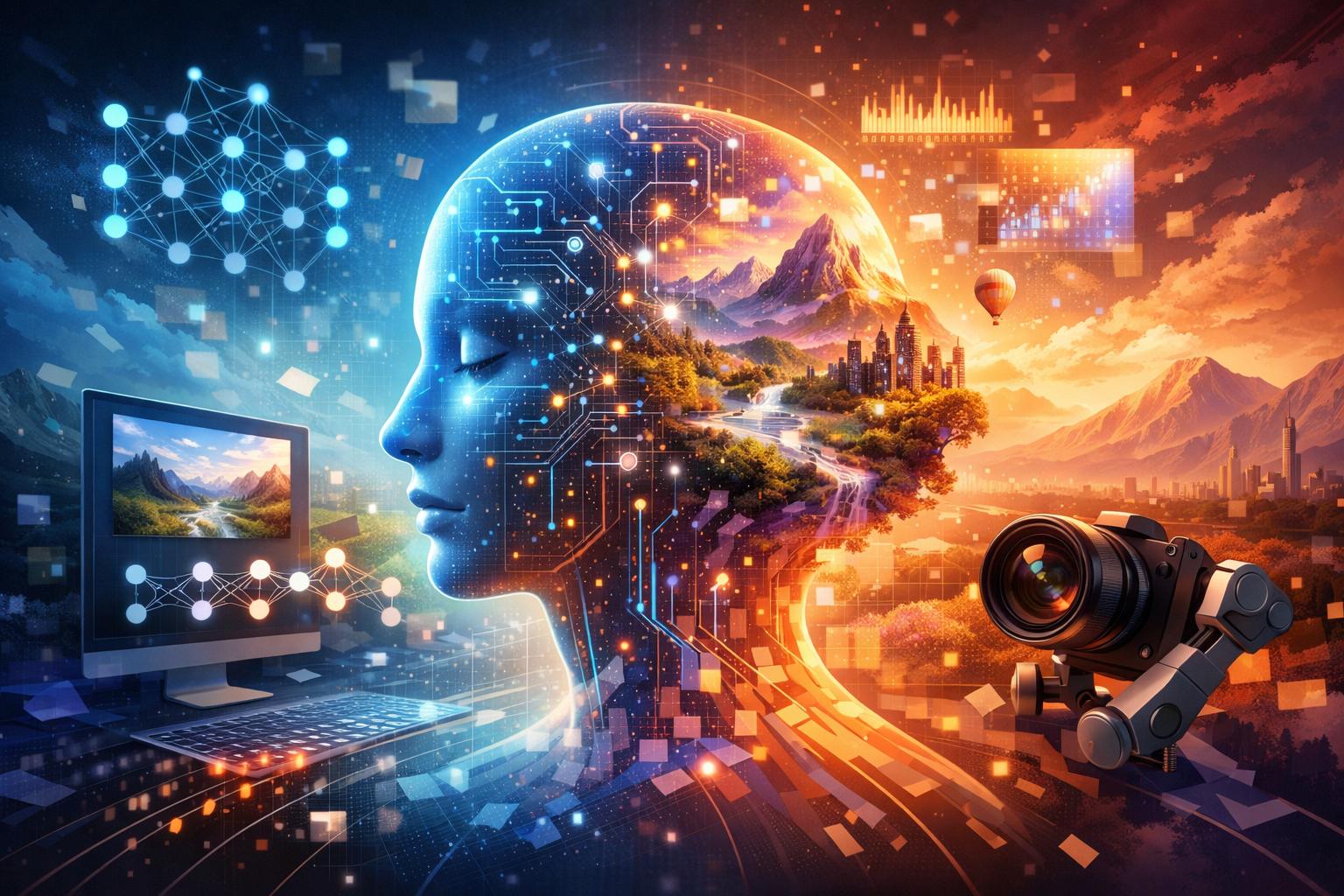
Analyzing the Impact of Neural Networks on Image Generation Quality
Neural networks have revolutionized the domain of image generation by drastically improving both the quality and coherence of synthesized visuals.These refined architectures, especially convolutional and transformer-based models, excel in capturing intricate patterns and details from vast datasets, enabling them to generate images that are stunningly realistic or artistically novel. The key to their success lies in their layered structure, which progressively abstracts visual features from simple textures to complex objects, culminating in images that are not only high in resolution but retain semantic accuracy aligned with the input prompts.
Several factors contribute to the enhanced image generation capabilities brought by neural networks:
- Deep feature extraction: Neural layers extract hierarchical visual features that mimic human perception.
- Adversarial training: The use of Generative adversarial Networks (GANs) pushes generated images toward photorealism by pitting two networks against each other.
- Attention mechanisms: these focus on relevant parts of the input prompt, producing images that accurately reflect complex descriptions.
| Network Type | Impact on Quality | Primary Strength |
|---|---|---|
| Convolutional Neural Networks (CNNs) | High detail retention | extracting spatial features |
| Generative Adversarial Networks (GANs) | Photorealistic textures | Real-vs-fake refinement |
| transformers | Semantic coherence | handling complex prompts |
Techniques for Optimizing Prompt Design to Enhance Visual Output
Mastering the art of crafting prompts for text-to-image AI starts with clarity and specificity. The AI interprets language literally, so concise descriptions with well-chosen adjectives and nouns dramatically improve the fidelity of the visual output. Incorporating contextual details-such as lighting, mood, perspective, or artistic style-helps the model understand the desired atmosphere and aesthetics. Additionally, experimenting with different phrasings or keyword orders often leads to more refined results, as the AI weights certain words and their positioning heavily during the generation process.
Understanding the relationship between prompt elements can also be enhanced through an organized approach. For example, using the following structured format can optimize prompt effectiveness:
| Prompt Component | Purpose | Example |
|---|---|---|
| Subject | Defines the main focus of the image | “a vintage red bicycle” |
| Attributes | Details that describe appearance or condition | “rusty, with worn leather seat” |
| Environment | Specifies setting or background | “park in autumn with falling leaves” |
| Style & Mood | Indicates artistic direction or emotion | “impressionist, warm and nostalgic” |
- Iterate systematically: tweak one prompt element at a time to isolate what influences results most.
- Leverage negative prompting: explicitly state what to avoid to reduce unwanted artifacts or elements.
- Use shorthand tags thoughtfully: some models recognize specific tags to amplify or soften effects.
through these optimization techniques, users gain finer control over generated visuals, culminating in images that faithfully match their creative intentions.
Best Practices for Ethical Use and Copyright Considerations in AI-Generated Images
When working with AI to generate images from text prompts, it is crucial to uphold ethical standards to respect the creators and the audiences. Ensure transparency by clearly indicating that images are AI-generated, which helps maintain trust and clarity for viewers. Avoid generating content that may propagate harmful stereotypes,infringe on privacy,or be used to create misleading or deceptive visuals. Additionally, always be mindful of input prompts-steering clear of requests that could result in offensive or inappropriate imagery.
Copyright remains a complex issue in AI-generated artworks. Even though the images are produced by algorithms, they often lean heavily on pre-existing datasets, which may contain copyrighted material. To navigate this responsibly, consider the following guidelines:
- Use publicly licensed or original datasets when training or fine-tuning models.
- Respect usage licenses attached to source images to avoid infringement.
- Give credit when derivative works are based on identifiable copyrighted content.
- Seek legal advice if uncertain about fair use or commercial application rights.
| Aspect | Best Practice |
|---|---|
| Transparency | Label images as AI-generated |
| Data Sources | Use licensed or original datasets |
| Content Sensitivity | Avoid harmful or misleading prompts |
| Copyright | Respect and credit existing works |