
understanding the core Technologies behind Speech Recognition Systems
At the heart of modern speech recognition systems lies a sophisticated blend of machine learning algorithms and linguistic models. These systems primarily rely on deep neural networks that mimic the way humans process and understand spoken language. By analyzing sound waves,the software first extracts acoustic features,which are then mapped to phonemes - the distinct units of sound in any language. This transformation from raw audio to phonetic elements is crucial for accurately transcribing spoken words into text. Equally vital are language models that predict word sequences and grammar, helping to contextualize and correct the raw outputs, thus improving transcription accuracy substantially.
Several core components work together seamlessly in these systems:
- Acoustic Modeling: Translates audio signals into probabilities of speech sounds.
- Language Modeling: Provides context to predict word sequences and understand semantics.
- Feature Extraction: Converts continuous audio waves into digital data that machines can analyze.
- Decoding Algorithms: Integrate inputs from acoustic and language models to generate the most probable transcription.
| Technology | Purpose | Example Usage |
|---|---|---|
| Deep Neural Networks (DNNs) | Acoustic feature mapping | Voice assistants like Siri and Alexa |
| Hidden Markov Models (hmms) | Speech sequence modeling | Early speech recognizers in call centers |
| Recurrent Neural networks (RNNs) | Handling temporal data sequences | Real-time transcription services |
| Transformer Models | Contextual language understanding | Advanced dictation software |
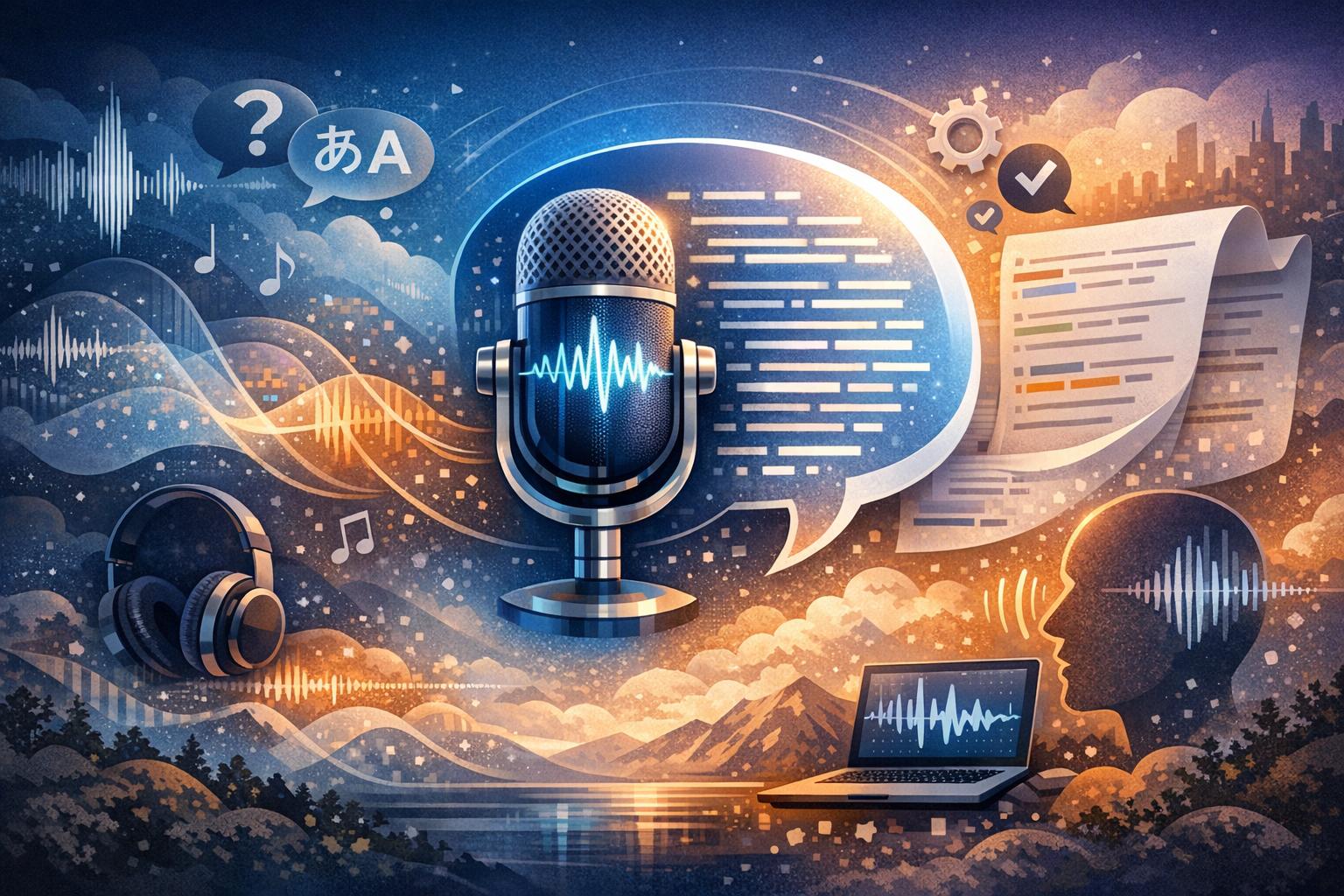
Exploring the Challenges and Solutions in Accurate Audio to Text conversion
Achieving precise transcription through audio-to-text conversion involves navigating a complex landscape of linguistic and technical hurdles. One major challenge is the diversity of accents and dialects, which can drastically affect recognition accuracy. Additionally, background noise and overlapping speech introduce distortions that confuse the AI models. The lack of standardized pronunciation and speech speed variation further complicate the task. These challenges demand sophisticated algorithms capable of dynamic adaptation and context-awareness to maintain reliability across diverse audio inputs.
To address these obstacles, developers employ a range of innovative solutions that enhance both the robustness and flexibility of speech recognition systems. Key strategies include:
- Noise reduction algorithms: Advanced filtering techniques selectively isolate speech from ambient noise.
- Acoustic modeling improvements: Use of deep neural networks enables the system to learn complex sound patterns.
- Contextual language modeling: Integrating contextual clues improves word prediction and reduces homophone errors.
- Personalized adaptation: Systems fine-tune recognition models based on user-specific speech characteristics.
Complementing these, continuous dataset expansion and multilingual support further empower AI to excel in real-world, varied scenarios.
| Challenge | Solution | Benefit |
|---|---|---|
| Accent variation | Adaptive neural networks | Improved understanding across speakers |
| Background noise | Noise suppression filters | Clearer audio input for processing |
| Speech speed | Dynamic time warping | Accurate recognition despite tempo changes |
| Homophones | Contextual language models | Reduced transcription errors |
Best Practices for Implementing Speech Recognition in Real-World Applications
Ensuring accuracy and reliability in speech recognition applications demands a strategic approach to model integration and environmental adaptation. Clear audio input is foundational-utilizing high-quality microphones and noise-cancellation techniques can drastically improve recognition rates. Moreover, tailoring the system to the domain-specific vocabulary and accents enhances performance, as generic models often struggle with specialized language. Developers should also implement ongoing learning mechanisms, allowing the system to adapt to new speech patterns and emerging slang without extensive manual retraining.
Performance optimization should balance real-time responsiveness with computational efficiency.cloud-based processing offers scalability but introduces latency concerns, whereas on-device processing favors instant results but might potentially be limited by hardware constraints. A hybrid approach often yields the best outcome,where initial processing occurs locally and complex analysis is offloaded to the cloud. Additionally, rigorous user testing across diverse demographic groups is critical to identify biases or failures, ensuring the technology performs equitably and inclusively.
Future Trends and Ethical Considerations in AI-Powered Speech Recognition
As AI-powered speech recognition continues to evolve,future trends point toward increasingly sophisticated and context-aware systems. These advancements will enable devices to understand not only words but also the nuances of tone, emotion, and intent, leading to more natural and effective human-computer interactions. Emerging technologies, such as on-device processing and federated learning, promise to enhance privacy, reduce latency, and make speech recognition more accessible in remote or offline environments. Additionally, the integration of multi-modal inputs-combining voice with visual and contextual cues-will further refine accuracy and user experience.
However, these technological strides bring meaningful ethical concerns that must be addressed responsibly. Issues of data privacy,consent,and algorithmic bias require transparent policies and robust safeguards. Key considerations include:
- User Consent: Ensuring individuals explicitly approve the collection and use of their voice data.
- Bias Mitigation: Developing diverse datasets to prevent discriminatory outcomes in speech recognition accuracy.
- Data Security: encrypting sensitive voice data to protect against unauthorized access and breaches.
- Accountability: Implementing frameworks to hold developers and companies accountable for misuse or errors in AI-driven systems.
| Trend | Implication | Ethical Focus |
|---|---|---|
| Context-aware AI | Enhanced interaction quality | transparency in AI decisions |
| On-device processing | Increased privacy and speed | Secure data storage |
| federated learning | Collaborative model training | User data ownership |
| Bias reduction techniques | Fairer and inclusive AI | Equity in AI services |