
Understanding the Core Components of Digital Workers and Their AI Technologies
At the heart of today’s digital workforce lies a refined integration of multiple AI technologies, each contributing to seamless task automation and enhanced operational efficiency. These core components, designed to mimic human cognitive processes, include Natural Language Processing (NLP), which enables machines to understand and interpret human language effectively, and Machine Learning (ML), allowing digital workers to learn from data patterns and improve their performance autonomously over time. additionally, Robotic Process Automation (RPA) acts as the executable framework that carries out repetitive, rule-based tasks across various systems without human intervention, effectively reducing errors and freeing up valuable human resources.
The synergy between these AI technologies forms a dynamic ecosystem where digital workers can handle complex workflows with impressive adaptability and speed. Their capabilities extend from managing customer interactions thru clever chatbots to analyzing vast datasets for predictive insights, making them indispensable in modern enterprises. The table below summarizes key AI components and their primary functionalities:
| Core Component | Primary Functionality | Key Benefit |
|---|---|---|
| Natural Language Processing (NLP) | understanding and generating human language | Improved dialog and customer engagement |
| Machine Learning (ML) | Analyzing data and learning patterns | Continuous performance improvement |
| Robotic Process Automation (RPA) | Executing repetitive tasks | Error reduction and operational efficiency |
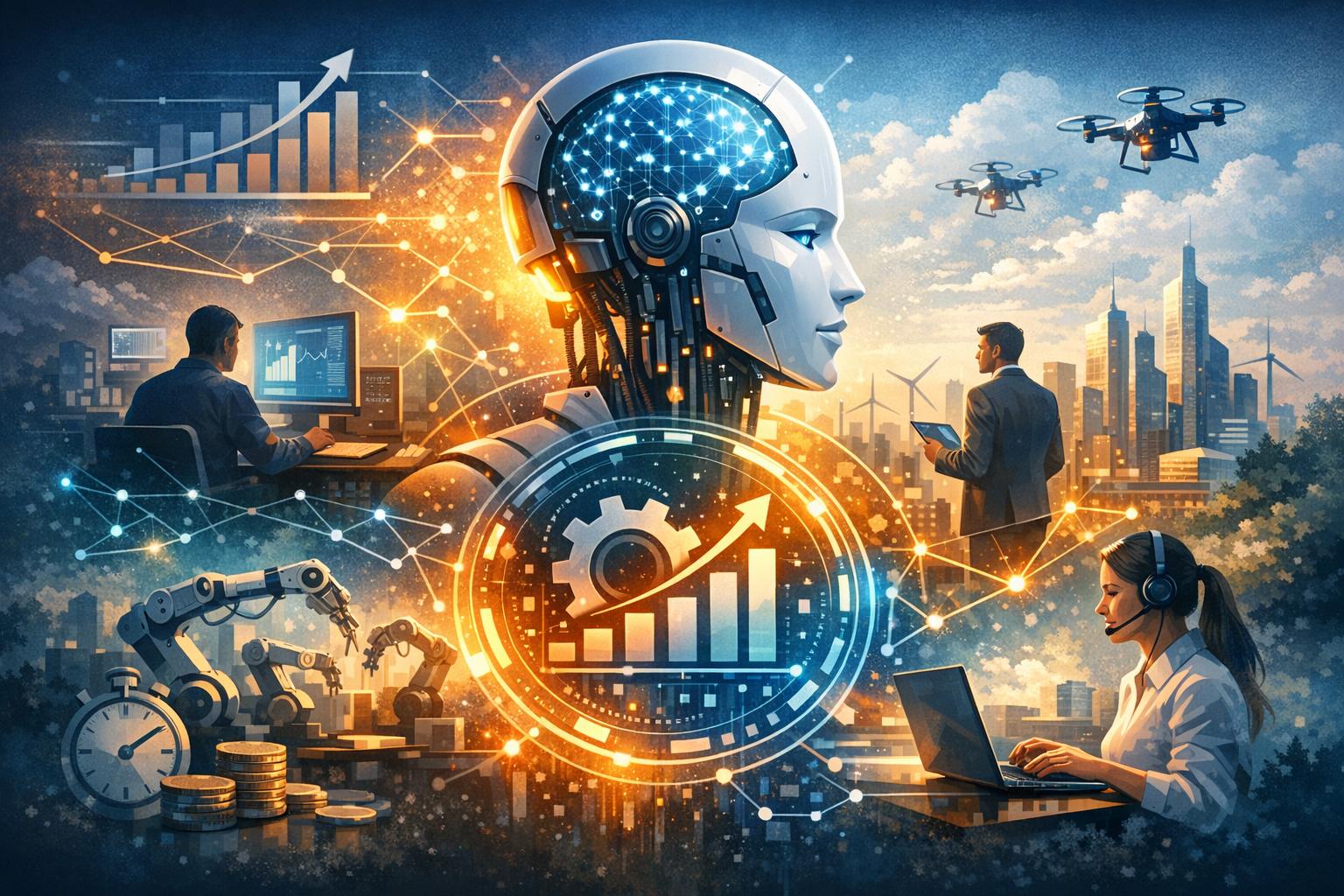
Analyzing the Impact of AI-Powered Automation on Workforce efficiency and Productivity
AI-powered automation has fundamentally transformed the way organizations approach workforce efficiency by enabling digital workers-software-driven entities that perform routine, repetitive tasks with unmatched precision and speed.These digital workers augment human capabilities, allowing employees to focus on strategic and creative endeavors rather of mundane activities. By automating workflows such as data entry, customer support ticket routing, and report generation, companies report meaningful reductions in operational bottlenecks and error rates. Consequently,this shift not only optimizes resource allocation but also enhances overall productivity metrics,driving enduring business growth in increasingly competitive markets.
The integration of AI automation tools introduces measurable improvements that extend beyond simple task completion. Key impacts include:
- Real-time analytics: Automated systems provide instant data insights, improving decision-making speed.
- scalability: Digital workers can handle increasing workloads without proportional increases in cost.
- Employee satisfaction: Reducing monotonous tasks leads to higher job satisfaction and retention.
| Efficiency Metric | Average Increase | Automation Impact |
|---|---|---|
| Task Completion Speed | 45% | Reduced manual processing time |
| Error Reduction | 60% | Minimized human entry errors |
| Employee Productivity | 35% | More focus on high-value tasks |
Strategies for Integrating Digital Workers into Existing Business Processes
Effectively embedding digital workers into your existing workflows requires a clear understanding of where automation can deliver maximum value without disrupting core operations. Begin by conducting a thorough process audit to identify repetitive and rule-based tasks that digital workers can handle reliably. Collaboration between IT and business units is essential to map out integration points, ensuring that digital workers complement rather than replace human effort. Organizations should prioritize gradual implementation, allowing teams to adapt and optimize human-machine collaboration through iterative feedback loops.
Key strategies for seamless integration include:
- Utilizing APIs and middleware to enable smooth data exchange between legacy systems and digital workers
- Establishing robust monitoring frameworks to track performance and quickly resolve exceptions
- Providing complete training programs to upskill employees, preparing them to work alongside AI-driven tools
- Setting clear governance policies to manage digital worker deployment and compliance
| Integration Step | Benefit | Recommended Tools |
|---|---|---|
| Process Mapping | Identify automation hotspots | Flowcharts, BPMN software |
| API Connectivity | Real-time data sync | RESTful APIs, Middleware |
| Training & Change Management | Improve adoption rates | e-Learning platforms, Workshops |
| Governance Setup | Ensure compliance and security | Policy frameworks, Audit tools |
Best Practices for Ensuring Security and Compliance in AI-Driven Task Automation
As organizations embrace AI-driven task automation, safeguarding sensitive data and adhering to regulatory standards becomes paramount. Employing robust encryption methods during data transmission and storage ensures that digital workers operate within a secure surroundings.Additionally, implementing role-based access controls limits exposure of critical systems and data only to authorized AI agents and personnel. Regular audits and continuous monitoring enable organizations to detect anomalies early, preventing potential breaches or compliance violations.
Equally important is fostering a culture of openness and accountability within AI task automation frameworks. Maintaining detailed logs that track algorithm decisions and workflow changes facilitates compliance with industry regulations such as GDPR and HIPAA. Below is a simplified comparison of key security practices aligned with compliance requirements:
| Security Measure | Purpose | Compliance Alignment |
|---|---|---|
| data Encryption | Protects data integrity and confidentiality | GDPR, HIPAA |
| Role-Based Access Control | Prevents unauthorized access | SOX, PCI-DSS |
| Audit Logging | ensures traceability and accountability | ISO 27001, GDPR |
| Regular Security Assessments | Identifies vulnerabilities and compliance gaps | HIPAA, NIST |