
Top Emerging Roles Driving AI Innovation Across Industries
Across various industries, AI is reshaping traditional roles and creating specialized positions dedicated to driving innovation. In technology and finance, AI Research scientists and Machine Learning Engineers are pivotal in developing cutting-edge algorithms that automate complex processes and enhance predictive analytics. Meanwhile, healthcare has witnessed the rise of AI Medical Data analysts who leverage patient data to personalize treatment plans and improve outcomes. In retail and marketing, AI Customer Experience Strategists optimize engagement through intelligent personalization and behavioral prediction models.
Emerging AI roles also span across operational and strategic dimensions, emphasizing the intersection of technical expertise and domain knowlege. Key positions include:
- AI Ethics Officers ensuring responsible and unbiased AI deployments.
- AI Product Managers orchestrating AI integration with customer-centric products.
- autonomous Systems Specialists advancing robotics and self-driving vehicle technologies.
- Data Labeling Coordinators managing the foundational datasets essential for training models.
| Industry | Key Emerging AI Role | Primary Focus |
|---|---|---|
| Healthcare | AI Medical Data Analyst | Personalized patient care |
| Finance | Machine Learning Engineer | Fraud detection and risk modeling |
| Retail | AI Customer Experience Strategist | Behavioral prediction and personalization |
| Automotive | Autonomous Systems Specialist | Designing self-driving technologies |
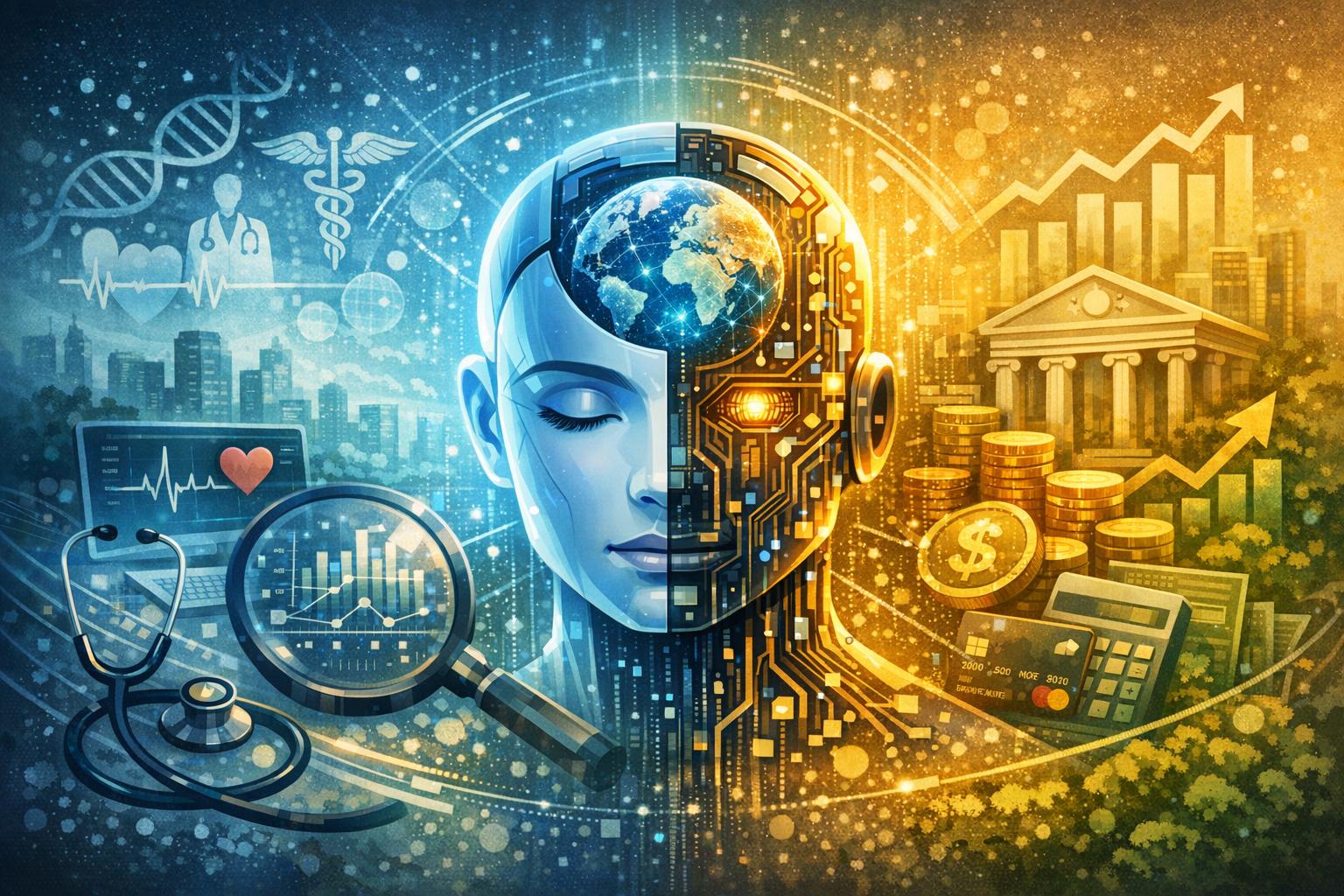
In-Depth Analysis of AI Integration in Healthcare and Finance
AI technologies have revolutionized the healthcare sector by enabling precise diagnostics, personalized treatment plans, and streamlined administrative processes. Machine learning algorithms analyze vast amounts of medical data to identify patterns that were previously undetectable, accelerating early disease detection and improving patient outcomes. Beyond diagnostics, AI-driven robotics assist in complex surgeries, enhancing surgeon accuracy and reducing recovery times. Moreover, natural language processing (NLP) tools aid healthcare professionals in managing electronic health records (EHRs), cutting down paperwork and allowing more time for patient care. Key AI applications in healthcare include:
- Predictive analytics for patient risk assessment
- automated medical imaging analysis
- Virtual health assistants and chatbots
- Drug discovery through advanced simulations
In finance, AI’s integration has transformed traditional workflows by automating routine tasks and enhancing decision-making processes with real-time data insights. Algorithms are now basic in fraud detection, continuously learning from transaction patterns to flag anomalies effectively and reduce financial losses. Algorithmic trading leverages AI to execute rapid trades based on market data, ensuring better returns and reduced risks. AI-powered credit scoring models evaluate borrower reliability more comprehensively than conventional methods, increasing loan accessibility without compromising security. the table below summarizes some transformative AI applications in both sectors:
| Sector | AI Application | Primary Benefit |
|---|---|---|
| Healthcare | medical Imaging Analysis | Improved Diagnostic Accuracy |
| Healthcare | Virtual Health Assistants | Enhanced Patient Interaction |
| finance | Fraud Detection | Increased Security |
| finance | Algorithmic Trading | Optimized Investment Returns |
Strategic Recommendations for Building a Career in AI-Powered Sectors
For professionals aiming to thrive in AI-driven industries, aligning your skillset with evolving technological demands is essential. Begin by mastering core AI competencies such as machine learning, natural language processing, and data analytics, while also cultivating soft skills like critical thinking and adaptability. Engaging in interdisciplinary learning-combining AI expertise with fields like healthcare, finance, or marketing-significantly broadens career opportunities. Furthermore, securing certifications from recognized institutions, contributing to open-source AI projects, and participating in specialized workshops can elevate credibility and practical know-how, helping you stand out in competitive job markets.
Networking and strategic career planning also play pivotal roles. Target organizations that invest heavily in AI innovation and seek roles that offer hands-on experience with cutting-edge technologies.Consider the sectors below for high-growth potential and skill application:
- Healthcare: AI-powered diagnostics, personalized treatment planning
- Financial Services: Fraud detection, algorithmic trading
- Retail and E-commerce: Personalized recommendations, inventory optimization
- Manufacturing: Predictive maintenance, robotics automation
- Transportation & Logistics: Autonomous vehicles, route optimization
| Strategic Action | Expected Impact | Implementation tip |
|---|---|---|
| Build a diverse AI portfolio | demonstrates versatile expertise | Incorporate projects from multiple industries |
| Engage with AI communities | Expands professional network | Participate in forums and hackathons |
| Stay current with trends | Maintains competitive edge | Subscribe to AI journals and news feeds |
Future Outlook on AI Job Market Trends and Skill development
As artificial intelligence continues to reshape industries, the job market is undergoing a dynamic change characterized by an increasing demand for hybrid skillsets that blend domain expertise with proficiency in AI technologies. Professionals aiming to stay ahead must prioritize lifelong learning and adaptability, focusing on mastering areas such as machine learning algorithms, data analysis, and human-AI interaction. Emerging roles will not only require foundational technical knowledge but also the ability to apply AI ethically and creatively within diverse sectors. Continuous skill development through courses, certifications, and hands-on projects will be paramount to thrive in this evolving landscape.
Key sectors poised for substantial growth due to AI integration include healthcare, finance, automotive, and creative industries. Within these fields, specialized roles such as AI ethicists, data curators, and AI-enabled product designers are gaining prominence.Below is a concise overview of essential future skills and their associated sectors:
| Future Skill | Associated Sector | Impact |
|---|---|---|
| Explainable AI (XAI) | Healthcare, Finance | Enhances clarity and trust |
| AI Ethics & Governance | Technology, Legal | Ensures responsible AI deployment |
| Natural Language Processing (NLP) | Customer service, Media | Improves communication and automation |
| Edge Computing Integration | Automotive, IoT | Enables real-time AI applications |
- Develop cross-disciplinary acumen: Combine AI knowledge with specific industry insights.
- Enhance problem-solving skills: Leverage AI to devise innovative solutions.
- Engage in collaborative environments: Work alongside AI systems and diverse teams for optimal outcomes.