
The Environmental Impact of AI Model Training and Development
modern artificial intelligence systems require considerable computational power to train complex models, which translates directly into meaningful energy consumption. Data centers hosting the GPUs and TPUs essential for this training run continuously, often relying on non-renewable energy sources. Studies estimate that training a single large AI model can emit as much carbon dioxide as several cars over their entire lifetimes. Beyond the training phase, the persistent infrastructure, including model deployment and user interactions, further contributes to a steady energy demand that amplifies the environmental footprint of AI technologies.
- Training Phase: Intensive computations over weeks or months cause peak power consumption.
- Data Center Operations: Cooling systems and hardware maintainance add to energy use.
- Model Inference: Real-time applications require continuous server activity, scaling carbon emissions.
| Stage | Approximate CO2 Emissions | Impact Factor |
|---|---|---|
| Initial Model training | 300-500 kg | High |
| Data Center Cooling | 100-200 kg | Medium |
| Model Deployment & Inference | 50-150 kg/year | Variable |
addressing this environmental challenge requires a multi-pronged approach. Transitioning to renewable energy sources, implementing efficient hardware accelerators, and optimizing algorithms to reduce unnecessary computations can cumulatively drive down emissions. Awareness among AI practitioners about the carbon costs associated with model complexity can motivate the development of greener AI solutions. Importantly, incorporating sustainability metrics into the AI development lifecycle is crucial to balancing technological advancement with environmental obligation.
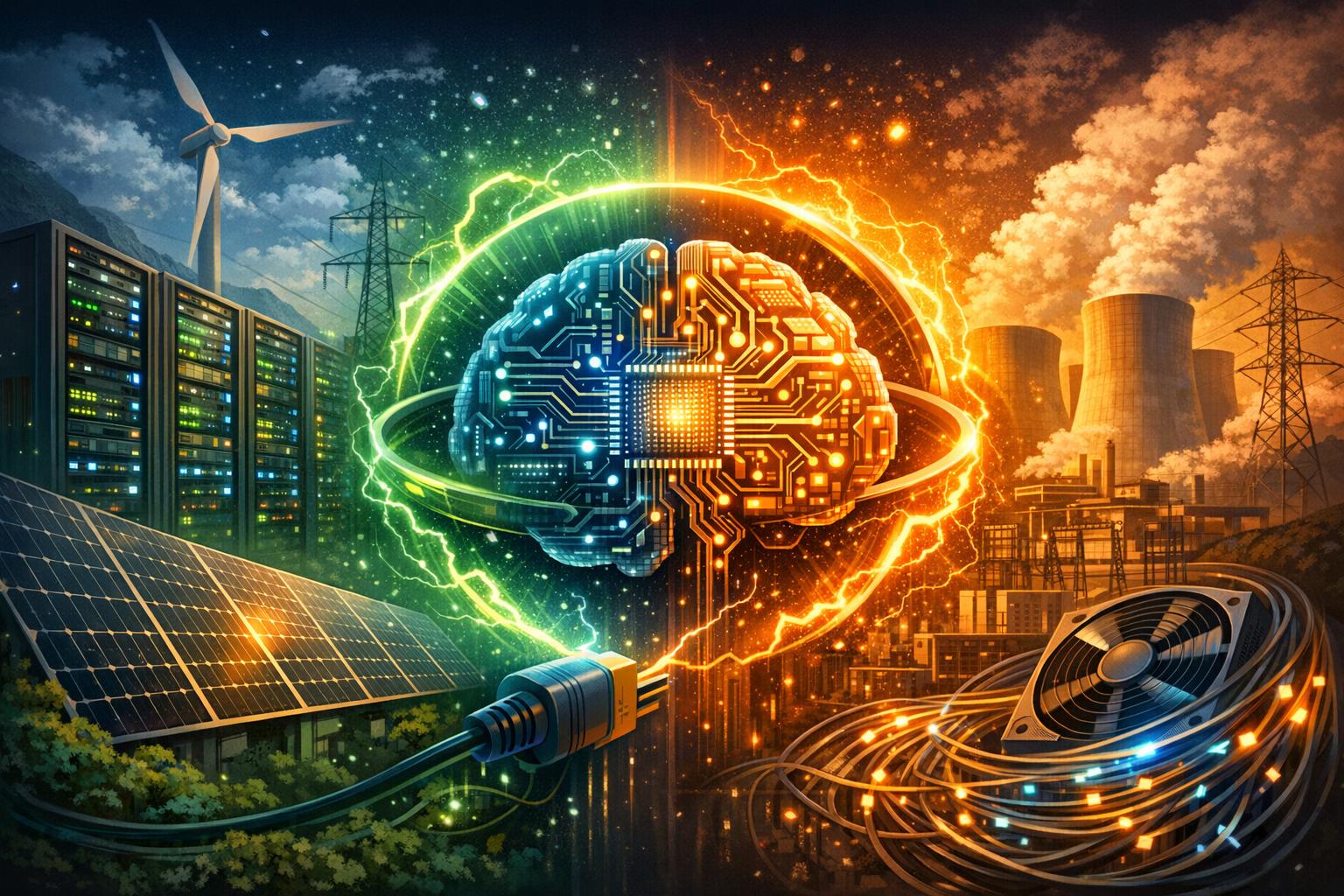
Energy Consumption in AI Infrastructure and Data Centers
AI infrastructure relies heavily on vast data centers, which are notorious for their immense energy demands. These facilities host the servers and storage units that enable AI models to be trained, tested, and deployed at scale. It is estimated that data centers worldwide consume about 1% of the global electricity supply,with a significant portion dedicated specifically to AI workloads. The continuous operation of cooling systems, processing units, and networking equipment contributes to carbon emissions that rival those of major industrial sectors.
Key contributors to energy consumption include:
- Training AI Models: Massive computational power is required, frequently enough running for weeks or months, dramatically increasing electricity usage.
- Inference and Deployment: Serving AI models to millions of users in real-time demands ongoing processor activity.
- Data storage and Transmission: The movement and storage of colossal datasets consume substantial energy, especially when redundancy and backup systems are factored in.
| component | Energy Use Contribution | Carbon Emissions Impact |
|---|---|---|
| Model Training | 45% | High |
| Data Storage | 25% | Moderate |
| cooling Systems | 20% | Moderate |
| Networking & Delivery | 10% | Low |
Strategies for Reducing Carbon Emissions in AI Operations
To meaningfully decrease carbon emissions in AI operations,organizations must adopt a multi-layered approach that addresses both the training phase and the supporting infrastructure. One of the most effective strategies is optimizing model architectures to reduce computational demands without compromising performance.Techniques such as model pruning, quantization, and knowledge distillation can drastically cut down the number of required operations. Additionally, shifting to energy-efficient hardware like specialized AI accelerators and GPUs built for low power consumption can further minimize carbon footprints. Leveraging cloud providers committed to renewable energy also plays a crucial role,as the source of electricity powering data centers directly influences emissions.
Operational efficiency must be balanced with sustainability, and this balance can be supported by adopting intelligent workload scheduling that prioritizes running compute-heavy tasks during periods of low carbon intensity in the grid. Developers and engineers should embrace carbon-aware programming by monitoring real-time energy consumption and employing software tools that estimate and track emissions across AI pipelines. The table below highlights some key strategies alongside their typical impact on reducing carbon emissions in AI workflows:
| Strategy | Emission Reduction Potential | Implementation Complexity |
|---|---|---|
| Model pruning & Quantization | High (up to 50%) | Medium |
| Renewable Energy Cloud Usage | Very high (up to 70%) | Low to Medium |
| Energy-Efficient Hardware | Medium to High | High |
| Carbon-Aware Scheduling | Medium | Medium |
Implementing Sustainable Practices for Greener Artificial Intelligence
To considerably reduce the environmental impact of AI technologies,organizations are adopting a range of sustainable practices aimed at lowering emissions across the entire AI lifecycle. Key strategies include:
- Optimizing model efficiency: designing leaner algorithms that require fewer computational resources without sacrificing performance.
- Utilizing renewable energy sources: Powering data centers and AI infrastructure with solar, wind, or other clean energy to minimize carbon emissions.
- Implementing carbon-aware scheduling: Running energy-intensive training operations during periods of low carbon intensity on the grid.
- Promoting hardware efficiency: investing in next-generation chips and accelerators designed for energy-efficient AI processing.
Measuring progress requires clear tracking of AI’s carbon footprint. The table below illustrates a simplified comparison of emissions associated with various AI phases, highlighting areas ripe for sustainability improvements:
| AI Phase | Average CO2 Emissions (kg) | Key Efficiency opportunity |
|---|---|---|
| Data Collection & Preprocessing | 150 | Enhanced data pipelines |
| model Training | 1200 | Efficient architectures |
| Model Inference | 300 | Edge computing |
| Infrastructure Maintenance | 450 | Renewable energy use |