
Essential Cognitive Skills for Navigating Artificial Intelligence Technologies
Mastering complex problem-solving and critical thinking is paramount for children as they engage with AI technologies. These cognitive faculties enable them to not only understand machine outputs but also evaluate the biases, limitations, and ethical implications embedded within AI systems. By nurturing a mindset of inquiry and skepticism, young learners can become adept at decoding algorithms’ decisions, fostering an informed interaction with digital tools that shape their habitat.
Key cognitive skills crucial for thriving alongside AI include:
- Analytical Reasoning: Dissecting data and identifying patterns generated by AI.
- Creative Thinking: Innovating alongside technology rather than merely consuming it.
- Meta-cognition: Reflecting on one’s own thinking processes when engaging with AI-driven insights.
- adaptive Learning: Quickly adjusting to AI’s evolving capabilities and learning paradigms.
| Skill | Benefit | Request |
|---|---|---|
| Critical Thinking | Identifies bias and flaws in AI outputs | Assessing content validity and ethical AI use |
| Creative Thinking | Drives AI-inspired innovation | Designing new solutions with AI tools |
| Adaptive Learning | Keeps pace with AI advancement | Continuous skill advancement and reskilling |
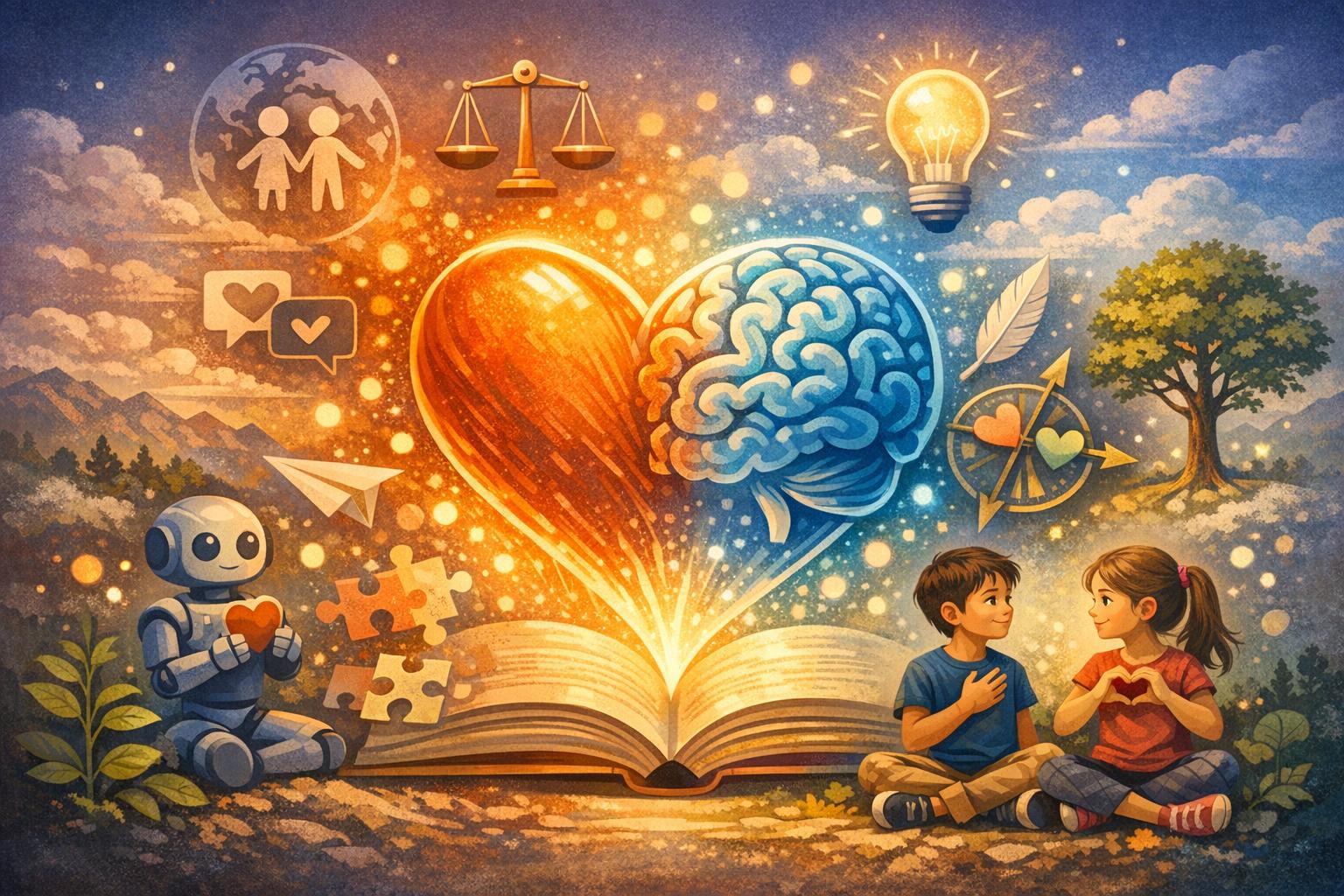
Building Emotional Intelligence and Ethical awareness in Young Learners
Emotional intelligence empowers children to navigate complex social landscapes, a skill that becomes indispensable as technology mediates more of our interactions. Young learners equipped with empathy, self-awareness, and effective interaction can better manage their relationships and respond thoughtfully to diverse perspectives. Encouraging these abilities through age-appropriate activities-such as role-playing, storytelling, and reflective discussions-helps build resilience and social competence, laying a foundation for ethical decision-making in an AI-driven environment.
ethical awareness complements emotional intelligence by fostering a strong moral compass in children. In today’s world, where artificial intelligence influences choices and behaviors, young learners must understand the implications of their actions on others and society at large. Educators and parents can nurture this awareness by guiding children to question the fairness, privacy, and impact of technology.Consider the following key areas to emphasize:
- Respect for Diversity: Valuing different viewpoints and cultures.
- Accountability: Taking duty for one’s actions and digital footprint.
- Critical Thinking: Assessing information sources and AI outputs critically.
- Compassion in Technology Use: understanding how AI affects people emotionally and socially.
| Skill | Child-Friendly Practice | Expected Outcome |
|---|---|---|
| Empathy | Story circles about feelings | enhanced emotional understanding |
| Ethical Judgment | Scenario-based discussions | Better moral reasoning |
| Self-Regulation | Mindfulness exercises | Improved focus and impulse control |
| Critical thinking | AI fact-checking games | Increased analytical skills |
Developing Critical Thinking and problem-Solving Abilities for Future Challenges
In an era dominated by artificial intelligence, cultivating the ability to think critically and tackle complex problems is indispensable for children.These skills empower young minds to not just absorb information but to analyze, evaluate, and synthesize data from diverse sources. This deep engagement with knowledge enables them to distinguish fact from fiction, innovate beyond predefined solutions, and adapt effectively to rapidly evolving technological landscapes. Encouraging questioning and reflective thinking helps children become resilient decision-makers who approach challenges with a strategic mindset.
Key components to nurture include:
- Analytical reasoning: Breaking down complex scenarios to understand underlying principles.
- Creative problem-solving: Generating innovative solutions beyond conventional approaches.
- Collaborative thinking: Engaging in group problem-solving to leverage diverse perspectives.
- Ethical judgment: Considering the broader impact of decisions in an AI-augmented world.
| Skill | Benefit |
|---|---|
| critical Analysis | Evaluates information rigorously |
| Innovative Thinking | Drives unique solutions |
| Collaboration | Fosters teamwork and diversity |
| Ethical Awareness | Ensures responsible choices |
Integrating Digital literacy and Creativity to Empower Lifelong Learning
In today’s rapidly evolving technological landscape, fostering digital literacy alongside creativity is no longer optional but essential for nurturing resilient lifelong learners. Children need to not only navigate complex digital environments with proficiency but also harness technology as a canvas for innovation. Integrating these skills encourages critical thinking, problem-solving, and adaptive learning capacities that prepare young minds to thrive amid AI-driven transformations. Emphasizing this dual competency empowers them to understand and ethically apply emerging tools,ensuring they remain active creators rather than passive consumers in the digital ecosystem.
Developing these core abilities involves cultivating habits that extend beyond conventional education frameworks. Key focus areas include:
- Collaborative problem-solving: Leveraging AI tools collectively to devise creative solutions.
- Information discernment: Critically evaluating digital content in an age of information overload.
- Reflective creativity: Using digital media to express unique perspectives and insights effectively.
| Skill | Purpose | Example Activity |
|---|---|---|
| Code Literacy | Enables understanding of AI functioning | Building simple chatbots |
| Creative Storytelling | Develops narrative and digital design skills | Creating multimedia stories |
| Data fluency | Interpreting and visualizing data effectively | Interactive data dashboards |
Infusing these competencies into education lays a foundation for students to continuously reinvent how they learn and contribute throughout their lives, ultimately crafting a future where human ingenuity and AI coexist and flourish.