
Copyright Considerations for AI-Generated Content Across Different Legal Systems
Determining the ownership and copyright status of AI-generated content becomes a complex issue when viewed through the lens of varying international legal frameworks. Several jurisdictions emphasize human authorship as a prerequisite for copyright protection. Such as, in the United States and manny European countries, copyright law requires a tangible expression resulting from human creativity, often excluding works created solely by artificial intelligence from traditional copyright claims. Conversely, some legal systems are beginning to explore frameworks that either attribute rights to the developer of the AI, the user who directs the AI, or even propose the creation of a sui generis right tailored specifically to AI-generated works.
- United States: Copyright applies only to works created by humans, not machines alone.
- European Union: similar human authorship requirements with ongoing policy discussions about AI-specific rights.
- China: Emerging openness towards recognizing AI contributions,with developers often considered authors.
- Australia: Requires significant human input for protection, but AI-generated content remains ambiguous.
| Jurisdiction | Copyright Criteria | AI-Generated Content Status |
|---|---|---|
| USA | Human authorship required | No protection without human input |
| EU | Creative human input | Exploring new legal frameworks |
| China | Flexible, developer considered author | Growing acceptance |
| Australia | Substantial human input | Uncertain, under review |
Thes jurisdictional variations highlight a critical challenge for content creators, legal professionals, and technology developers aiming to navigate AI-generated content rights globally. The absence of a unified international standard means that creators must be vigilant in understanding local laws and the evolving regulatory landscape. Many experts advocate for the harmonization of legal principles or the introduction of new categories of intellectual property rights that specifically address AI-generated works, balancing innovation incentives with clear ownership and usage rights. Until a consensus emerges,the landscape remains unpredictable,requiring careful contractual arrangements and risk management strategies in cross-border AI content exploitation.
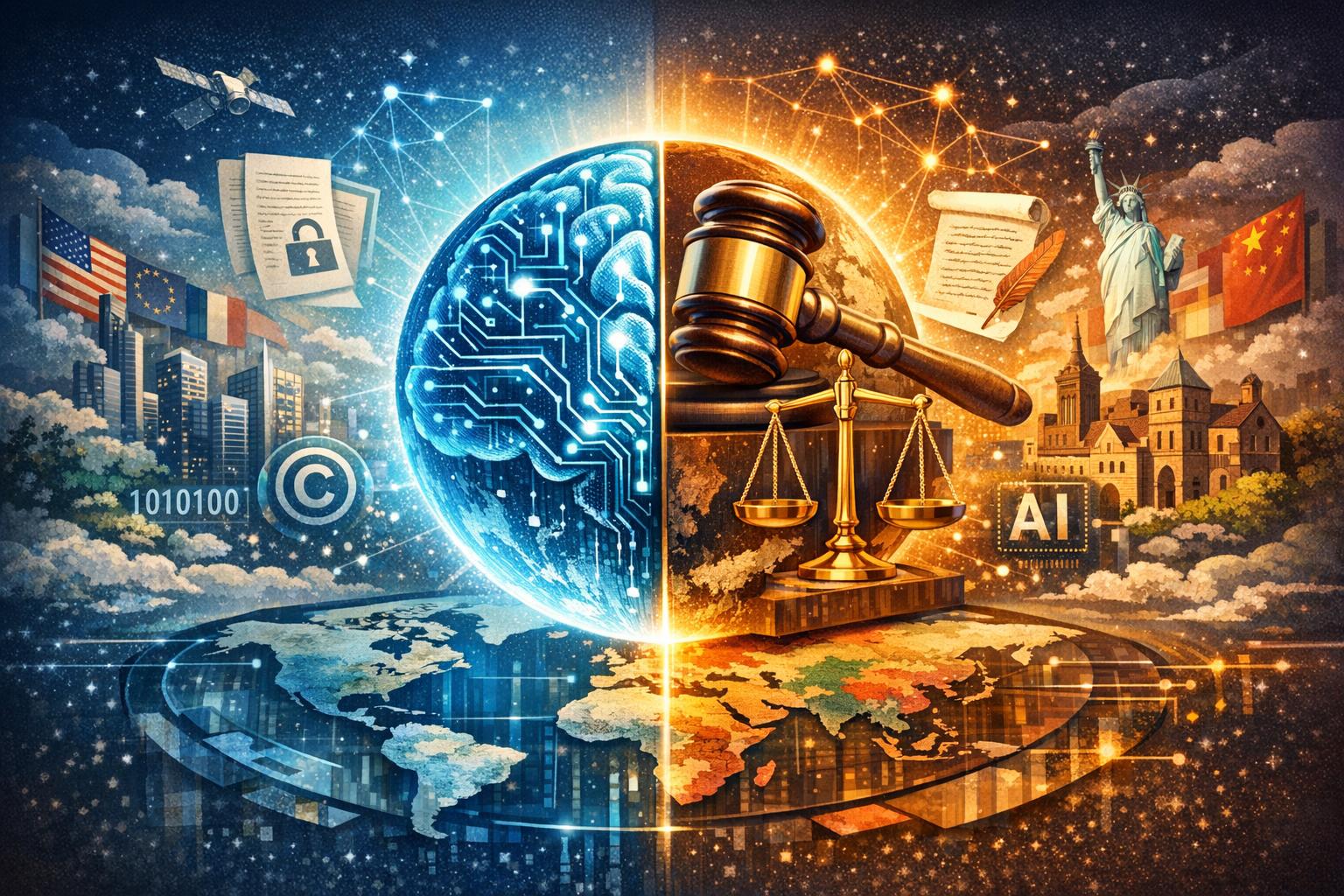
Analyzing Jurisdictional Disparities in AI Content Ownership and Rights
In the evolving landscape of AI-generated content, legal frameworks across jurisdictions display marked inconsistencies regarding ownership and copyright rights. Certain countries adhere strictly to traditional copyright principles, where human authorship is essential for protection, effectively excluding AI-generated works from automatic copyright coverage. Conversely, some jurisdictions have begun adapting policies to recognize AI as a co-creator or to grant rights to the human entity utilizing the AI tool, reflecting a more progressive understanding of intellectual property in the digital age. this divergence presents complex challenges for creators, businesses, and legal practitioners dealing with AI-produced materials in multiple markets.
Key jurisdictional disparities include:
- Human Authorship Requirement: Nations like the United States and the European Union typically require a human author for copyright eligibility, creating limitations for fully autonomous AI outputs.
- Rights Assignment Models: Some territories permit the assignment of rights to the user or operator of the AI, recognizing their role in the creative process despite non-human authorship.
- Public Domain Classification: in jurisdictions where AI-generated content is not copyrightable, such works may automatically enter the public domain, impacting commercial exploitation strategies.
| Jurisdiction | Ownership Model | Copyright Status |
|---|---|---|
| United States | Human authorship Required | Protected if Human Created |
| European Union | Human Creator Focused | Limited AI Rights |
| Japan | User Rights Recognized | Conditional Protection |
| Australia | Mixed Approaches | Under Legislative Review |
Challenges of Applying Traditional Copyright Frameworks to AI Creations
The rapid evolution of AI technology has exposed the inadequacies of traditional copyright laws, which were originally designed to protect human authorship. A critical issue arises in defining authorship when AI autonomously generates content without direct human creative input. Traditional frameworks often require a human author to claim copyright, yet AI-generated works challenge this premise by blurring the lines between human creativity and machine output. Jurisdictions struggle to classify such creations, leading to a patchwork of inconsistent legal interpretations. these inconsistencies result in uncertain protection rights, where some territories may deny copyright altogether while others might extend limited protections under different conditions.
Additionally, the question of ownership complicates the enforcement of rights globally.Should the credit belong to the AI developer, the user who configured the system, or the AI entity itself? This ambiguity affects licensing, commercialization, and infringement disputes. Consider the following comparison of selected jurisdictions and their approach to AI-generated content:
| Jurisdiction | Authorship Recognition | Ownership Attribution | Notable Legal Stance |
|---|---|---|---|
| United States | Human required | Human user or developer | Copyright denied for wholly AI works |
| European Union | Human creative input needed | Possible shared rights | Exploring new legislative models |
| United Kingdom | Original literary work defined broadly | Person who made arrangements for creation | Copyright exists if human involvement present |
| China | Mixed approach | Frequently enough favors AI developer | Increasing focus on AI innovation |
- Legal uncertainty: Varies widely, complicating international enforcement.
- Inconsistency: divergent standards create barriers for creators and businesses.
- Policy gaps: Calls for tailored legislation to address AI’s unique role.
Strategic Recommendations for Navigating International Copyright Complexity in AI-Generated Works
Organizations engaging in the creation or distribution of AI-generated works must adopt a proactive and nuanced approach to copyright compliance. Understanding jurisdictional nuances is paramount-what qualifies as protected content in one country may fall outside copyright scope in another, due to differing legal frameworks regarding authorship and originality. To mitigate risks, entities should implement comprehensive due diligence processes, including:
- Regularly monitoring evolving intellectual property laws across key markets
- Engaging legal experts specializing in AI and international copyright
- Mapping rights ownership and usage permissions clearly before publication or commercial exploitation
Adopting adaptable strategies can streamline compliance and strengthen enforcement. For example, leveraging centralized digital rights management systems can facilitate openness and cross-border collaboration. Below is a strategic framework illustrating key considerations for managing AI-generated content copyrights internationally:
| Aspect | Challenge | Recommended Approach |
|---|---|---|
| Authorship Definition | Varies by jurisdiction | Consult local IP counsel; document human contributions |
| Licensing clarity | Opaque rights in training data | Secure explicit licenses and track provenance |
| enforcement | Fragmented international enforcement | Use tech-enabled monitoring; coordinate cross-border actions |
AI tools built by Emerald Force
Built and supported by Emerald Force.
You might also like
- How AI Writes Scripts: Scenes, Dialogue, and Structure
- Why One Model Cannot Serve Every AI Task Safely
- Keeping AI on Topic: Define Scope and Core Task
- Suspicious AI Content: Pause, Verify, Then Act
AI Worker Monitoring: Legal Limits Employers Face
- How AI Reads PDFs, Charts, Screenshots, and Photos
- Access Control in AI: Rules for Use and Access
- AI Rationales Aren’t Always Faithful Explanations
- AI for Homework: Tutoring Allowed, Final Answers Limited
- AI in Healthcare: The Risks of Overtrust