
The Evolution of Generative Models in Artistic Media
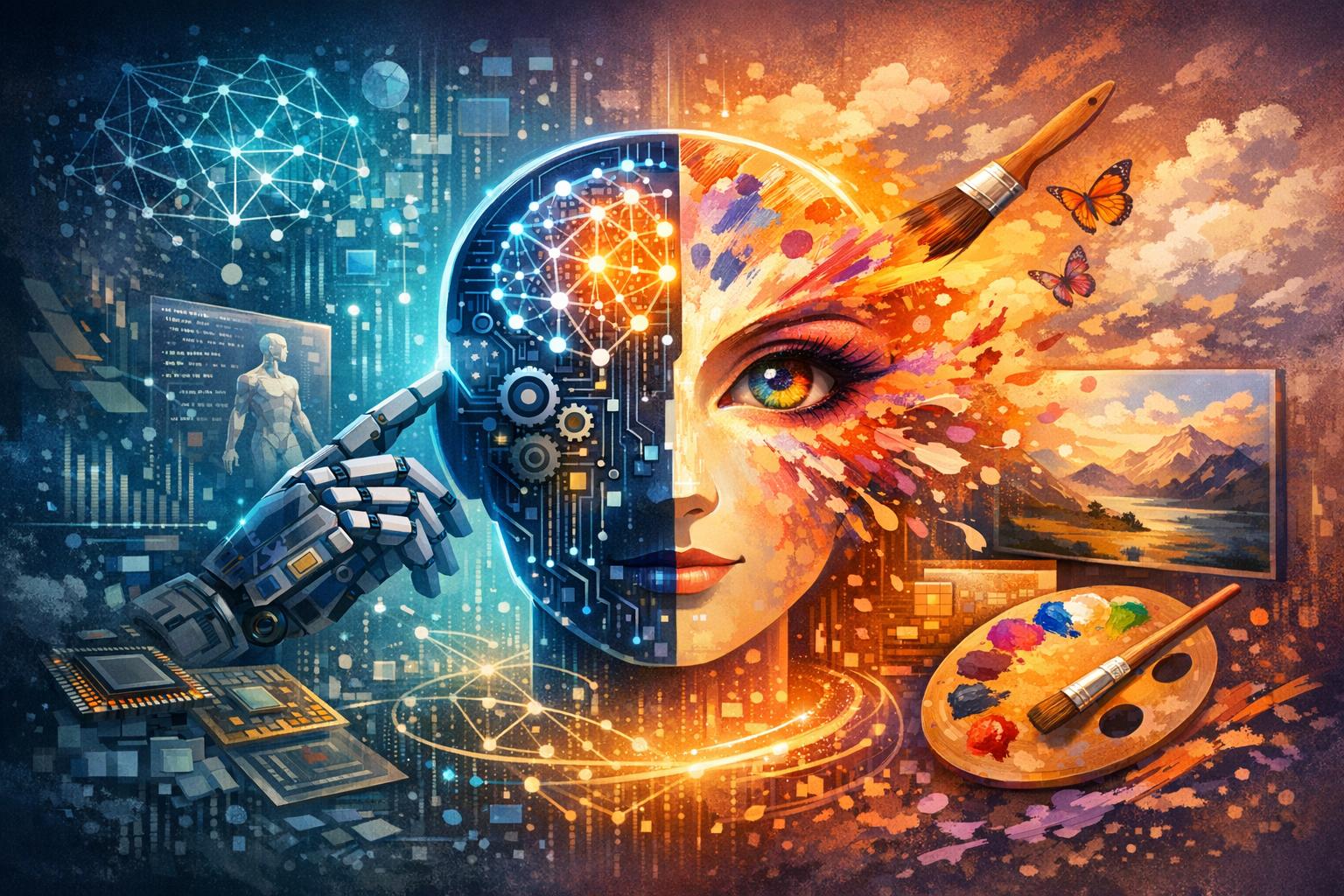
The journey of generative models in the realm of artistic media illustrates a compelling narrative of technological innovation meeting creative expression. Initially, these models were rudimentary, limited too generating simple patterns or repetitive motifs. Over time,breakthroughs in deep learning-especially with the advent of Generative Adversarial Networks (GANs) and Variational Autoencoders (VAEs)-transformed AI from a mechanical tool into a genuine artistic collaborator. These sophisticated algorithms can now synthesize images, music, and even text that echo the style, emotion, and subtlety traditionally reserved for human artists.
Key milestones in this evolution include:
- Early algorithmic art in the 1960s, albeit static and rule-based
- Introduction of statistical models enabling more dynamic outputs
- The rise of GANs circa 2014, allowing bidirectional learning between generator and discriminator networks
- Current hybrid approaches combining reinforcement learning and neural networks for adaptive creativity
| Model Type | Artistic Output | Significance |
|---|---|---|
| Rule-Based Algorithms | Pattern generation | Foundation of generative art |
| GANs | Photo-realistic images, surreal art | Enhanced creativity through adversarial training |
| VAEs | Image morphing, style transfer | Control over latent space representations |
Technical Foundations Behind AI-Driven Art Creation
At the core of AI-driven art creation lie sophisticated generative models that enable machines to produce novel visual content. Among these, Generative Adversarial Networks (GANs) and Variational Autoencoders (VAEs) stand out as the primary architectures fueling this revolution, each with distinct mechanisms. GANs operate by pitting two neural networks against each other-a generator crafting images and a discriminator evaluating their authenticity-ultimately refining outputs toward photographic realism. VAEs, conversely, focus on learning compressed latent representations to generate variations that maintain structural coherence while allowing creative deviations.
The technical process is further supported by crucial elements, such as:
- Training Datasets: Massive and diverse image libraries curated to teach AI the nuances of style, texture, and form.
- Latent Space Mapping: A mathematical representation of visual concepts that the AI navigates to blend or innovate new artistic constructs.
- Loss Functions: Algorithms that measure the gap between generated and real art, guiding the optimization process.
| Model Type | Strength | Typical Use case |
|---|---|---|
| GAN | High fidelity and detail | Photo-realistic art |
| VAE | Flexible generation with latent encoding | Abstract and style variation |
| Diffusion Models | Progressive refinement of images | Complex scene generation |
Evaluating the Authenticity and Originality of AI-Generated Art
Determining the authenticity of AI-generated art challenges traditional definitions of creativity and originality.Unlike human artists who imbue works with personal experiences and intentions, generative models produce images by synthesizing patterns learned from vast datasets.This raises questions such as: Can an artwork lacking human emotion truly be called original? Additionally, the role of the human operator-who selects parameters, curates outputs, and refines results-introduces an element of collaboration rather then solitary creation. Authenticity in this context becomes a spectrum, encompassing:
- Data provenance: The source and diversity of training data shaping the AI’s outputs.
- Algorithmic transparency: understanding the model’s decision-making pathways and biases.
- Intent and interpretation: How creators and audiences perceive meaning beyond the mechanical process.
Originality also takes on new dimensions, as AI can generate novel combinations of styles and concepts never seen before. Yet,concerns about replication and derivative works remain central,especially when generative models closely mimic existing art without attribution. The comparison below highlights key distinctions between human and AI-generated art:
| Aspect | Human Art | AI-Generated Art |
|---|---|---|
| Creative Intent | Explicit and personal | Implicit, guided by data |
| Uniqueness | Rooted in individual experience | Emerges from data recombination |
| Authorship | Single or collaborative humans | Human + machine synergy |
| Reproducibility | Often singular and unrepeatable | Possibly infinite output variations |
Best Practices for Integrating AI Art into Creative Workflows
Seamlessly incorporating AI-generated art into creative workflows demands a strategic balance between human intuition and algorithmic inspiration. Creative professionals should establish clear objectives for AI tools, aligning technology with project goals rather than letting automation dictate the creative process. Collaboration between artist and AI can lead to groundbreaking results when artists treat AI as a dynamic partner rather than a mere tool.This involves iterative experimentation, where early AI-generated drafts serve as conceptual foundations to be refined and personalized by human touch, ensuring the final piece exudes authentic artistic intent.
- Set defined parameters: Customize AI outputs to reflect the style, tone, and emotional nuances of your project.
- Maintain creative control: Use AI to augment,not replace,your vision and narrative voice.
- Document iterations: Track changes between AI suggestions and human adjustments to identify effective synergies.
Equally vital is understanding the ethical and legal frameworks that govern AI-generated content, which safeguards both creators and their audiences. When integrating generative models, transparency about the origin of artistic elements and respect for copyright boundaries reinforce professional integrity. Creative workflows benefit from embedding such considerations into the process flow early on.The adoption of tools should be accompanied by an ongoing dialog on intellectual property, attribution standards, and the potential biases baked into training datasets.
| Best Practice | Benefit |
|---|---|
| Human-in-the-loop review | Ensures quality & authenticity |
| Clear licensing agreements | Protects creator rights |
| Ethical source validation | Prevents biased outputs |