
AI Techniques Revolutionizing Materials Discovery
The integration of artificial intelligence into materials science has transformed the customary trial-and-error approach into a predictive and highly efficient process. Machine learning algorithms analyse vast datasets from experiments and simulations, identifying patterns and correlations that human researchers might overlook.Techniques such as deep learning and reinforcement learning enable the rapid screening of thousands of compounds, accelerating the discovery of materials with desired properties like enhanced conductivity, durability, or thermal resistance. This shift not only shortens development cycles but also significantly reduces costs associated with laboratory experimentation.
Among the standout methodologies revolutionizing the field are:
- Generative models: These create novel material structures by learning from existing data,expanding the universe of potential candidates.
- High-throughput virtual screening: Automated simulations prioritize the most promising materials for synthesis, streamlining experimental efforts.
- Transfer learning: Leveraging knowledge from one material system to make predictions in another, enhancing model versatility.
The following table highlights the impact of these techniques on discovery speed and accuracy:
| AI Technique | Discovery Speed | Prediction Accuracy |
|---|---|---|
| Generative Models | ↑ 5x faster | 85% |
| High-throughput Screening | ↑ 10x faster | 80% |
| Transfer Learning | ↑ 3x faster | 90% |
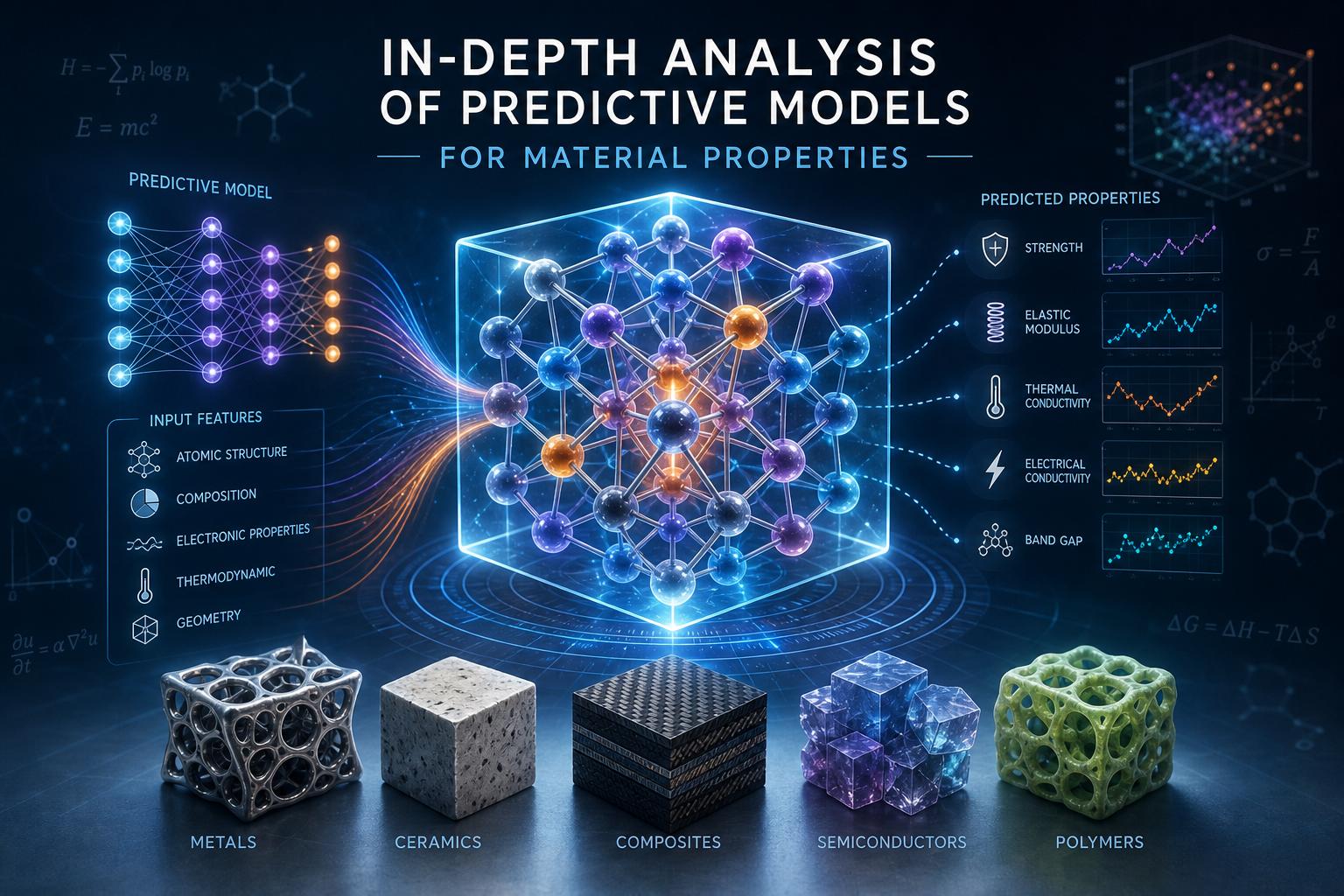
In-Depth Analysis of Predictive Models for Material Properties
Modern predictive models leverage advanced machine learning algorithms to decode the complex relationships between material compositions and their intrinsic properties. By integrating large datasets with feature engineering, these models can forecast mechanical strength, thermal stability, and electrical conductivity with remarkable precision. Key methodologies include:
- Neural networks: Excelling in pattern recognition, they adapt to non-linear trends in materials data.
- Support Vector Machines (SVM): Efficiently classify material types and predict phase changes under varied conditions.
- Random Forests: Provide robust predictions by aggregating outcomes from multiple decision trees, mitigating overfitting.
| Model | Property Predicted | Typical Accuracy |
|---|---|---|
| Neural Networks | Elastic Modulus | 85-93% |
| Random Forest | Thermal Conductivity | 80-90% |
| SVM | Phase Stability | 78-88% |
The integration of interpretability tools has further enhanced the usability of these predictive models, enabling researchers to identify critical material descriptors and optimize material design with confidence. Combining experimental data with simulation outputs enriches model training datasets, resulting in a synergistic approach that significantly reduces the time and cost associated with discovering novel materials.As an inevitable result, AI-driven models are transitioning from theoretical constructs to practical instruments central to innovation in materials science.
Integrating Machine Learning with Experimental Methods for Accelerated Innovation
Leveraging machine learning in conjunction with traditional experimental approaches transforms how new materials are discovered and optimized. By creating predictive models trained on extensive datasets of material properties and behaviors, researchers can rapidly narrow down candidate materials with desirable attributes. This integration enables the identification of promising compounds,reducing the dependency on costly and time-consuming trial-and-error experiments. Key advantages include:
- Accelerated hypothesis generation by simulating material responses before synthesis.
- Enhanced data-driven decision-making guiding experimental designs toward the most impactful variables.
- Improved reproducibility by standardizing the interpretation of complex experimental results through AI algorithms.
Moreover,this symbiotic relationship between AI and experimental methods optimizes resource allocation and opens avenues for exploration beyond human intuition. The implementation of active learning loops, where experimental outcomes iteratively refine machine learning models, fosters continuous advancement. A simplified comparison of traditional versus integrated approaches is outlined below:
| Aspect | Traditional Experimental Method | With Machine Learning Integration |
|---|---|---|
| Discovery Speed | Months to years | Weeks to months |
| Material Candidates Explored | Limited by manual screening | Vast chemical space via simulations |
| Resource Efficiency | High material and labor costs | Reduced costs through predictive targeting |
| Optimization Process | Stepwise empirical testing | Iterative model-driven refinement |
Strategic Recommendations for Leveraging AI in materials Science Research
To harness the transformative potential of artificial intelligence in materials science, researchers should prioritize integrating machine learning algorithms with experimental and simulation data. This integration accelerates the identification of novel compounds and predicts their properties with unprecedented precision.Emphasizing collaboration between computational experts and domain scientists ensures that AI models are grounded in physical realities and tailored to specific research challenges, enhancing both efficiency and accuracy. Moreover, establishing robust data infrastructure and standardized protocols for sharing materials data will maximize AI’s impact, fostering innovation across research teams globally.
Implementing a strategic approach involves focusing on these key areas:
- Data Quality & Quantity: Curate high-quality datasets enriched with diverse material classes to train predictive models effectively.
- Interdisciplinary Teams: Combine expertise in AI, materials science, and engineering to tackle complex problems holistically.
- Iterative Validation: Employ iterative cycles of prediction, experimental validation, and model refinement for continuous improvement.
- Ethical AI Use: Ensure transparency and explainability in AI decisions to promote trust in novel material discoveries.
| Strategic Element | Impact on Research |
|---|---|
| Data Integration | Expands predictive scope across material systems |
| Collaborative Networks | Enables cross-disciplinary innovation |
| Model Transparency | Builds confidence in AI-generated results |
| Continuous Learning | Adapts to new discoveries and evolving challenges |