
AI Driven Advancements in Protein Structure Prediction
Recent innovations have positioned artificial intelligence at teh forefront of biotechnology, enabling unprecedented precision in deciphering protein structures. By leveraging deep learning algorithms and vast biological datasets, AI models can now predict the 3D conformation of proteins with remarkable accuracy, a feat that was once labor-intensive and time-consuming using traditional experimental methods. These computational advancements not only accelerate the pace of research but also unlock new potentials in drug discovery, personalized medicine, and understanding complex biological mechanisms.
Key breakthroughs facilitated by AI include:
- Automation of structural prediction, reducing dependency on physical lab experiments
- Integration of multiple data sources to improve model reliability
- Real-time refinement and validation of predicted structures
| AI Model | Accuracy Rate | Application Domain |
|---|---|---|
| AlphaFold | ~92% | General protein folding |
| RoseTTAFold | ~88% | Rapid structure prediction |
| DeepMind’s Model | ~90% | Complete proteomics |
Such strides have created a cascading effect across scientific disciplines – enabling researchers to explore novel hypotheses about protein functions and interactions with a clarity that was once impossible. The computational power driving these AI tools is not only transforming academic research but also reshaping the biotechnology industry, as companies harness these insights to design targeted therapies and innovate with speed and precision previously unattainable.
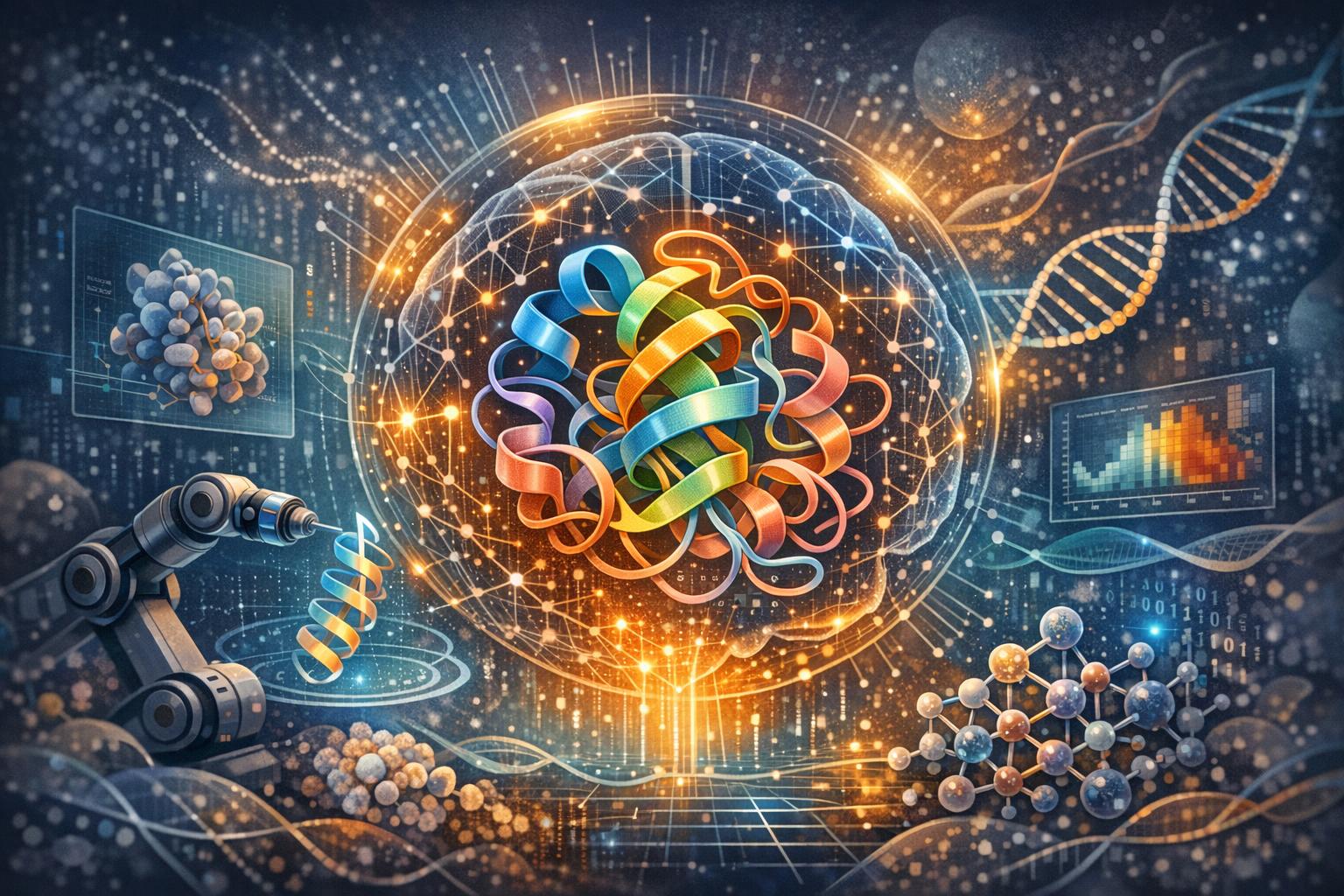
Mechanisms Underlying AI Models in Protein Folding Accuracy
At the core of AI’s superior accuracy in predicting protein structures lies its ability to capture intricate spatial and sequential dependencies within amino acid chains. By utilizing advanced neural network architectures such as deep convolutional networks and attention mechanisms, AI models effectively process vast biological data, recognizing subtle patterns that traditional methods overlooked. These systems are trained on colossal databases of known protein conformations, enabling them to infer the folding rules that govern protein shapes with remarkable precision.Moreover, the use of evolutionary data enhances the model’s understanding, allowing it to predict how variations in sequences impact folding outcomes.
Key mechanisms contributing to this breakthrough include:
- multi-layered Feature Extraction: Captures diverse biochemical properties and spatial interactions at multiple scales.
- End-to-End Learning Frameworks: Enable prediction without reliance on manually curated features or heuristics.
- Attention-based Models: Spotlight critical residue interactions essential for stable folding.
- Integration of Evolutionary Details: Strengthens prediction accuracy by using homologous sequence alignments.
| Mechanism | Function | Impact on Accuracy |
|---|---|---|
| Deep Convolutional Networks | Spatial feature extraction | Enhances detection of structural motifs |
| attention Mechanisms | Focus on key residue interactions | Improves fold prediction by prioritizing critical contacts |
| Evolutionary Data Integration | Leverages homologous sequences | Provides context for conserved folding patterns |
Impact of Accurate Protein Predictions on Biomedical Research
Groundbreaking advancements in AI-driven protein folding predictions have revolutionized biomedical research by providing unprecedented insights into molecular functions and interactions. Accurate protein modeling accelerates the design of targeted therapies,enabling researchers to identify potential drug candidates more efficiently and reduce costly trial-and-error processes. This transformative capability is especially critical in understanding complex diseases such as Alzheimer’s, cancer, and infectious pathogens, where protein misfolding or malfunction plays a pivotal role.
Key benefits of precise protein predictions include:
- Enhanced ability to model protein-ligand binding sites, improving drug specificity and minimizing side effects.
- Facilitated advancement of synthetic enzymes and antibodies tailored to combat novel pathogens rapidly.
- Streamlined experimental workflows by prioritizing promising protein targets, saving valuable time and resources.
| Application Area | Impact on Research |
|---|---|
| Drug Discovery | Accelerates identification of candidates with higher efficacy |
| Genetic Disease Study | Facilitates understanding of mutation effects on protein function |
| Vaccine Development | Enables rapid design of antigen structures for immune response |
Strategic Recommendations for Integrating AI in Protein Science Studies
To harness the full potential of AI in advancing protein science, research teams should prioritize the establishment of interdisciplinary collaborations that integrate computational experts, biologists, and chemists. These collaborations enable the development of robust AI models capable of accurately predicting protein structures and dynamics, which traditional approaches alone cannot achieve efficiently. Emphasizing the continuous training of AI systems with updated and diverse datasets will help mitigate bias and improve prediction reliability. Additionally, incorporating explainable AI techniques can bridge the gap between black-box predictions and actionable scientific insights, fostering greater trust and adoption among researchers.
Strategic deployment of AI tools must also be guided by a clear understanding of experimental validation requirements and clinical applicability. Laboratories should adopt a feedback loop where AI-generated hypotheses drive targeted experiments, and empirical results refine AI algorithms in return. Investing in scalable computing infrastructure is equally vital to support the intense data processing demands without compromising turnaround times. Below is a concise comparison of key factors to consider when integrating AI technologies in protein studies:
| Factor | Traditional Methods | AI Integration |
|---|---|---|
| Speed | Slow | Rapid prediction |
| Accuracy | Variable,often low for complex proteins | Consistently high with large datasets |
| Interpretability | High (experimental data) | Improving (explainable AI) |
| Scalability | Limited | Highly scalable |