
The Evolution of AI Transcription Technology in Modern Workplaces
Over the past decade, AI transcription technology has transformed from rudimentary voice recognition tools into sophisticated systems capable of understanding context, accents, and even intonations within conversations. This rapid evolution has empowered modern workplaces to streamline their meeting processes by automatically converting spoken dialog into accurate text formats.Advanced algorithms now enable real-time transcription, allowing team members to follow discussions seamlessly without losing focus.Moreover, the integration of natural language processing (NLP) facilitates the generation of concise summaries and action points, ensuring that critical insights are captured and easily accessible for future reference.
The benefits of leveraging AI-driven transcription extend beyond simple text conversion. companies now implement these technologies to enhance collaboration and boost productivity through features such as:
- Searchable meeting archives: Quickly locate specific discussions or decisions made.
- Automated action item extraction: Highlight responsibilities and deadlines without manual note-taking.
- Multilingual support: Transcribe meetings involving participants speaking different languages.
| Feature | Impact on Workflows | Example Use Case |
|---|---|---|
| Real-Time Transcription | Immediate accessibility of conversations | Virtual team meetings in global organizations |
| Summary Generation | Efficient review of key points | Weekly project review sessions |
| Action Item Detection | Automated follow-up tasks | Sales calls with client commitments |
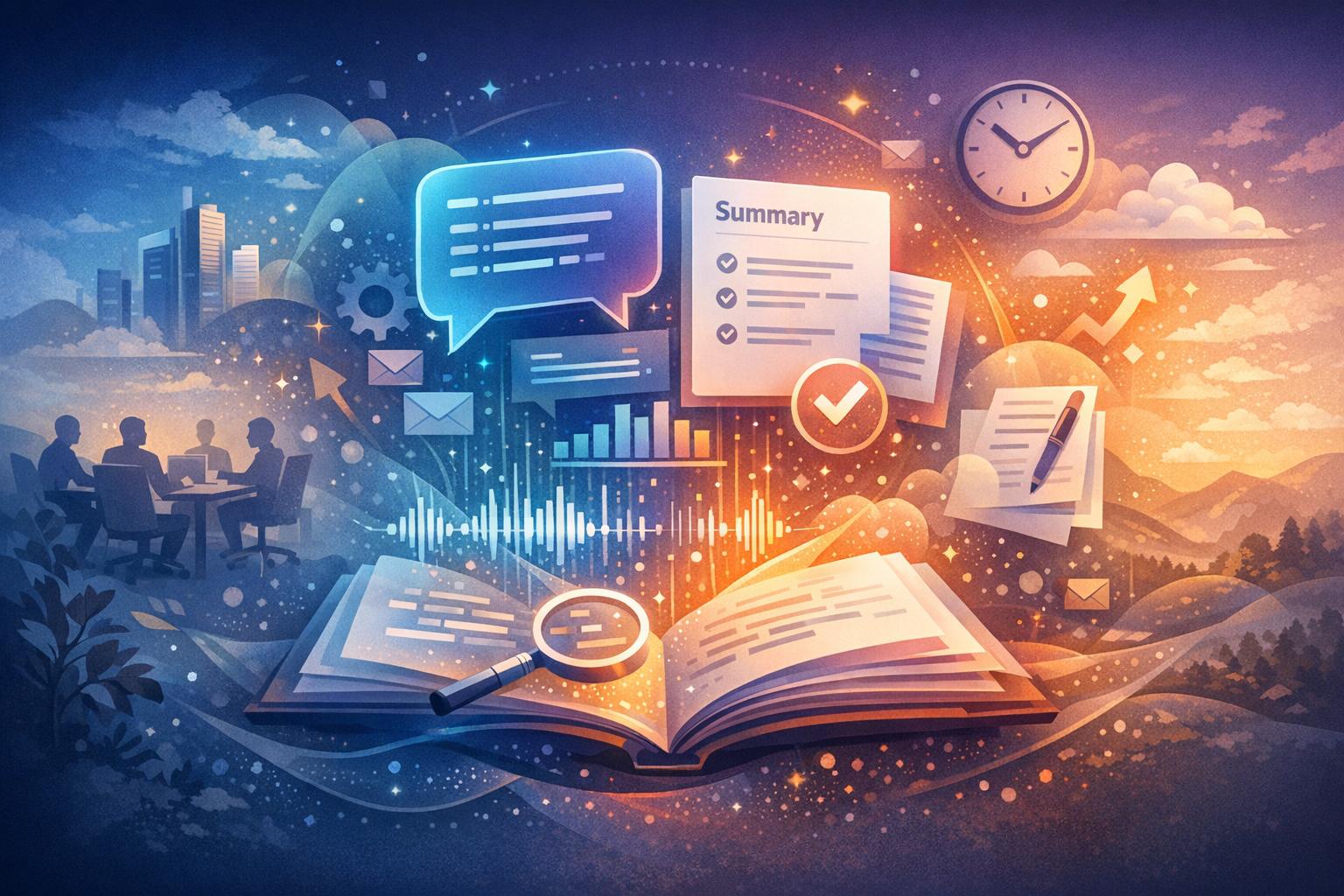
Optimizing Meeting Productivity through accurate Transcriptions and Summarization
Harnessing AI to transform spoken dialogue into precise text unlocks a new level of meeting efficiency. Accurate transcriptions eliminate the need for manual note-taking and reduce misunderstandings by capturing every detail verbatim. This technology supports a seamless review process, ensuring stakeholders who couldn’t attend stay fully informed. Moreover, integrated summarization tools distill lengthy conversations into concise overviews that highlight critical points and key decisions without overwhelming readers. These automated summaries serve as instant refreshers, helping teams focus only on what truly matters to drive projects forward swiftly.
Key benefits include:
- Enhanced clarity with exact records of discussions
- Time savings through instant, actionable summaries
- Improved accountability by clearly documenting agreed tasks
- Better accessibility for remote or absent participants
| Feature | Benefit |
|---|---|
| Real-time Transcription | Immediate text capture during meetings |
| AI-Generated summaries | Fast extraction of key insights |
| Action Item Highlighting | Focuses team effort on deliverables |
| Searchable Archives | Fast retrieval of past discussions |
Leveraging AI to Extract Actionable Insights and Delegate Tasks Effectively
harnessing artificial intelligence in meeting transcription opens new frontiers in transforming raw conversations into readily actionable insights. by converting spoken words into structured text, AI transcription systems enable teams to quickly locate critical points without wading through hours of audio.This capability is enhanced by integrated summarization tools that identify key decisions, deadlines, and follow-ups, enabling organizations to maintain clarity across complex discussions. Moreover, the automated extraction of action items ensures that no task is overlooked, providing a seamless bridge between dialogue and execution.
Effective delegation is amplified through customized tagging and categorization within transcripts, which allows leaders to assign responsibilities instantly and monitor progress effortlessly. Consider the following streamlined workflow enabled by AI-driven transcription:
- Identification: AI highlights tasks and assigns priority levels.
- Assignment: Action items are linked to specific team members automatically.
- tracking: Progress updates are integrated into project management dashboards.
| feature | Benefit |
|---|---|
| Real-Time Transcription | Immediate access to dialogue for faster decision-making |
| Contextual Summaries | Quick overview of key points without reading full text |
| Automated Task Extraction | Ensures all responsibilities are clearly documented and assigned |
Best Practices for Integrating AI Transcription Tools into Workflow Systems
Maximizing the efficiency of AI transcription tools within your workflow demands thoughtful integration strategies. First and foremost, ensure that the transcription software seamlessly interfaces with your existing interaction platforms, such as video conferencing apps and project management systems. This not only automates the capture of meeting content but also allows for real-time text generation and instant accessibility across your team. Additionally, configure the software to recognize multiple speakers and industry-specific terminology to enhance accuracy, reducing the need for tedious manual corrections post-meeting.
Equally important is embedding AI-generated transcripts into actionable workflows. Use transcripts to create automated summaries and prioritized task lists that can be directly assigned within your project management tools. Consider adopting the following best practices to elevate productivity:
- Automated tagging: Categorize meeting content by topics and action items to streamline retrieval and follow-up.
- Regular updates: Continuously train AI with company-specific jargon and context for improved transcription quality.
- Security protocols: Ensure encrypted storage and controlled access to sensitive meeting transcripts.
| Integration Aspect | Benefit | Suggestion |
|---|---|---|
| Real-time transcription | Instant access to meeting conversations | Enable live captioning across all meetings |
| Action item extraction | Streamlines follow-up and accountability | Automate task assignments based on transcript analysis |
| Multi-speaker differentiation | Clear attribution of comments and decisions | Use AI models that support speaker diarization |